Begin at the doorway
Stand just outside the living room and look toward the place you usually go first. In a walk-through room, that may be a doorway on the opposite wall. In a room with one entrance, it could be a lamp switch beside the sofa or a chair by the window. Now walk the route carrying whatever you commonly bring with you, such as a laptop, a cup of tea, or a basket of folded laundry. Notice where you tilt the object or turn your shoulders to get through.
Draw the room on ordinary paper and mark the two ends of that route. Add a second path for a person coming into the room while somebody else is already sitting down. If a front door opens directly into the room, mark its swing with a curved line. The curved area belongs to the door every time it opens, even though the floor looks empty when the door is closed. Also mark radiator valves, plugs you need to reach, and the space taken by curtains when they are open.
A piece of furniture can fit within the measured walls and still be in the way. This sketch records the places people need to pass, as well as the places furniture can occupy. Keep it with you when you measure the sofa and chairs. You will get more useful answers from the route than from a photograph of somebody else's room.
Measure the pieces you actually live with
Measure the deepest part of the sofa from back to front. Upholstery can curve several inches beyond the frame. Take the same measurement on an armchair, including the angle of the legs if they splay. If either piece reclines, trace its footprint with the footrest open. Add the space your knees and feet occupy while sitting. A passage directly in front of somebody's seat shrinks the moment that person gets comfortable.
Pick up a strip of removable painter's tape and check it on an inconspicuous area of the floor. If the finish is delicate, lay down a folded bedsheet or pieces of cardboard instead. Mark the outline of the largest piece you might move. A paper outline allows you to try a sofa on two walls without dragging anything. Place a laundry basket at the corner nearest the doorway to give the outline some height. You may discover that the corner you could walk over on the floor is also the corner you would bump with a hip.
Before moving furniture in earnest, check the delivery path for any new piece, including hall turns and stair landings. Record the opening width with the door in a usable position and include protruding handles. Check which legs can come off and whether the back can tilt through the route. A short sofa with bulky rolled arms can be harder to carry in than a slightly longer sofa with a low, narrow back. Compare the manufacturer's delivery measurements with the tightest point on the actual route.
Try a long wall first, then test the alternative
Placing the sofa against a long wall often makes one continuous walkable strip possible. Begin by setting its center roughly across from the primary thing you will look toward, whether that is a media console, a fireplace, or a pair of chairs. Then slide it toward one end in small increments. Each move changes which end has room for an occasional chair and which end must stay open for traffic.
Where two doors are on the same side of the room, a long open strip along that side is especially valuable. You can place the sofa on the opposite wall and angle a small chair toward it, keeping the inner corner of the chair out of the lane. If the doors are diagonally opposite, a clear straight strip may be hard to achieve. Put a smaller piece by the crossing point, where you can walk around either side, and keep deep pieces out of the middle.
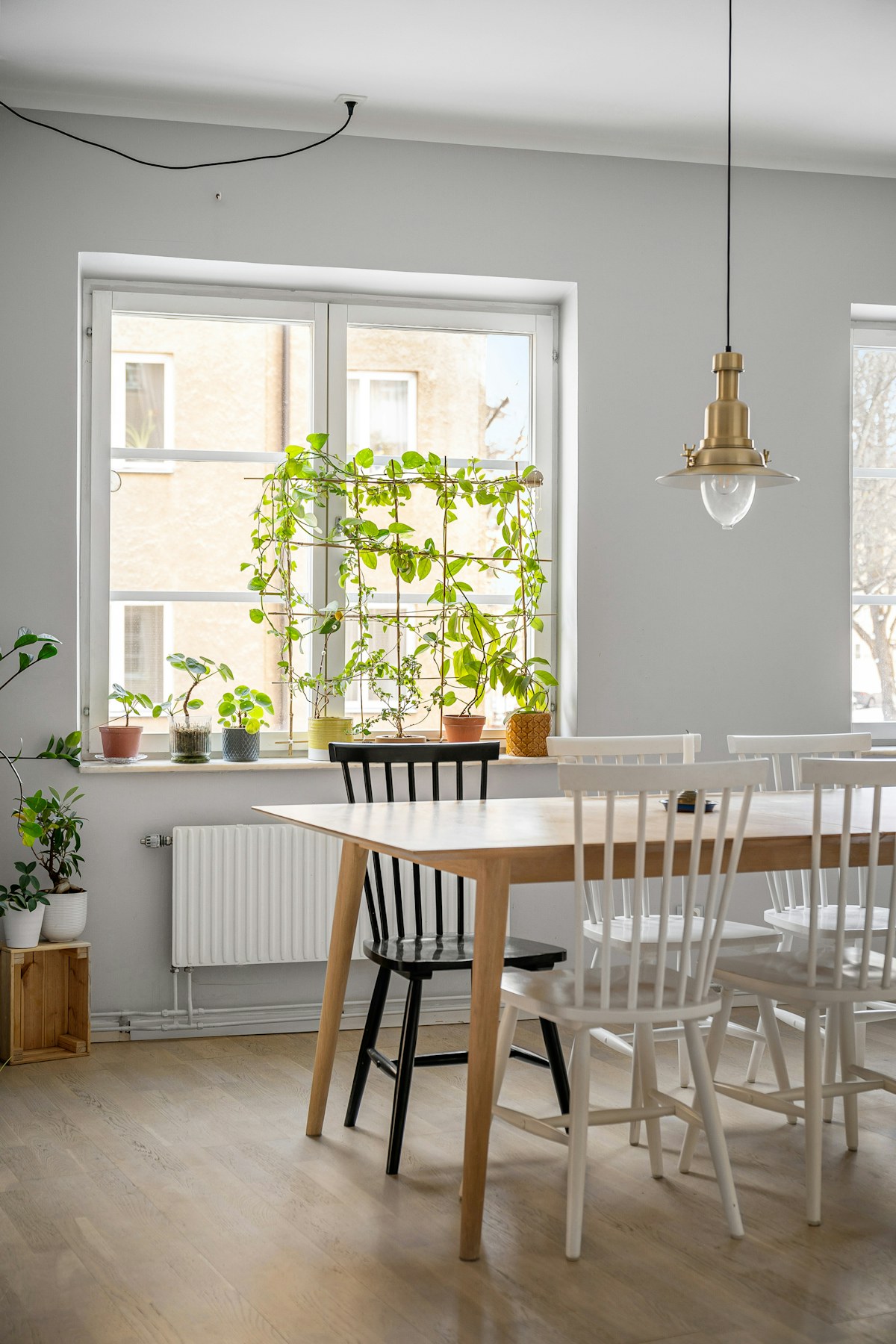
An arrangement across the short wall can also make sense. A sofa at the window end can turn the view down the long room into part of the seating experience. Look first for heaters, low sills, or windows that need room to open. If the sofa leaves enough space on one side to reach the window safely, its back may sit lower than expected. The two rooms can look identical in a floor plan while feeling completely different once somebody sits down and sees the window from eye level.
Give each seat somewhere to set a cup
Set out the seating group before choosing a coffee table. Sit in each place and extend your arm naturally, as if you were putting down a mug without looking. Mark the landing points. If most of them sit close to the ends of the sofa, two small surfaces may serve the room better than a long table in the center. A side table can share a footprint with the sofa's front corner where a conventional table would consume the walking lane.
A central table makes sense when several seats point inward and the room has a separate route around them. An oval or soft-cornered table leaves more space around its ends, which is often where somebody turns into the group. Watch the base as well as the top. A wide pedestal may keep people's feet farther back than a table with open legs. A good test is to place a box on the intended spot and stand up from each seat without moving it.
If children or pets use the room, account for the floor area they actually use. A bench that feels convenient during an evening visit can be one more thing to navigate during the day. A floor cushion can tuck beneath a console when it is in the way. An occasional chair can stay at the end of the room, then pull closer when somebody joins the group. Choose light, stable pieces you can reposition easily and give them a regular place where they do not block the door or the main route.
Use the floor and light to bring the room together
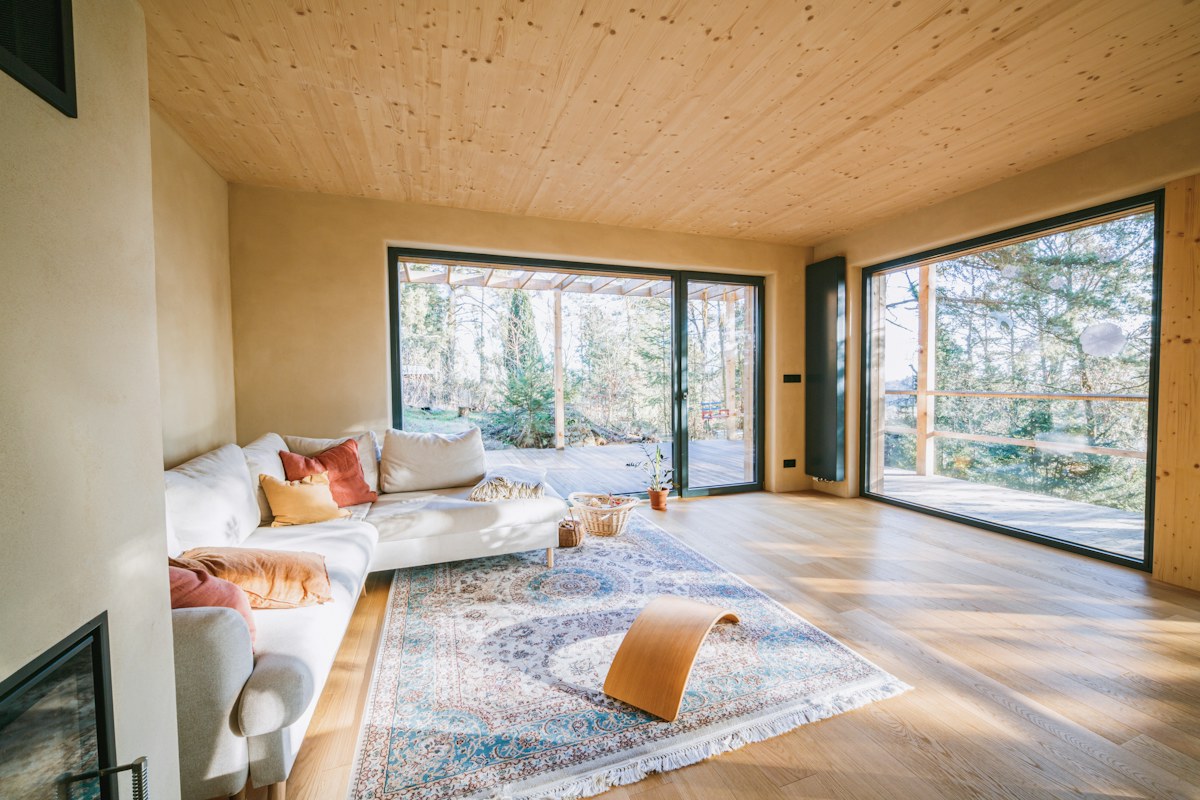
A rug helps a narrow room feel like one connected seating area when its position follows the furniture. Try a rug that reaches under the front feet of the sofa and chair, then check where the exposed edge ends. A rug edge running through a spot where everyone pivots can curl or catch a foot. Move that edge out of the main turn, or choose a size that covers the entire turning area with a suitable nonslip pad.
Color can be used to mark the place you want people to pause. A muted blue or earthy green on the sofa wall can make that wall feel intentional even if the remaining walls are white. If the sofa has a strong pattern already, a simpler rug gives the eye more room to notice it. Lay the paint or fabric samples near a window in the morning and on the sofa under a lamp in the evening. A narrow room often has one bright end and one shaded end, so a single swatch held at the door can give a misleading impression.
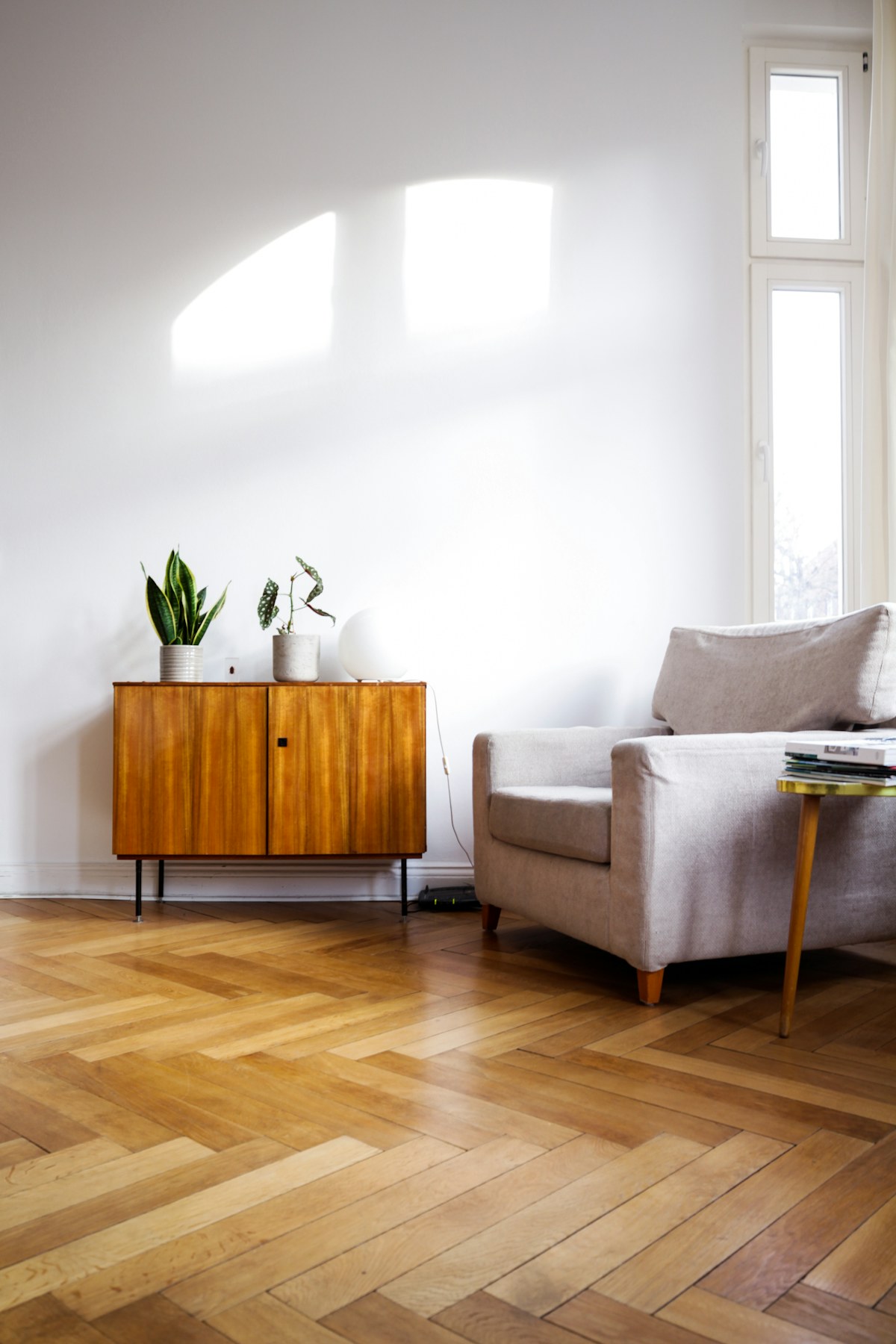
Place the first lamp where you need light after dark, such as above the book side of an armchair. Then sit in the rest of the seats and look toward that lamp. A bare bulb that seems unobtrusive when standing can glare when you lower your eyes to sofa level. Choose a shade deep enough to hide the bright source from the other seats, and route the cord beside the wall where it stays out of the walkway. If the only available outlet would put a cable across a passage, try a different lamp location before you settle on the layout.
Spend one ordinary evening with the new arrangement
Leave any undecided piece where you can move it without disturbing the rest of the room. Put a mug down, pick up a book, switch on the lamp, and walk past somebody already seated. Open a window and pull the curtains all the way closed. If you need to step over a stool to do either, try moving the stool before shopping for a narrower one. Moving the object can solve the same problem without adding another piece to the room.
Ask the other people who use the room which seat they reach for and what they carry through it. A room laid out for two people who watch television together can feel awkward if one often takes a call from the far chair. Move the small chair or lamp first, then decide whether the sofa needs to follow. Changing the largest item early makes it harder to judge the smaller improvements.
Write a shopping measurement only after this test. Keep a maximum width, a maximum depth, and a note about the spot where that piece must go. A side table that is two inches too deep can erase a turning space you just worked to recover. Conversely, a chair with arms slim enough to pull toward the sofa may give you another comfortable seat in the very same footprint. Measure from the route you want to keep open and let that measurement guide the purchase.