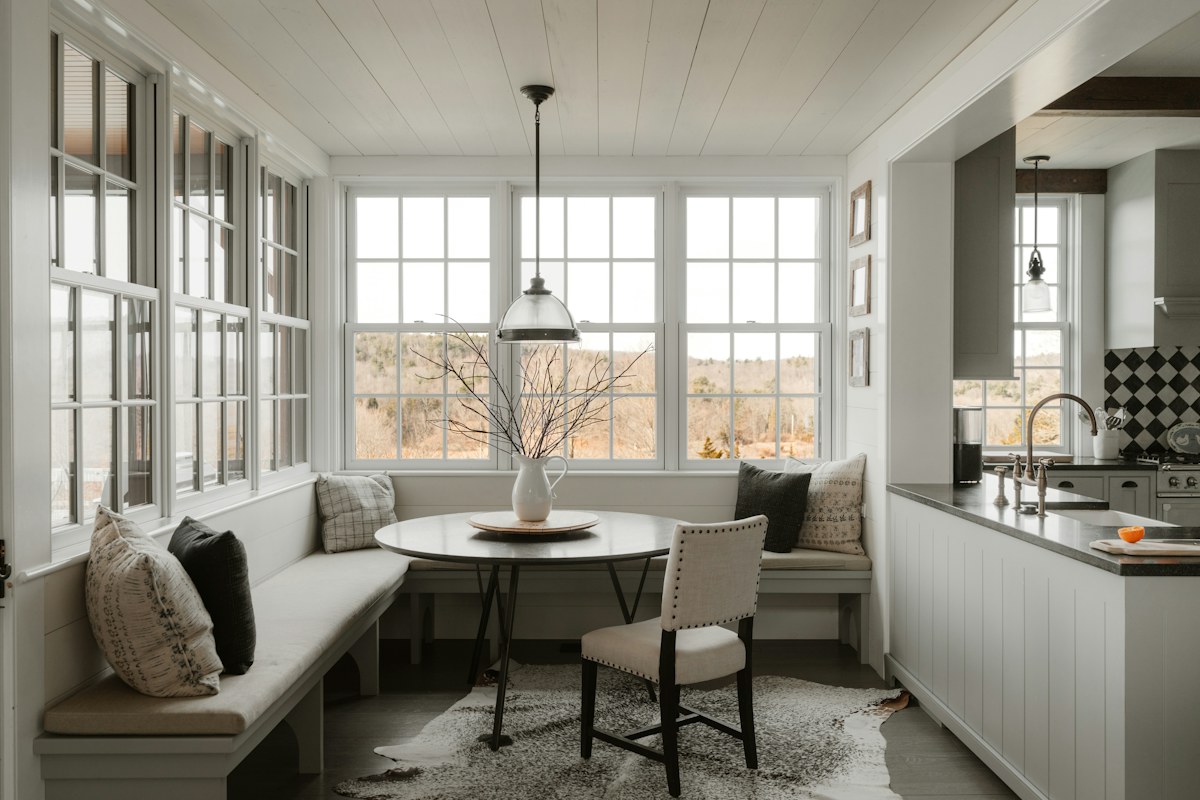
At breakfast, a corner of the kitchen can behave quite differently from a dining room. Someone sits for ten minutes with a bowl, somebody else comes in for a mug and a person wearing a coat puts a bag down on the nearest empty seat. The first person may need to leave before the second has finished eating. A small nook works when it can handle these brief visits without asking everyone to rearrange themselves. The space has to make sense at eight in the morning, with the refrigerator open and the table only partly cleared.
Before you bring in a bench, write down who usually arrives first and who is usually last to leave. Mark the kettle, the refrigerator and the path to the door on a simple sketch. Those points will help you choose the open edge of the nook. A seat facing the window may look like the obvious choice, but the person who uses it has to get there while the kitchen is in use. Leave the shortest independent route for the person whose meal ends first. In a household with changing schedules, give the most accessible seat to whoever is leaving next.
Try sitting in the farthest seat
Put an existing chair where you imagine the end of a bench. Sit down and get up with another chair standing where it would normally be. You can ask someone to sit in that second chair if they will usually use the nook. Try reaching for a bowl on the table and setting it back down. A person sitting against the wall often needs to slide sideways before they can stand. Check what they will have to pass. A table leg, a thick cushion or the edge of a chair can stop the movement at the exact place where you expected room.
Measure the usable part of a bench from the point where the seat first becomes accessible. A cushion that covers the full length still leaves some of its area behind the table. Sit where a person would use that part and see where their knees go. For an existing built-in bench, a table with a well positioned support may help people reach it. Look carefully at the actual design and its base. A broad central pedestal can get in the way of feet even if there are no legs at the corners. A narrow base can work well if the table remains stable and suitable for the intended use.
Imagine a breakfast with a visitor. There may be a preferred seat near the window and a practical seat at the open end for the person who gets up twice. Leave the near end clear of side tables and bags. If an open bench is easy to slide along, a family can use it differently on a weekend without changing the furniture. In a small apartment, a short seat that takes one person comfortably may be better than one that can technically take two but traps the person at the far end.
Work out how a plate reaches the table
Use an empty plate and cup for the first trial. Carry them from their usual cupboard to the point where you set them down. If you have to reach over a seated person's shoulder, put the regular serving place closer to the open side. See whether there is a small strip of counter near the nook that can hold an item while you get the next one. Leaving that strip clear may be more effective than adding another piece of furniture. The plate can reach the table from the direction that is already convenient for the person preparing it.
Check the refrigerator and cupboard doors while a person sits down. If a door needs to occupy the space where somebody pulls out a chair, give the chair another position or choose seating that stays within the nook. A bench can preserve the main path because it doesn't have to be pulled out. A chair can be better for someone who needs space to rise or prefers to sit at an angle. Choose the movement that suits the actual people using the room. A mix of seats often works when each one has a clear reason to be there.
Notice which dishes come back during the meal. A small used cup might be able to wait on the table, while a cutting board needs a clear route to the kitchen. Put the cooking equipment away from the dining edge when possible so it does not share the path with somebody getting up. Avoid creating a spot where hot items have to pass over seated people. A short path into the kitchen is useful when the person clearing the table can see where they are going and the next person can still reach a seat.
Choose a table for the things you put down
Lay out the actual breakfast for two people on a table you already have. Include the newspaper, lunch bag or extra cup that usually appears. Mark the rectangle occupied by the two place settings and the center space they share. This gives you a better picture of useful table area than the stated number of seats on a product label. A rounded corner can make it easier to pass in a tight space. Look at what happens to the area you use at that corner. Some broad curves leave a useful place for a cup. Others remove more surface than you expect.
Check how far a table needs to sit from the edge of a bench. Too far away and you may lean forward to eat. Too close and it can be hard to turn your knees under it. Test a comfortable position with a table and chair of roughly the intended heights. Use furniture designed to carry its load. Measure any edge or frame underneath the top. People can have different needs when sitting down, so test the piece with the person who will use it most. If more than one position is needed, see whether an open chair can provide a second comfortable option.
Consider a table you can pull out for occasional use if there is a clear place for the extended size. Check that you can make the change safely and that any parts are secured as instructed. A compact shape used every morning may matter more than accommodating a crowd at the nook. If a larger group normally eats in another part of the home, the nook can stay sized for the usual two or three people. You can plan for rare meals without asking the regular table to keep that extra footprint every day.
Decide where things wait before and after the meal
Some breakfasts start while somebody is packing to leave. Give the things headed out the door a suitable place clear of the eating area. A school bag that lands on the bench can remove the far seat in a moment. A hook or landing outside the kitchen may help if it is already on the route out. You can also leave one clear place near the open edge for a small item that has to stay with you. What matters is that you know where it goes without setting it in a chair somebody is about to use.
Put regular table objects close enough that they can be taken and returned easily. A few napkins can wait in a suitable low container near the table. If you always have to walk around the bench to reach a cupboard for them, try leaving the small supply at the open end. Keep the table clear enough that you can wipe it between meals. Check the care instructions for cushions and surfaces. A cover that is difficult to remove may be a poor choice for the place where a cup regularly gets tipped or crumbs fall into a seam.
Think about the light you use in the morning. A bright window can make one seat pleasant and give the other uncomfortable glare. Try a different orientation before adding a fixture. If the nook depends on a light before dawn, see how the existing light reaches the table while someone sits down. Keep any lamp in an appropriate safe spot according to its instructions. You may only need to change which side of the table is open to the room. That can improve the useful light as well as the route.
Check the nook at the end of a regular breakfast
Watch who leaves first and see how much has to move to let them out. If the far seat empties first every day, swap the jobs of the seats. If the kitchen door barely opens while somebody eats, compare a shallower table or an alternate position. If one person starts the day standing beside the counter, ask whether they would use a seat if it were easier to approach. A spare chair that blocks the usual path has less value than space to stand while pouring coffee.
Clear the table as you usually would. Notice where the breakfast things can stay for tomorrow and where the rest of the room needs its space back. The best arrangement may be two seats, a table with a reliable open edge and a small place to set down an extra cup. On a weekday, that is enough when a person can arrive, sit, finish breakfast and leave while the rest of the kitchen carries on.