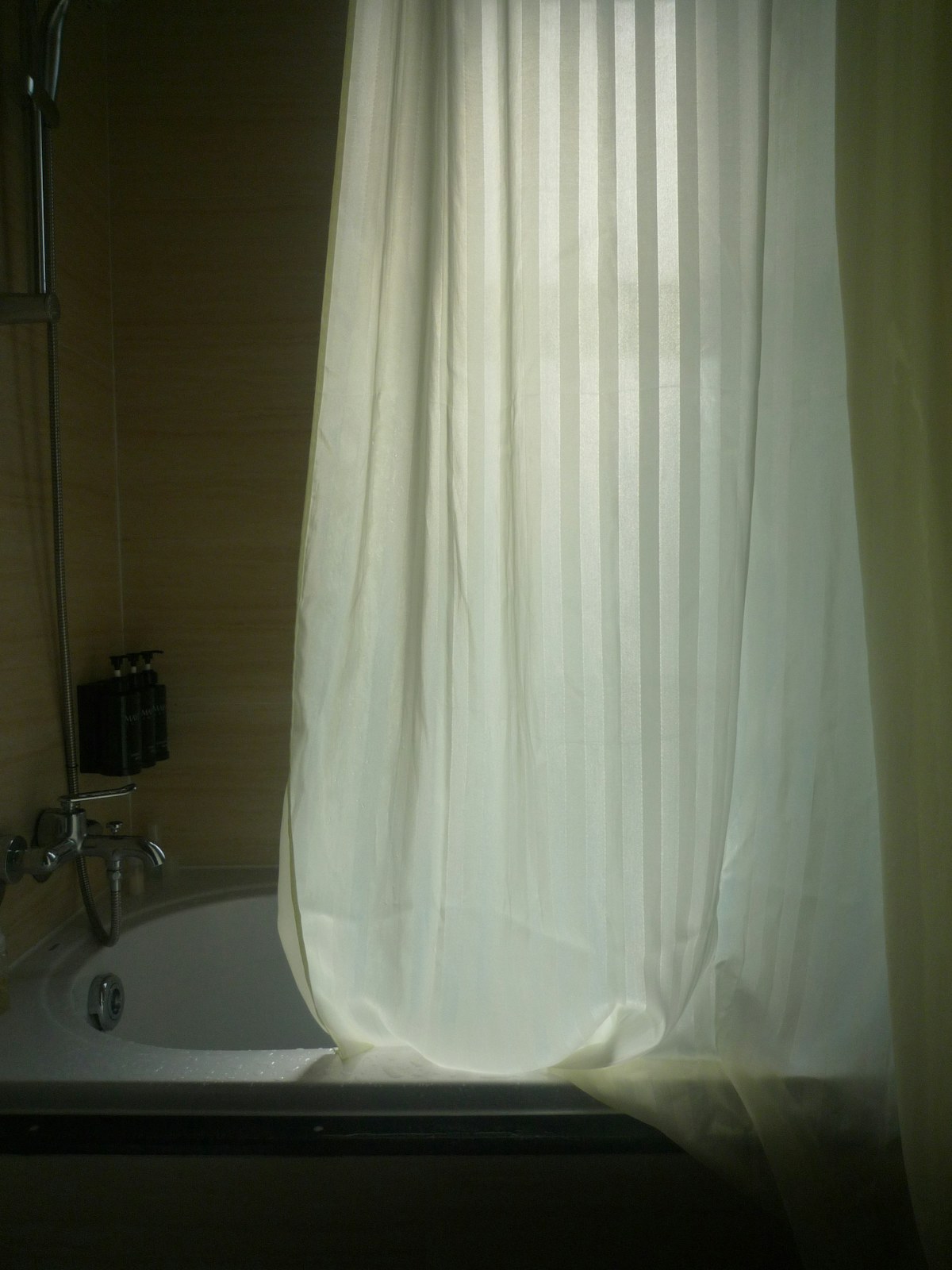
A shower curtain can look tidy when the bathroom is empty and behave quite differently after somebody steps into the tub. A liner that gathers at one end may leave a gap beside the wall. Fabric that reaches well below the rim can be hard to dry. On the floor, water may always appear at the same corner even though the rest of the curtain is doing its job. These small clues are more useful than choosing the next curtain from its color or stated size alone. Look at where the water reaches and where you need the fabric to go when you get in and out.
Start by noticing one ordinary shower. With the water off, look for the opening you used, the position of the curtain when it was drawn and the end of the tub that received the most spray. Look for water on the rim or floor. Water can arrive from several places, including a gap in the coverage or a fitting that needs attention. Deal with any repair through the appropriate person. If the problem comes from the curtain, you can test a change with the existing setup before buying anything.
Measure from the point where the fabric actually hangs
Look at the rod, ring or hook that supports the curtain. The distance from the rod to the tub rim is a useful measurement, but the fabric begins lower than the center of the rod when a ring or hook holds it. Measure from the attachment point where the curtain will sit. Think about the hooks you intend to keep. A change in their drop can change where the bottom of the new fabric lands. Take the measurement at both ends if the rod or floor appears to vary.
Measure the open span across the tub at curtain height. A curtain must have room to gather and still cover the parts that need it. Check the width of the specific product and how it is intended to be installed. A curved rod can put more distance between the ends than the straight span suggests. Follow the product's measurement guidance and include where its ends meet the wall. If a tub has a lip or recess at one end, see whether the curtain can cover the opening without being dragged tight.
Think about where the lower edge needs to sit for the way your bath or shower is designed. On a tub, the water containing liner generally belongs inside the tub during use, where it can direct water back into it. A separate decorative outer curtain may hang outside if its design calls for that. Follow the instructions for your specific setup. Check that the bottom has enough clearance from the tub floor and drain area and that loose material does not collect under your feet. A small change in hook length can be worth testing if the existing curtain almost reaches the right spot.
Give the edge nearest the spray enough coverage
The most exposed edge is often beside the shower fittings. Draw the existing curtain and see whether it stays in contact with the intended side of the opening. Pull it from its usual end rather than rearranging all the folds by hand. If the first movement leaves a wide gap, consider how the first hook reaches the edge. A short rod stop, an awkward hook shape or something stored at the end of the tub may limit the coverage. Move loose objects out of the way before deciding whether the curtain needs more width.
When the other end remains dry, leave it enough coverage for an ordinary change in direction. Someone else may aim the spray differently or use the tub in a slightly different position. There may be a useful resting point for the folds nearer the middle, leaving sufficient fabric at both ends. See whether you can pull the curtain into that position without reaching around an obstacle. The best arrangement is the one you can repeat during a normal shower, without straightening each fold individually.
Some liners have features intended to help the bottom stay in place. Check that those features are compatible with the tub and its finish, and use them as directed. Avoid adding loose weights or improvised attachments to the curtain. If air movement pushes the fabric inward, a liner with a suitable weight or a differently shaped setup may help within the limits of the space. Check which part moves during a normal shower. A liner that pulls in only when the fan is on presents a different choice from one that always clings because the rod sits very close to the wall.
Leave a clear place to get in and out
Move the fabric to the side you use when stepping in. See how much room the folded portion occupies. A long span of fabric may fill the same end where you need to set a foot down. You can test parking the curtain at the other end if the hooks and layout allow it. Do this with dry surfaces first. If the other end gives a clearer opening, look at where the curtain goes during the rest of the day. It may share space with a shelf or a towel hook that needs room at the same time.
Think about the person who uses the tub least easily. A rod or curtain is not intended as a handhold. Keep appropriate supports available and follow their instructions. A curtain should open easily enough to let the person reach the safe route they use. Check whether a broad piece of fabric hides a useful edge or makes it hard to see the floor. If a separate liner and curtain make the movement awkward, a compatible single curtain designed for the purpose may be easier to handle. A wide opening you can see is more useful than an arrangement that takes several pulls to operate.
Set the used curtain where it can drain as designed. A bath mat or towel should be in a suitable position away from the place where water routinely runs. If the water always ends up outside one edge, adjust the coverage before putting a more absorbent mat on the floor. Keep the floor dry and deal with persistent moisture. A curtain setup is doing its work when a person can use it in an ordinary way and leave the room without spending time chasing the same puddle.
Check how the material dries
Read the care instructions before choosing between a washable fabric, a liner and a product that does both jobs. Ask how you will take it down, wash or wipe it as directed and put it back without losing the orientation that worked. If the rod is high, consider whether you can safely reach the hooks to remove them or get appropriate help. The intended care should be practical enough that you can carry it out as often as needed. A fabric that looks appealing in a shop may be less useful in a room that is difficult to air.
See what happens when you spread the curtain after a shower. The folds may open enough to dry, with the edge still resting in the right place. Follow the product's guidance and use the room's available ventilation appropriately. If a small section stays damp against the same shelf or tub edge, find a way to keep that section clear. A set of rings that moves freely can make the everyday reset easier, as long as they are designed to fit the rod and do not leave the curtain hanging at the wrong height.
Look at how the room feels with the curtain drawn. An opaque material may darken the tub in a bathroom where the ceiling light sits outside the shower area. A light fabric or a product with a suitable translucent section can change that experience. Use a sample or a similar item to test the amount of light you would lose. If the current curtain is always pushed open to get light, look for a setup that keeps the coverage where it belongs during use. Good light can make it easier to see the edge, the floor and anything you need to reach.
Recheck after a few showers
Use the setup several times in the way you normally do. Notice where the hooks stop and where the fabric dries. If the same puddle remains, look again at its source. A curtain may need to extend a little farther at one end, or the water may be coming from a different part of the bath. If the liner begins to bunch at the bottom after you move the rings, remeasure the drop and compare it with the manufacturer's setup. Small changes in the way the pieces hang can have a larger effect near the floor.
Put the shower products and towels back where they usually live and try opening the curtain again. The test should include the room as you use it, with its ordinary objects and routes. Keep the curtain that gives you enough coverage, slides away from the entrance and can dry after use. That can be a plain material with the right width and a set of hooks that places it at the right height. The appearance is a choice you can make once those everyday movements work.