A small square of curtain fabric can look creamy on a shop counter and nearly white against your own window. A fabric that seems dense when folded may let a clear shadow through when it hangs in one layer. Curtain fabric is best judged with the light that will pass through it, from the places where you sit and the places where somebody could look in. A good test takes part of one day and a few minutes after dark. It can save you from buying a whole length of fabric whose most important quality you have never seen.
Name what you want to change at the window
Look at the window during the part of the day when it bothers you. You might be trying to read without a stripe of light across a page. A neighbor's window might face the part of the room you use most. Perhaps the window looks bare from the sofa and works well in every other way. Write down the task in concrete terms. “Soften the patch of light on the left side of the table after lunch” is easier to test than “make the room feel softer.” A sentence like that can also tell you whether a partial covering might solve the problem.
List what you want to keep. You might like the view of a tree, the daylight that reaches the opposite wall, or the ease of opening the window. A full curtain that improves one thing can affect the others. If you use a different part of the room at night, record that position as well. A light fabric can be useful during the day even if you need a second layer in the evening. Knowing the two jobs before you begin helps you decide which samples belong in the test.
Hold fabric where it would really hang
Obtain a sample if you can. Bring it to the glass and hold it as a single layer. Stand where you would usually look toward the window and watch how much light it passes. Then move the sample away from the glass to the plane where the curtain would actually hang. The nearby wall and the distance from the glass can change what the cloth looks like. Make sure any temporary method of holding the sample is suitable for the surface and does not interfere with the operation of the window. A helper can hold it for a quick comparison.
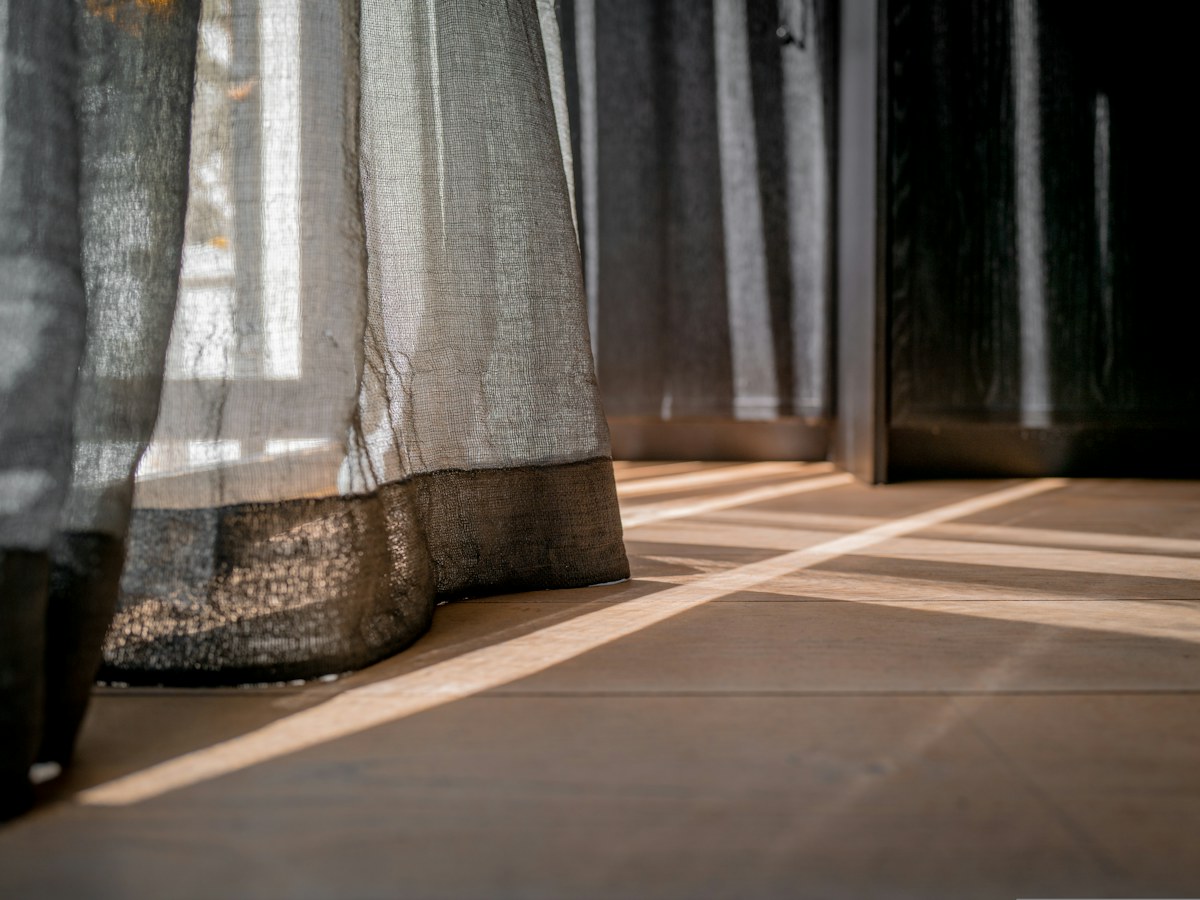
If you have a large enough sample, let part of it fall straight and gather the rest into a couple of loose folds. A finished curtain has both stretched areas and folds where the fabric overlaps. Watch which parts become brighter. A cloth may show its weave clearly across the flat part and look darker where it gathers. If the finished design would have much fuller folds than you can reproduce, treat the sample as one piece of evidence. Ask whether you can see a panel of the same fabric hanging before you order it.
Check the same sample in morning and afternoon light
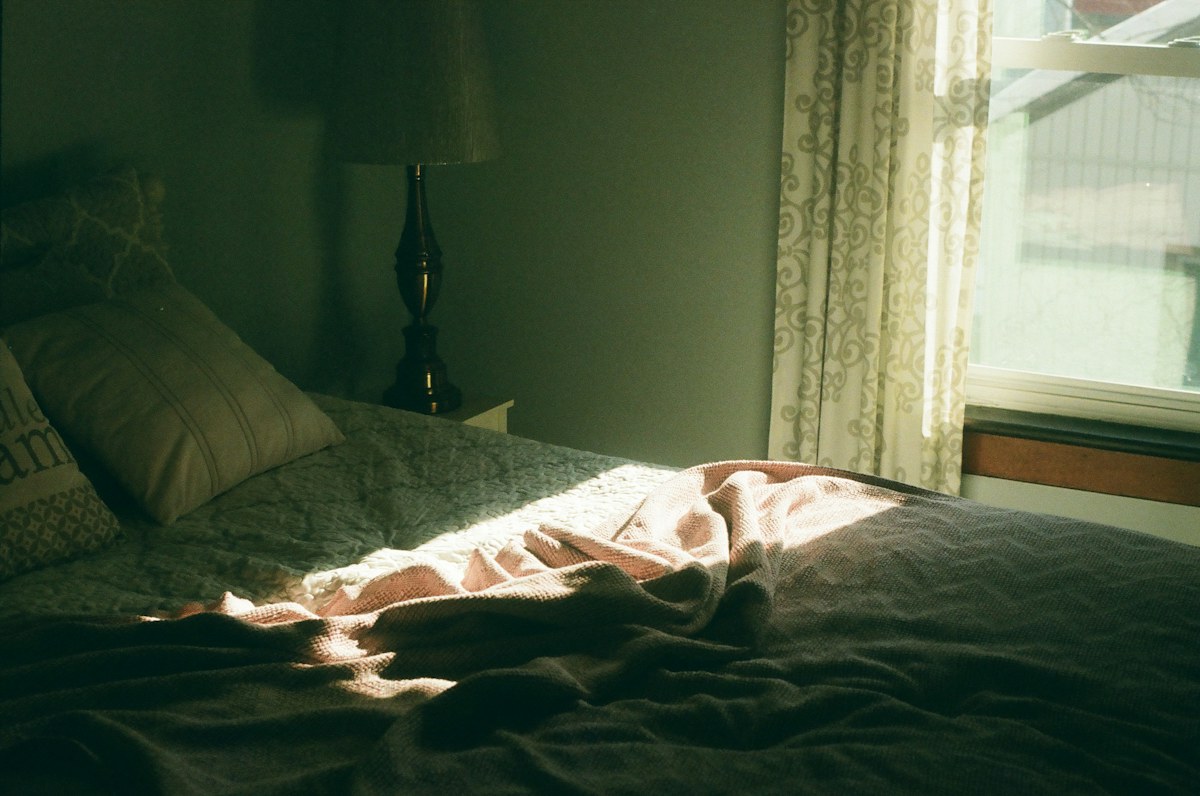
Look at a light sample when the window is receiving direct sun, if that happens at the time you use the room. Check it again when the wall or sky outside supplies the main light. Direct light may show slubs, seams, and variations in the weave. Indirect light may make the color blend into the wall. A sample you like at either time gives you more reason to think the finished curtain will suit the room than a quick decision under a shop light.
Set a piece of white paper beside the sample if two pale colors are difficult to compare. See whether one takes on a gray, pink, or yellow tint in the room. Then remove the paper and compare the sample with the floor, the wall, and the largest piece of furniture. You can also set the sample down and come back a few minutes later. The color may stand out when your eyes have stopped comparing it directly with another cloth. An isolated sample can look strong in your hand and quiet from across the room.
Give nighttime privacy its own test
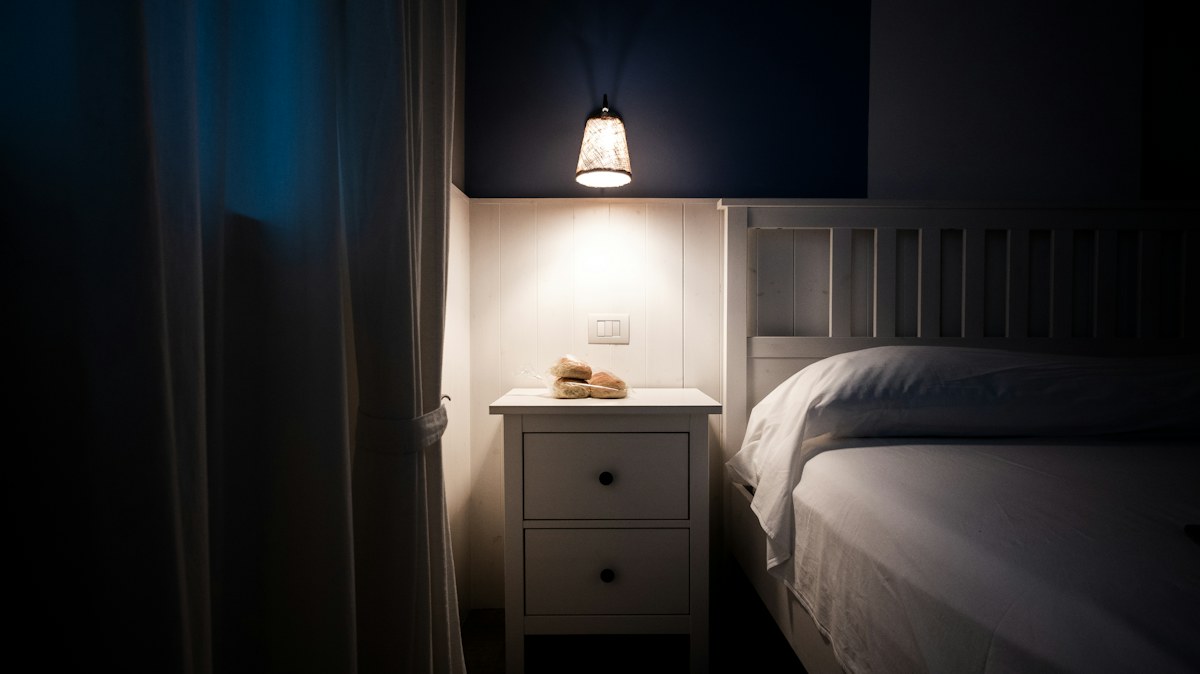
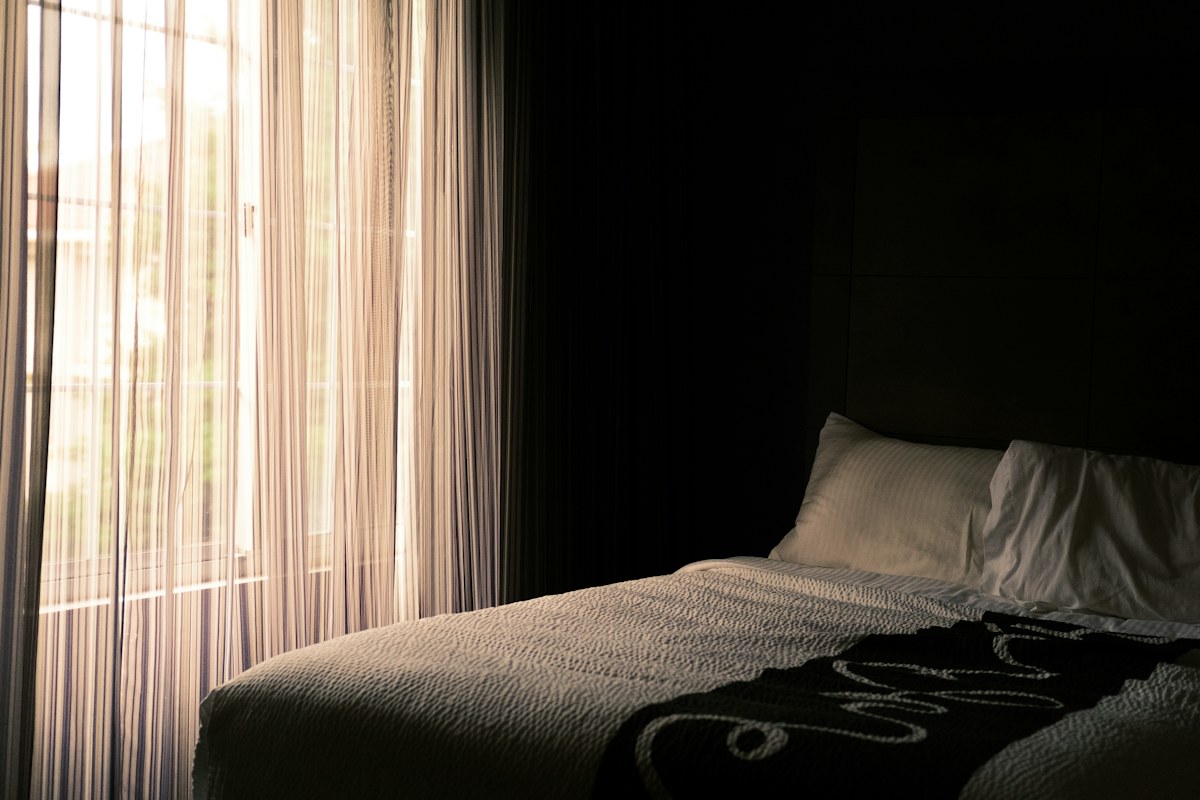
Light moves through fabric in both directions. During the day the brighter side may be outside. After dark a lamp can make the inside the brighter side. With another person helping, test what can be seen from any place you can safely and appropriately stand outside, or use a window that faces your own private outdoor area. Move a hand or a neutral object behind the fabric and compare how easy it is to see the movement. Try with the lamp close to the window and farther back. A small swatch cannot show every gap around a full panel, but it can show whether the cloth passes more detail than you want.
If an outside comparison is unavailable, hold a sample in front of a bright indoor source while keeping the fabric at a safe distance, and look for the edge of an object on the brighter side. Treat this as a comparison between samples, not a guarantee of privacy. The thickness of the cloth is only one part of the result. Check how the finished covering would meet the edges and whether two panels would overlap at the center. A small bright opening can give a clearer view than a large area of closely woven fabric.
Compare one layer with two
Consider a sheer that you enjoy in the day and a more substantial layer for the evening. You can test the combination with two fabric samples. Hold them together and then apart by roughly the distance the layers would hang. Compare whether you like the outline of the outer fabric through the inner one. Try each on its own to see whether it works as the independent layer you intend. Two layers can provide more choices over the course of a day, though they also require room when open.
An existing blind can serve one of those jobs. Test it at the position you actually leave it, then add the sample. A light cloth may make the room more pleasant without having to provide privacy by itself. An opaque curtain can be useful where you want to reduce light more substantially. Consider how easy each layer is to operate. If opening the window requires reaching around two large folds and a cord, the combination may become irritating even if you like the way it looks from the sofa. Follow any applicable safety guidance and the hardware instructions.
If the window catches the eye from an adjoining room, walk into that room and look back. A cloth that seems neutral beside the bedroom wall may become a noticeable square against a different color. Consider the appearance from outside as well, where you can do so appropriately. The back of a lined panel may look quite different from the face. Check the actual backing or lining if a consistent street-facing appearance matters to you or is required where you live. A small sample only answers that question if it includes the layer people will see.
See what the cloth asks of you after you buy it
Read the care information for the exact fabric or finished panel. Some curtains can go into an ordinary wash. Others require a particular process to preserve the fabric, backing, or lining. If you like a sample made with natural fibers, look at how much it wrinkles when you fold it loosely and release it. Decide whether you enjoy that texture. A smooth finish may matter in one room while a little unevenness is part of the appeal in another. Look for the result you are willing to care for on a normal week.
Think about where the lower edge and the open panels will sit. A sweeping fold can be attractive beside a window and awkward where a pet passes or a chair is moved daily. A lining may change how heavily the curtain hangs and how much room it takes when pushed aside. If you need frequent access to the window, choose a treatment you can shift without dragging furniture. Use your usual movements as part of the test. The curtain needs to serve the person opening it as well as the person looking at it.
Choose from the seat where you will see it most
Bring the best two samples back to the room at the hour that matters most. Look from the seat where you noticed the glare or the loss of privacy. Try each sample with the lighting you use there. If one passes that test and leaves you enough light and view at other times, it has done the job you named at the start. If two are equally useful, choose the one whose texture or color you enjoy from a normal distance.
Keep the sample and any notes about how you tested it. If you later choose a lining or want to dress another window, they give you a comparison you can reproduce. The second window may face a different direction even in the same room. Look at it on its own terms. A useful curtain changes the light where you need it, and it still lets you use the window the way you want to use it.