Start with the window hardware
Look at the window with its current covering fully open. Try opening the window as far as you normally do and then as far as it can safely go. Note whether the handle swings inward, whether a sash lifts, and where a blind cord or window lock sits. A curtain that blocks the handle will need moving every time the window is used. A pair of panels that stack clear of the handle leaves the window easy to operate even if the panels are wide.
Check the wall space beside the opening. If one side is close to a corner or a tall cabinet, note the difference. Two matching panels can still hang well when there is little stack space on one side, but you may prefer to draw one wider panel all the way to the freer side. Test that idea with a sheet held loosely by a helper. See how much glass remains covered when the fabric is gathered. A narrow window can lose a surprising amount of its light to the stack.
Measure the span from the outer edge of the trim on one side to the outer edge on the other. Mark the available wall beside each edge and the height between the top of the trim and ceiling. Take a photo from straight in front of the window if you are going to a shop. Those few measurements and the photo make it much easier to understand whether the rod needs room for brackets, end pieces, and the fabric itself.
Think about what you want the curtains to do at night
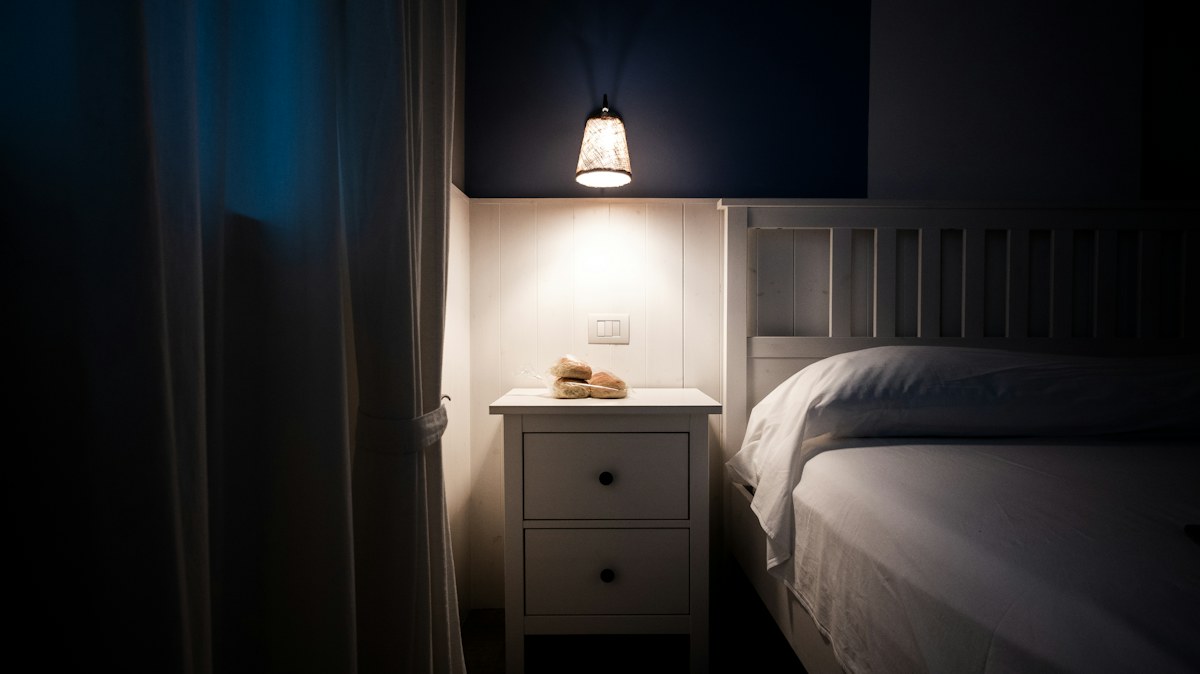
A curtain that softens daylight can be nearly transparent when a bright room is viewed from outside. Check the window under the conditions that matter. At night, turn on the lamps you normally use and ask somebody to look from a safe position outside if possible. Look from inside during the day as well. A light sheer can make the room feel comfortable by day, while an opaque lining or a separate blind supplies privacy after dark.
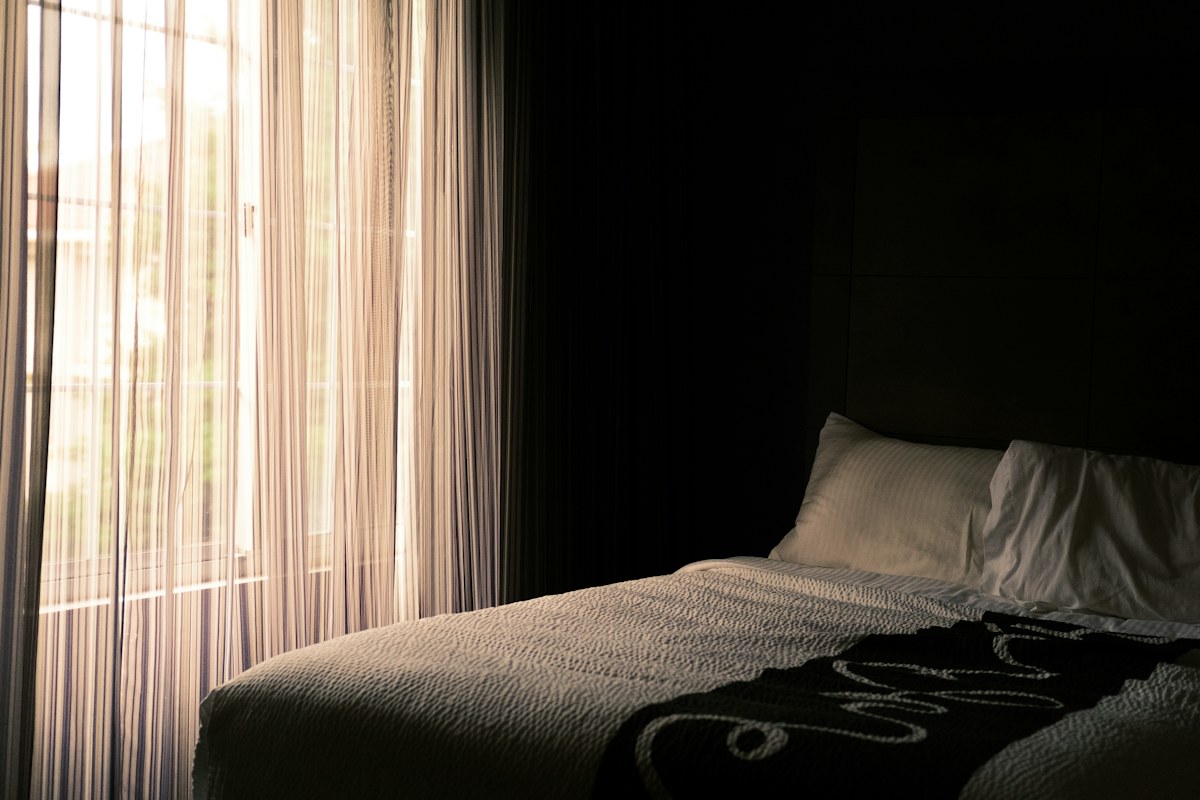
If you want to keep early light from a bed, look for the direction from which it enters. A dark fabric can leave an obvious line of light at the sides and a bright patch over the top. Wider coverage and a shape that brings the fabric closer to the wall can matter as much as the cloth. A lining might add stiffness to the panel and make its stack wider. Check the full assembly with that in mind when deciding how far each panel can move.
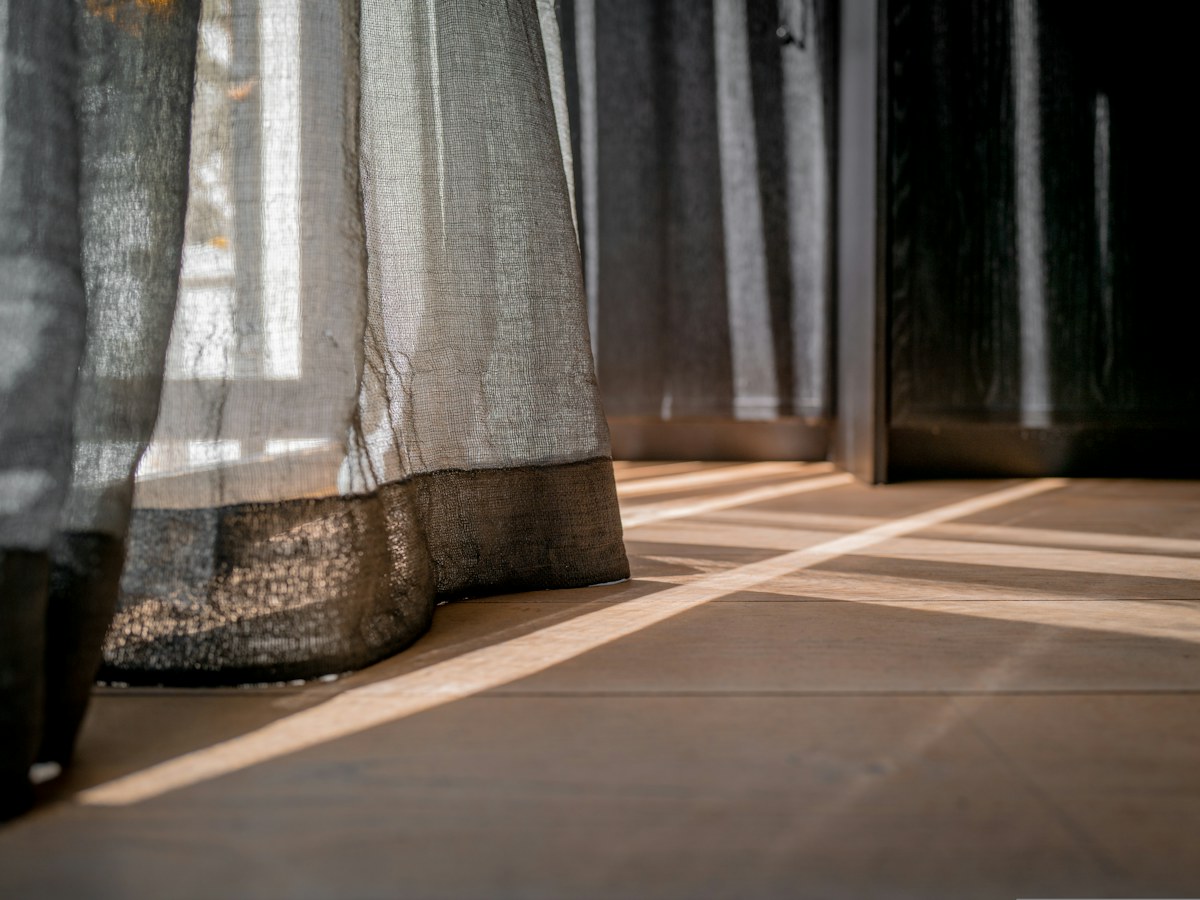
If the main goal is to soften glare, hold fabric samples in front of the window rather than testing them on the table. Look at them during the brightest part of the day and again when the window is shaded. A fabric that looks white on a shelf may be warm enough to make the room feel yellow in strong sun. A finer weave can still give the view some definition. Choose the effect you like while standing in the place you will use most often.
Allow for both coverage and folds
The stated width of a panel is usually its flat width. It will cover a shorter distance when it hangs in folds. Check the curtain manufacturer's guidance for the type of header you choose. A gathered pocket and a panel with evenly spaced eyelets hold their fabric differently. If you want a soft fold across the center when the curtains are closed, allow more fabric than the width you need to cover.
Decide how you will close the middle. Some curtains meet in a straight line and let a little light through. An overlap can make sense where privacy matters. Stand across the room and watch how a sample of cloth looks when it is pulled tight. If the cloth flattens completely before it reaches the other panel, the pair may need a wider combined width or a shorter span between their outer edges. Take those dimensions from the place where the curtain will hang rather than only from the glass.
For the open position, count the fabric, the rings or other fittings, and any end space needed by the rod. Those parts add up. A panel with more fabric can look generous when closed, yet stay visibly across the glass when open. If the room needs every bit of winter daylight, give the stack more wall space where the layout allows. If there is no extra wall, a simpler header or a lighter cloth may suit the window better.
Choose a length that can survive daily use
A curtain that stops slightly above the floor is usually easier to open and clean around than one that lies in a fold on the floor. Measure to the floor at both ends and near the center. The floor and trim may be slightly uneven. Check whether the panel will clear a thick rug if the rug extends into its path. A curtain that hangs perfectly in the center might drag at the end where the floor rises or the rug curls.
Use a sill-length curtain if there is a desk, seat, heater, or deep counter below the window and the shorter length suits the room. Measure where you want the hem to fall with the window open and shut. A curtain touching a cluttered desk can pull papers or brush a cup. A hem that stays above the sill may let you use the entire surface. Keep curtains clear of heat sources and follow any clearance guidance for nearby fixtures.
Take the final length measurement from the point that carries the curtain. A ring with a hook can put the top of the cloth below the rod, while a rod pocket can raise part of the fabric above it. Read the measurement instructions for the selected heading before ordering. A difference of an inch is easy to miss on a list of dimensions and very visible once a light-colored hem hangs over a dark floor.
Test the placement before putting holes in the wall
Put up small pieces of removable tape to show the rod height and the ends. Look at them from the doorway and from the usual place in the room. A higher rod can make the fabric look like one tall surface, but it may leave a panel too short or get too close to a ceiling projection. Measure the available area for the brackets, not just the line where the rod will run. Check the intended wall surface and product instructions before mounting anything. Ask a qualified installer if you are uncertain about the wall, hardware, or clearance.
Have somebody hold an existing curtain or light sheet at the marked height if you want to see the proportions before committing. Open the window and move the fabric while the helper is clear. This test often reveals that one handle needs a little more space or that a panel works better if drawn to the other side. You can also use the test to decide whether a large amount of visible fabric beside the window will feel comfortable next to a wardrobe or framed picture.
Look at the relationship between the curtain and the whole wall. If a window is off center, the rod can sometimes make the composition look more balanced by using more space on the wider side. That may be helpful only if the fabric actually moves into that space when opened. Keep the plan tied to the operation you need. You will notice the window that opens easily more often than a perfectly symmetrical measurement on paper.
Live with the curtains before adjusting the hem
Once the panels are installed according to their instructions, open and close them several times. Check that they reach the handle position you planned, meet at the center as intended, and do not catch on a bracket. Leave new cloth hanging for a while if its care instructions allow. Creases from packaging can change the way the bottom edge appears. Follow the label if the material can be pressed or steamed.
Look at the window at the time of day that led you to change the curtains. If light still enters in the wrong place, see whether the panel has enough travel to cover it before changing the hardware. If the room feels too dim during the day, move the folds farther onto the wall or try pulling back one side and compare the effect. The position you settle on should work with the furniture and lighting already in the room.
Write down the finished rod height, width, and panel length once you are happy with them. The measurements will save time if one panel needs replacing later. Keep a note about the header style as well. It is the small difference between the listed length and where the fabric hangs that often matters most.
If the window is used from both sides of the bed, ask the other person to open and close it too. They may reach for a different edge or use the window when the room is dark. A small handle or a different overlap can make that action easier without changing the position you already like.