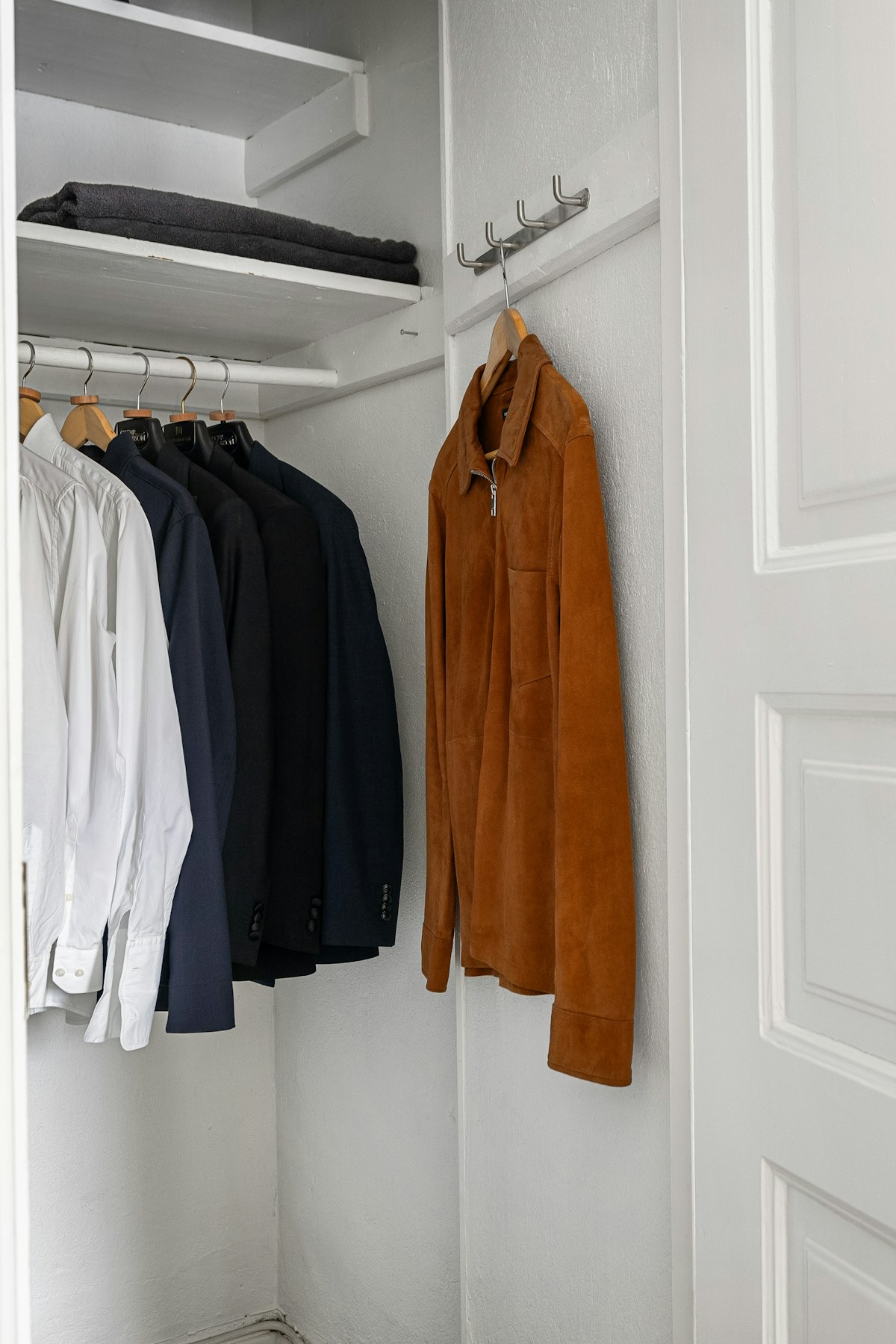
An open clothes rail can make a bedroom feel calm on Monday and crowded by Thursday. The clothes that start out in order are joined by a cardigan you plan to wear again, a jacket that needs airing and several shirts fresh from the wash. This is a sign that the rail is doing work. It needs enough room to receive clothes as well as enough room to display them. A few garments chosen for the next several days can make an open rail useful without requiring you to keep the whole wardrobe in sight.
Begin by deciding what should happen at the rail tomorrow morning. Perhaps you want to take a work shirt from it and find the jacket beside it. Perhaps there is no fitted closet and it needs to hold the clothes you use throughout the year. Those are different amounts of storage. Work with the rail you have if it suits the load and the room, and compare the needs of the busiest day with the maker's limits. A rack that can hold a row of jackets can still be awkward to use if it sits where the clothes catch the bedroom door.
Give the rail a job in the wardrobe
A short rail can serve as a place for the next several outfits. Keep the pieces that go together within the same part of it. Leave room at one end for an item that has just come back from the wash or is going out the next day. You can use a spare hanger at that end as a movable marker. If you wear the same jacket several times a week, give it a spot that can be reached without moving all the shirts. The rail can answer the daily question of what to wear while less frequently used clothes remain elsewhere.
If the rail is your main hanging space, identify the difference between the pieces you take out most often and the pieces that can wait. A long coat needs enough drop to hang clear of the floor and anything stored below. Give the full height to the longest pieces first. Group the short garments together so the space underneath can hold a suitable lightweight basket or remain clear. Follow the rack's design and the manufacturer's loading instructions. A shelf intended for shoes may have a different capacity from the bar above it. Use both according to the guidance for your unit.
Some people use the rail for clothes that have been worn and will be worn again. If that is the purpose, give those items a place of their own. A few separate hangers can help you see what is waiting. Keep clothing that needs cleaning in its appropriate place. Check the fabric care directions before deciding whether a piece should hang or be folded. The rail makes a temporary decision easier to see, but it works best when the items move onward after you wear or wash them. A chair covered with the same clothes may be a sign that there is no room left to return them.
Measure the garments as well as the frame
Stand where you will approach the rack and look at the widest part of a garment on a hanger. A rack can fit in an alcove when empty while jacket sleeves project beyond both sides. Measure the clothes at the point where they hang. Compare the depth with the closet door, bed or other furniture beside it. Check whether you can remove a hanger without lifting it into a light or scraping the wall. A shallow hanger of the right design for the garment may help in a tight spot. It still needs to support the shoulders and keep the piece easy to handle.
Leave a space at the front for the movement of choosing clothes. Reach into the center of the rack while someone uses the route past it. Try lifting a garment and turning toward the mirror. If the rail stands near the bed, see whether the next person can pass while it is in use. Keep doorways, routes and heating equipment clear, with the relevant requirements in mind. An open area on paper can feel small when you stand in it with a coat on a hanger. You may need to move the rail closer to a wall or rotate it so the long face remains accessible.
Make sure the floor and position suit the rack. Assemble and secure it as directed, and follow the maker's guidance for wheels if the design has them. A freestanding rack needs to remain stable as you take things off and put them back. Distribute the contents within the specified limits. Avoid hanging a heavy bag on an end unless the product is designed for that purpose. Consider the household, especially if children or pets can reach it. A place away from daily traffic may make it easier to keep the rack stable and leave the clothes where you intended.
Use hangers that match how clothes leave
Compare the garments that slide freely with the ones that snag. A broad hanger can help hold the shape of a tailored garment when the fabric and care directions call for it. A slim hanger can make a row of shirts easier to see if it still supports them. Try to choose a few suitable types you can distinguish, so a spare hanger is easy to find when laundry comes back. Let them face a consistent direction if that helps you return clothes without turning the hook first. The useful pattern is the one you can repeat while holding a small pile.
For clothes that go together, put them side by side or use the same section of the rail. You can keep two everyday outfits assembled without putting both pieces on one hanger. That makes each item easier to see and take off. If you often wear the same shirt with two different pairs of trousers, place them so you can compare them from where you stand. The rail lets you see relationships that can be hidden in a closed closet. Use that benefit for the choices you make frequently, then save some space for clothes you did not plan.
Look out for heavier knitwear or other items that may be better stored folded according to their care guidance. A small stack on a suitable shelf can keep the pieces accessible without making them take a hanging place. If you add a basket below, check the height of the clothes above it and whether the handles remain free. Leave room to slide it out without disturbing the rail. Short items can share that part of the frame as long as the stored basket and the hanging fabric do not get in each other's way.
Leave the rail ready to receive the next load
At laundry time, take a set of empty hangers from one place and bring them to where the clean clothes are ready. Return the garments to the rail in the same groups you use when dressing. If they routinely stay on a drying rack for several days after they are ready to put away, notice which part of the transfer takes effort. You may need to leave more empty hangers close to the laundry. You may also need to set aside a little open bar space before you bring everything back. An arrangement that depends on moving a whole row to insert two shirts can be easy to abandon halfway through the week.
Give occasional items a place that does not compete with everyday clothes. A dress for an event may need to stay on the rail for a short time. Move it once the event is over so there is room for the next arrival. Keep fabric coverings or garment bags suitable for the items and the location, following the care instructions. Check that nothing drags, catches in a wheel or touches a surface that can mark it. If you choose to add a bag or cover, see whether it changes the useful space on either side.
Notice how the rail looks at the time you enter the bedroom. Light across the window can make a crowded section more noticeable. A small change in its orientation can leave the room easier to see and give a clear walking path. Take the room's light and the garments' care into account. Pick a place where you can reach the clothes and clean around the frame. Avoid treating the entire row as a display that has to be restored each evening. If a few items are in the order you use them, the rail already gives you a good start tomorrow.
See what is still hanging on Friday
At the end of the week, look for the garments you never touched. Some may need to be there for occasional use, while others are waiting for a different home. Move a few and see whether the everyday clothes become easier to choose. If you consistently run out of room just before the wash comes back, leave more space near the place where you return it. If everything leans toward the same crowded end, check both the storage layout and the rack's load guidance.
The rail will look a little different as you use it. It can give you one visible outfit, a few places for frequently worn layers and room to receive the next clean load. When you can take what you need without reaching around something else, the visible storage is doing a job that suits the bedroom. Leave the rest of the bar clear for the next time the week changes.