A nightstand drawer can hold the small things you use at the end of the day and still be hard to open when you are ready for them. A charging cable can catch on the front, a book can slide into the only clear part of the drawer, and an item near the back may require you to turn on the light again. It helps to see the drawer as part of the bedtime routine. The objects you handle in the same few minutes can have positions that make sense from the bed. Everything else can move to a place that suits the time you actually need it.
Stand beside the bed before you open the drawer. Think about the last few things you do before turning off the light. Then think about what you might reach for once you have sat down or lain back. These are two different positions. The drawer can serve one while the surface serves the other. You do not need to bring everything within reach from both places. Give the things you always reach for last the easiest position and leave the rest of the room available for what comes before.
Find where your hand goes when you are already in bed
Sit in the position you usually use when reading or getting ready to sleep. Open the drawer if you can do so safely without leaning awkwardly. See how far it needs to travel before the front items are available. A drawer that is deep but sits low can be easy to use while standing and hard to see from bed. Give the first items a shallow position at the front if that is where you can reach comfortably. If the drawer cannot be reached easily, reserve it for the things you use while standing and keep only the necessary suitable item on top.
Pay attention to the space the drawer takes while it is open. A side rail, bed cover or nearby curtain may catch in the gap. Try the routine with the bedding in its usual position. If the blanket regularly falls over the handle, move the furniture a small amount only if the new position remains suitable and clear. Check the nightstand's guidance for assembly, stability, loads and securing. Open and use the drawer as directed. A light piece of furniture can move more than you expect when the drawer is pulled to one side.
Choose a clear path for the objects you bring to the nightstand. Glasses may come from your face to the drawer in a single movement. A book may need a flat place on the top while you change position. A device may need to be put away or handled according to its charging and storage instructions. Try the movement with each object once. The place where your hand stops is the easiest one to remember in low light, provided the storage is suitable and nothing else regularly takes that spot.
Divide the space with the fewest pieces possible
Empty the drawer and measure the inside with its usable width and depth in mind. Set the everyday items on a nearby surface in the order you use them. Compare the largest item with the actual drawer opening. A book may fit inside and still catch against the top when you lift it out. A low open tray can give small objects a place to wait and let you take them out without looking for a lid. Test how it sits and whether the drawer can move freely. Use a compatible liner or organizer only where it solves a particular problem.
Make a separate place for the objects that are easiest to confuse. A pair of glasses in a suitable case can occupy a larger spot than an empty case and be easier to recognize. A short divider may give a small object a clear place next to a folded cloth. Leave enough room to reach the item from the angle your hand actually comes in. If the drawer is shallow, do not fill the space above the objects simply because there is room to close it. That small gap is the room you use to get a grip.
Leave an area clear for an object that arrives occasionally. Someone may put a different book down or need a larger case while traveling. A fully packed drawer makes that one item stay on the top for several days. You can keep a small open strip and use it only while the change lasts. If the spare area stays full all week, consider whether those objects have a role in bedtime or are waiting for another destination. Move the second group somewhere it can be dealt with at the appropriate time.
Let the top hold the things that need a surface
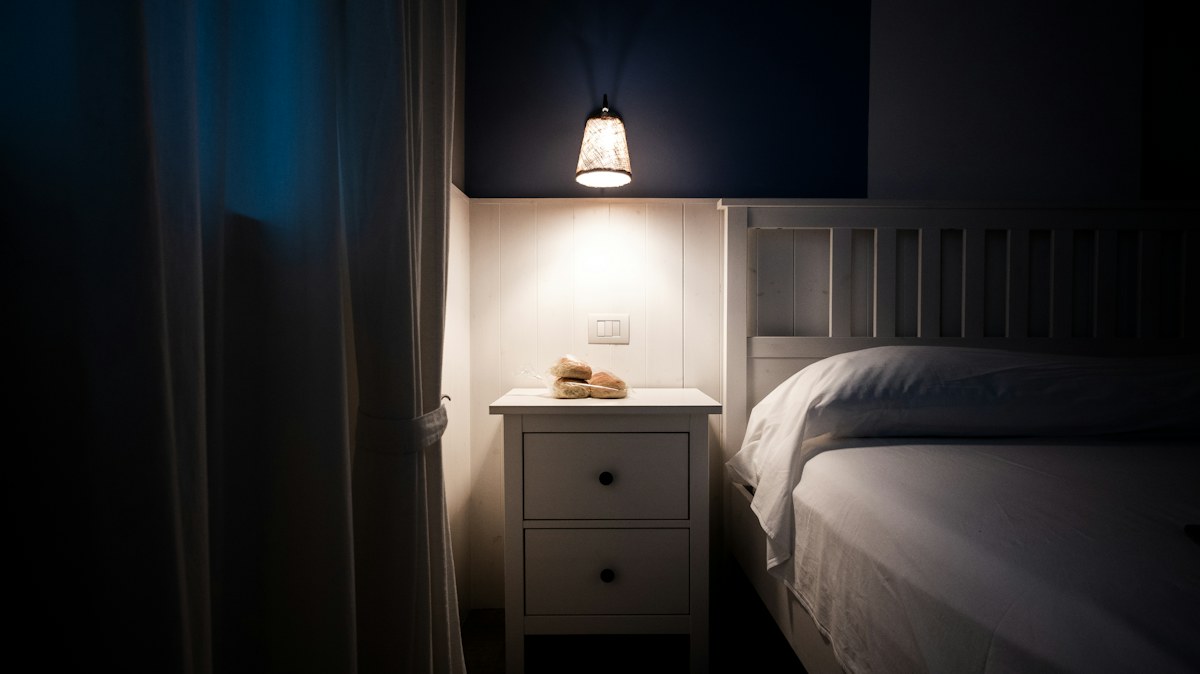
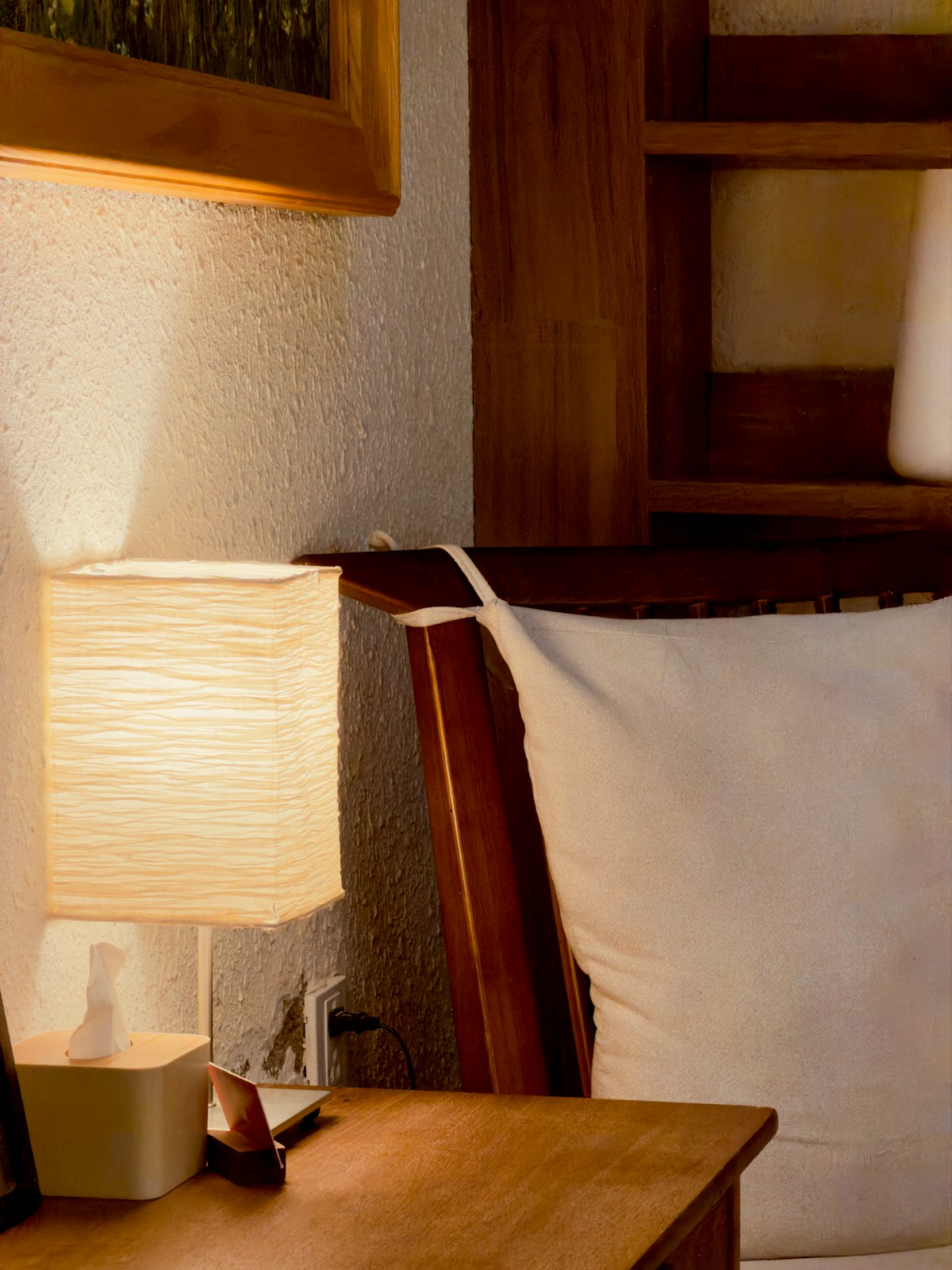
Put the objects that are meant to remain on top back in place. A lamp may need a suitable stable position with the clearances its maker requires. If you put down a cup, leave a flat area it can sit on safely away from electrical items and the edge. Keep the path for your hand clear. A good bedside surface can hold the few things you handle without turning into a place where you need to arrange everything before you can use the light. Try reaching for the switch before putting any other objects between it and you.
Look at cable routes with the drawer open and shut. Follow the instructions for any electrical items and keep cords away from pinch points and walking routes. Use a suitable power arrangement. Avoid charging devices in enclosed furniture or on textiles unless that use is supported by the product instructions. You may find the practical charging position is elsewhere, while the bedside area gives the device an appropriate place to wait when you are finished with it. Choose the route that keeps the drawer free and leaves the space around the bed open.
Pick a place for the object you will handle just before falling asleep. The closed book could move into a suitable part of the drawer if there is room to put it away without trying several orientations. Glasses can have a position where you can find them again when you wake up. Keep any medication or other items that require secure or specific storage in a suitable place according to their instructions, taking household access into account. The useful drawer should make the safe routine easy to remember.
Test the setup in the light you normally use
Get ready for bed on an ordinary evening. Turn the light down or off as you usually do and try reaching for the first item. Notice what you can recognize immediately. If a case or book has moved toward the back, give it a front position with a suitable stop. If two small items feel alike, give them distinct places so you can tell by where you reach. Try opening the drawer only as far as you normally do. An arrangement that needs the full extension may leave everyday items farther away than they appear.
Think about a shared room. A person who gets up earlier may want to put their objects away before somebody else goes to sleep. Put the items they use first in a suitable part of the room they can reach quietly. If both people use the same drawer, a clear place for each person's belongings can help avoid searching. Test the nightstand with both sides of the bed in their usual state. A setting that works with the covers pulled back may need a small change before it works at the end of a normal evening.
Look at how the path around the bed appears when you use the light you actually use after dark. Keep floor and doors clear, and move anything that projects from the nightstand into the walking route. Follow the care and use directions for any lighting. You should be able to put the last object away and leave the area ready for whoever gets up first. If you have to leave the drawer open to remember what is inside, give the most important object a position you can identify without seeing the entire drawer.
Check what is still on the surface in the morning
Look at the small collection that has stayed there after several nights. Some items belong on top and some are waiting because the drawer does not make room for them. Move one position at a time. If the book never reaches the drawer, try leaving a suitable clear place where you already put it. If the drawer is hard to use with the light low, give its most useful items a more distinct position rather than adding another tray.
A drawer can also hold an object you reach for before getting out of bed. Test that first morning movement separately. If you have to move last night's book before you find your glasses, give the two a little more distance from one another.
Keep the arrangement when you can get ready for bed, return the objects you handled and find what you need the next morning. A short open space beside a lamp and a few familiar places inside the drawer can do all of that. The routine should be easy to repeat at the hour when you have the least patience for putting things in order.