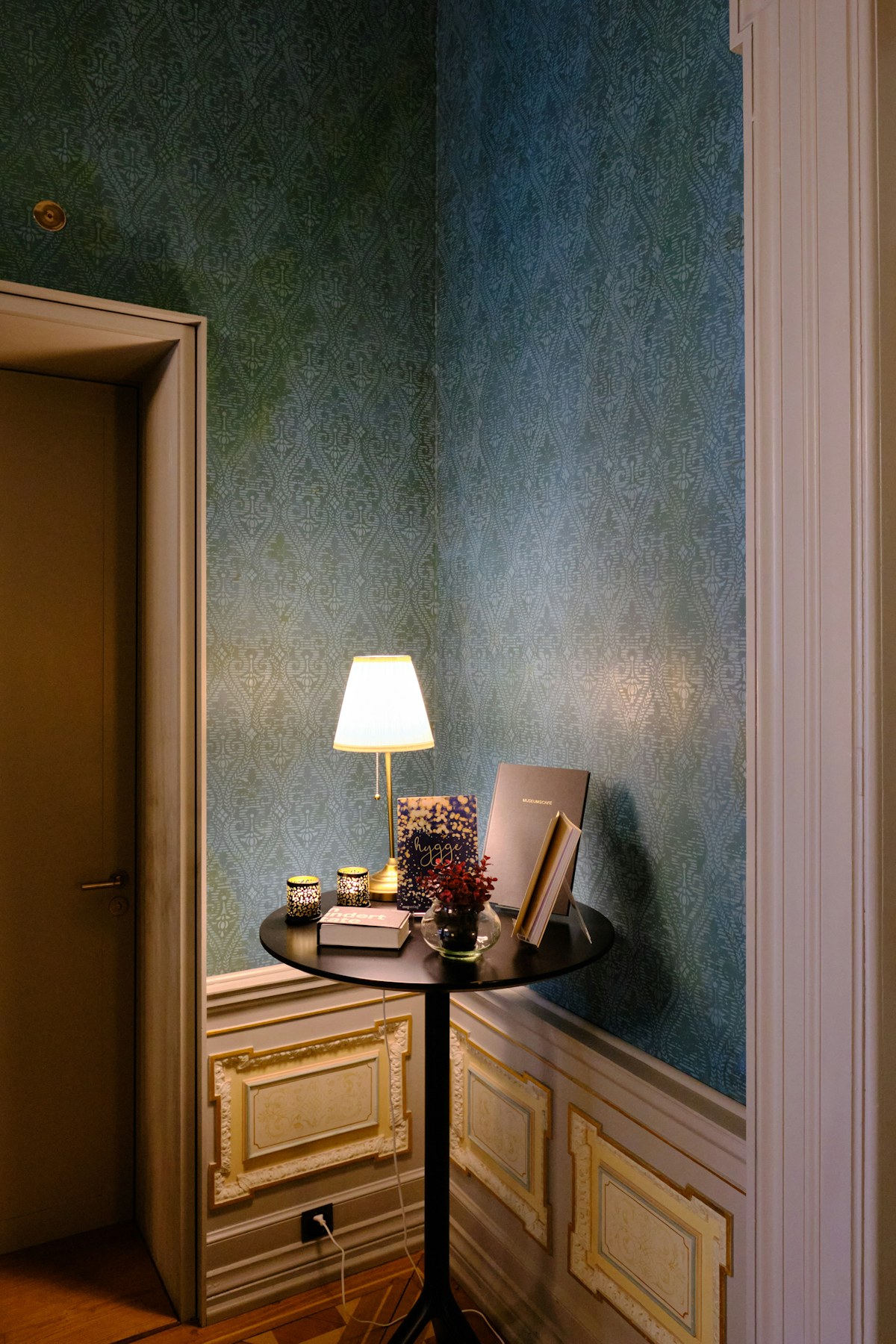
After dark a corner can look completely different from the same spot at noon. The chair beside a bright window loses its reason to be there. A book on the side table falls into shadow even though the rest of the room feels well lit. Turning on the overhead light solves that problem for a moment and can change the mood for everyone in the room. A lamp that lights one useful area gives the room another way to work. Start by looking at the place from the chair, with the lights you normally use at that time of night.
Watch what the light does from a seated position
Sit in the chair and notice what is visible at the height of your eyes. If you can see the bare bulb or a bright part inside the shade, shift the lamp or the chair to see whether the shade can block that view. Next, hold a book or a piece of paper in the position you naturally use. Check whether the pages are bright enough and whether your hand makes a shadow across them. A lamp can make a table look inviting and still put its useful light just beyond your lap.
Ask someone else to sit in the chair if you share the room. A taller person's line of sight may meet the bulb where yours passes below it. If the seat serves a person who uses the arm of the chair for support, make sure a lamp or side table leaves that space free. Walk through the room with the lamp on. The setup should feel comfortable from nearby chairs and leave the usual route clear. A good pool of light can be pleasant to look toward as well as sit in.
Move the lamp before looking for a different one
Try the lamp beside the chair, a little behind it, and slightly forward if the cord and furniture allow it. Put it on a sturdy surface large enough to support the base. Use the position of the shade as a clue to where the strongest light falls. An open-bottom shade might send more light toward a side table than toward your book. A lamp placed a little behind your shoulder can bring that light forward onto the page. The best side depends on which hand holds the page or a pen.
In a corner with a pale wall, turn the lamp slightly toward the wall if the design allows it. See how much of the light returns to the chair and how the reflected area looks from across the room. A dark wall may absorb enough that the same move gives you a much smaller effect. Try both positions while seated. The difference may be more noticeable on a page than in a photograph. Move the lamp back if the reflection is bright enough to distract somebody using a screen nearby.
Give the cord a place before giving the lamp a home
Locate the outlet and follow the cord's path before settling on a position. The cord should not cross a route you walk, run beneath a rug, or get pinched by a table or chair. Leave enough slack to use the lamp without pulling it toward the edge. Follow the instructions for the lamp and its intended power connection. If the lamp cannot reach a suitable outlet from the place you want to use it, try another nearby arrangement. Changing the furniture position is often the simplest option.
Check the switch as carefully as the cord. A switch on the lamp may be easy to reach while standing and frustrating from a low chair. A cord switch can disappear behind the table if you do not give it a consistent place. Walk toward the corner with the lamp off and see whether the switch is easy to find. If someone needs to reach it before sitting, leave the area around the table clear enough to approach. The best place for the lamp includes a position where it is easy to turn on at night.
Use the shade to make the light easier to live with
Look at the opening of the shade from the place where you sit. A shade that is higher on one side may reveal more of the bulb when it is tilted. A translucent shade sends light across more of the room, while a more opaque shade can direct it toward the openings. If you already have a compatible shade you can try, change it according to the lamp instructions with the lamp off and cool. Keep the shade and all nearby objects clear of the bulb as the manufacturer requires. Judge the result with the same bulb and placement first.
A textured shade may draw attention when the lamp is on, which can be pleasant in a bare corner. Check what it does to the light on paper. If the pattern makes a strong line across your reading area, aim the lamp elsewhere if that is possible or use the lamp for background light. Test surfaces around the corner as well. A shiny side table can reflect a small bright spot directly toward you. Move the lamp a little or give the table a matte surface you can remove and clean.
Compare a bulb with the rest of the room on
Choose a bulb compatible with the lamp and its dimmer, if it has one. Use the manufacturer's limits for the bulb type and power. Compare at the time of evening you expect to use it. In a room with a television, turn the screen on for the test. A lamp that feels mellow in an empty room may appear in the screen as a distinct reflection. Moving it sideways can help more than dimming it. A different direction can also leave the page bright enough without making the far wall feel busy.
Think about what the corner does on different evenings. On some days you might want to read a small typeface or work on a puzzle. On other days you may want a quiet light near someone watching a film. A compatible adjustable lamp can help if those jobs need different levels. A second lamp elsewhere can also give the room a lower background light so the reading corner feels less isolated. Try the combinations you are likely to use before replacing more than one thing.
Leave space on the table for the things you actually set down
Put a glass, book, or glasses case on the side table and check whether you can reach them without touching the shade or catching the cord. Place the lamp far enough back to use the front edge of the table, while keeping the whole base supported. A lamp with a large base may give a narrow table very little usable space. You can move the light to a nearby stable surface and leave the smaller table for what you use from the chair. A side table works best when setting down a cup is an easy movement.
Think about how you leave the corner in the morning. A stack of magazines may crowd the switch. A blanket tossed over the arm could end up too close to the lamp if the furniture is close together. Give the loose items somewhere clear to go and follow the lamp's instructions for the space it needs. Check that the table remains stable as you remove or return a book. After a few evenings, you will have a good idea of where the furniture wants to sit and where objects are most convenient.
Try the light on a dark evening and a bright one
A position chosen in the middle of winter may serve a different purpose in summer. Test the lamp once when there is still daylight outside and once when the window is dark. The glass can reflect a lamp more strongly after dark, particularly if the shade sits at the same height as the window. Shift the lamp sideways and see whether the reflection leaves the places people look. Closing a curtain can help when you would close it anyway. Leave the curtain the distance from the lamp its instructions require.
If you use the chair in daylight, keep the daytime arrangement useful too. A lamp can block part of the view or take up the only place that catches the sun. Try a position that stays out of the window's way during the day and still gives you enough light at night. Keep the route to the switch easy at both times. The right placement is one that does two jobs in the same corner without needing to be moved each afternoon.
Keep the changes that make you use the chair
Read or sit for fifteen minutes on a normal evening. See whether you stay in the position you expected or move to follow the light. When you get up, turn the lamp off and check whether you can still leave the corner easily in the light available. If the setup works, leave it alone for a few evenings before choosing a permanent accessory for the table. If one part still feels awkward, move that part and repeat the same test.
Make one last comparison from across the room. The lamp can give an otherwise dark area a visible place in the room and help the chair feel available. It can also let somebody read while the rest of the room stays pleasantly dim. The useful result is the combination you choose without thinking at the end of an ordinary day. If you settle into the chair and can see what you came there to do, the corner has enough light.