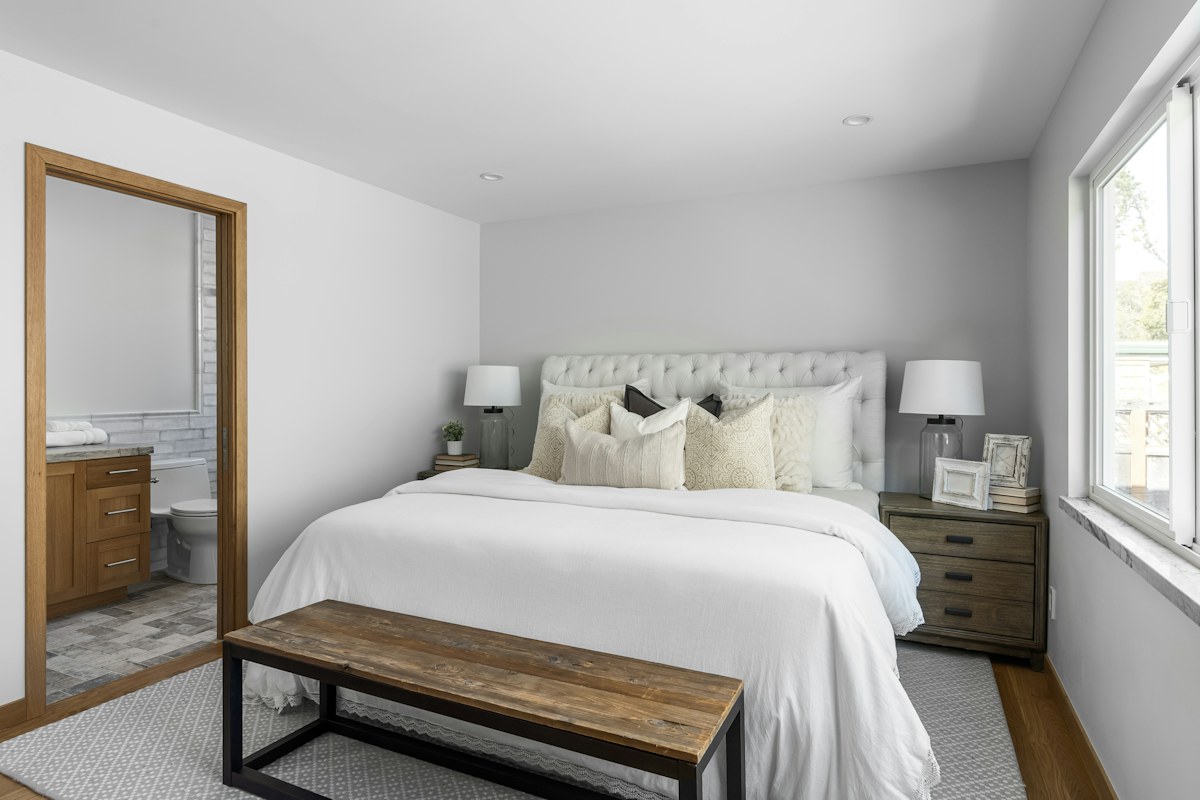
A bench at the foot of a bed can give you a seat for putting on shoes, a place to lay out clothes and a way to keep a bag off the covers. It can also use up the only route between the bed and a wardrobe. The easiest way to decide whether it belongs there is to act out a morning in the space. Make the bed, open the nearest drawer, and put down the bag or shoes that would usually arrive with you. The clear part of the floor has to hold these movements as well as the piece of furniture.
Look at the bed when it is made the way you actually leave it. A quilt that hangs down to the floor needs room behind the bench. A folded blanket that normally sits at the foot of the bed may move onto the bench, adding bulk to a place you intended to sit. Write down the one or two things you expect the bench to do most often. If its main job is to offer a seat, the space around your knees matters. If it will hold a travel bag once a month, the bag and the person reaching into it need a different test.
Find the space left after the drawers open
Take a measurement from the foot of the bed to the nearest fixed edge across from it. Then open the dresser and measure from the bed to the front of an open drawer. Take both readings where the drawer projects farthest. A bed frame with a footboard can be deeper near the floor than the mattress makes it appear. Measure to the point that matters where the legs of the bench would sit. Include the base of any furniture opposite. A low lip on a cabinet can take up a few inches even when the handle leaves plenty of room above it.
Put a laundry basket, flat box or paper outline where the proposed bench would stand. Keep it there during one ordinary trip to the wardrobe. Can you turn while holding clothes? Can you step around the corner without brushing the mattress? If two people use the room, try opening a drawer while somebody walks around the bed. Measure the clear part again after the movement. A bench that only fits with the drawer closed will ask you to change a daily habit. A shallower one or a position a little farther from the drawer might leave the room easier to share.
Check how the room behaves when you change the sheets. Someone usually needs to stand close to the foot of the mattress and reach across a corner. The bench can leave enough room for a hand and still be in the way of a person leaning forward. If the proposed piece has a light frame and is intended to be moved, think about where it can sit during this job. A larger bench with storage can be more awkward once it is full. You may prefer a position with a little breathing room on each end so the corners remain reachable without moving anything.
Match the seat to the use
A bench meant for sitting has to be comfortable at the moment you put weight on it. If you will use it for shoes, try a chair or stool at a similar height. Sit down with the shoes you actually wear and see where your feet and knees end up. Notice whether you want to lean forward or need a free hand. Choose seating intended for the load and use. Some pieces sold as luggage racks or decorative shelves may have a different purpose. Check the product instructions so you know what the top can safely hold and how it needs to rest on the floor.
For laying out clothes, seat depth may matter more than height. Fold a pair of trousers the way you normally do and measure how much of the top it needs. Place a sweater beside it and see whether there is still room for the piece of clothing you want to pick up first. A narrow bench can be useful when it simply gives tomorrow's clothes a stop. Think about whether you still need to sit down at the same time. A person preparing for work may appreciate a section of empty seat even if another part holds a shirt or a folded towel.
If the bench will be used with a bag, bring that bag into the room for a test. Measure it when open. Set it down on a suitable existing surface and notice where you stand to reach the inside pockets. A soft bag can spread beyond the usable width, while a rigid case can sit on small feet at its corners. The top should support the load as directed. A heavy case may be easier to pack on a lower purpose-built rack, especially if you would have to lift it from the floor several times. Give the regular daily use priority when you choose what will occupy the bedroom floor.
Compare an open frame and a storage seat
An open frame leaves the floor visible and can make a small room easier to inspect at a glance. You can also reach under it when cleaning if the legs leave enough clearance for your equipment. Look at what will actually accumulate beneath it. Shoes worn every morning may benefit from an open spot if there is enough space to slide them in without snagging a heel. A basket below should fit without projecting into the walking route. If a basket must come all the way out to open, test the extra distance in front of the bench before treating that space as permanent storage.
A bench with a lid or drawer can give blankets a home in a room short of cupboard space. Check where the lid moves and whether it clears the bed, wall and hanging covers. A drawer opening toward the dresser needs clear floor in the same area you use to dress. Measure with both pieces open if that is likely to happen. Test the lid or drawer as the maker directs, including any hardware meant to support movement. You should be able to reach the inside without balancing on the bed or holding a heavy top with one hand.
Make a trial pile of the items you hope to keep inside. It might be one spare blanket and a pair of pillowcases, which fit without much sorting. If the pile consists of several different kinds of clothing, decide which items you expect to reach every week. Put them where they can come out without disturbing everything else. Keep enough space around the hinge or drawer mechanism for it to work as intended. If your household includes small children, check the maker's safety information and choose a product and location appropriate for the room.
Give the fabric and frame a place in the room
A bench can sit almost flush with the end of a wide bed or leave a visible gap on each side. Choose a width that follows the furniture and preserves your routes. A piece that projects beyond the side of the frame can take up space you use every time you walk around the mattress. If the bed has an upholstered footboard, leave space for both pieces so they do not rub. In a bedroom where sunlight reaches the foot of the bed, see how a finish looks in daylight as well as under a lamp. The other pieces in the room give you the most useful comparison.
A cushioned top may be comfortable for a seat that gets used every day. Look at the maker's care directions if the bench will regularly hold a bag, shoes or folded laundry. A wipeable surface can be easier to keep clean after travel, while a textile seat can make a short dressing routine more comfortable. You can put shoes on while sitting on a bench and still leave the shoes on the floor. If the floor is often damp or dusty when you come in, choose a route that gets outdoor items out of the bedroom before they reach the bench.
Check how much of the top stays clear
Keep the first arrangement simple for a week. Lay out clothes the way you intended, sit down to put on shoes and leave the room ready for the evening. Notice whether the bench spends most of the time full. If it has become a place for everything you remove from your pockets, another stop closer to the door may be useful. If clothing remains there all week, give the particular garment a destination that is easy to reach. The bench should have some room available when you return the next day.
Try the room on a laundry day as well as a weekday morning. If you regularly have to move the bench to reach the bed and there is no good place for it to go, a narrower seat or a different location may work better. There may be enough space beside the wardrobe even if the end of the bed is too tight. When the fit is right, the bench takes care of its one or two jobs and leaves space for the other things the room needs to do. The clear route you measured at the start is the part worth keeping.