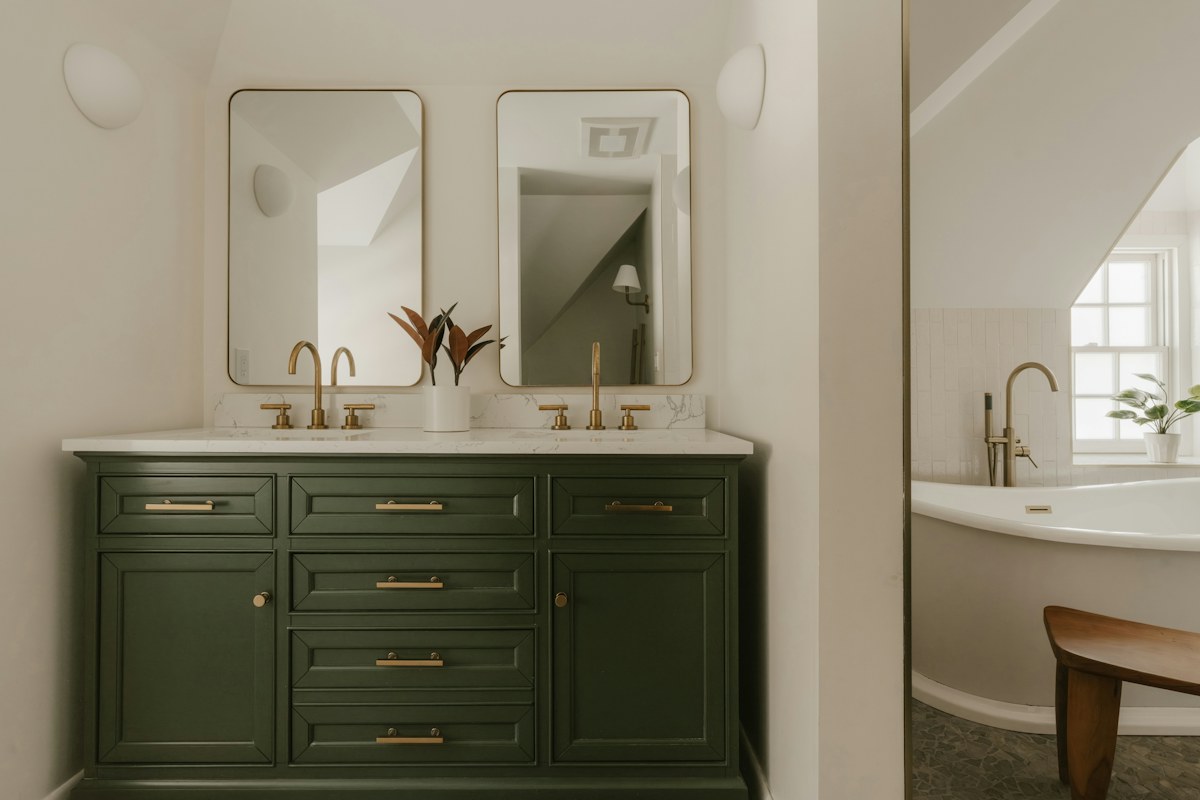
The deepest drawer in a bathroom can be the hardest one to use. It may have a cutout for the sink, space behind an oddly placed bottle and a strip at the front that collects the things you meant to put away. From above you see the caps. What matters in the morning is whether you can pick up the right item with one hand and close the drawer behind you. You can improve that movement with fewer changes than a photograph of an empty vanity suggests.
Take out one familiar item, use it at the sink and try returning it as you usually would. A jar might be easy to reach but need a second hand to settle into a tall holder. A comb may fall between two objects every time you close the drawer. Leave a few things in their ordinary positions before you empty anything. The sequence tells you which section should work without thinking and which can handle items you only reach for once in a while.
Look at the sink and drawer together
Open the drawer as far as it is designed to move and see what becomes visible. Some drawers wrap around the plumbing, with two deep sides and a shallow central strip. A cabinet may have more height at the front than it does behind a pipe. Measure the space left when the drawer or doors are open. Then measure the usable inside height, including anything that may project down from the sink. Use the maker's instructions for what can be stored and what needs service access. Leave the fittings reachable and check for any signs that the area needs attention before you put belongings there.
Try the tallest bottle on the side where it would actually live. Move the drawer slowly and see whether the bottle clears the opening and remains upright. Use an empty bottle for the first trial if the one you normally use is full. Something might fit in the open drawer and still be too tall to pass under the cabinet. Check the back, especially if the storage under the sink is shaped around fixed parts. Leave enough room to lift a cap or grip a handle. A bottle that has to go in at a particular angle may be more trouble than the small space it saves.
Line up the things you expect to use in the same part of the morning. Note how many fit into the front section without crowding. If the drawer is deep and you keep only short objects in it, the useful space may be the floor of the drawer. A low washable tray can let small pieces travel together. A taller divider can obscure what you want to see, especially when you stand close to the sink. Start with an object you can clean and remove easily. The odd shape of the available floor is often more important than the total number of compartments.
Give each person an obvious first reach
In a shared vanity, ask which objects belong to the same person and which are genuinely shared. A pair of low trays can give each person a place for daily items without assigning half the drawer to every product. Set the trays where the people can reach them from their usual sides. A larger drawer can offer one good location near the center and one narrow area near the wall. If somebody uses only a few objects, the narrow area may work perfectly for them. Decide by trying the approach from the actual standing position.
Use a separate place for spare products. A second unopened bottle can be helpful, but it can also occupy the spot where you want the current bottle to go every morning. Leave the current bottle nearest the front and put the spare where you can check whether it exists before shopping. Keep products in their original packaging or with their labels where needed and store them as directed. Household cleaners, medicines and anything requiring controlled or secure storage need a suitable place of their own, with manufacturer guidance and household access in mind. The shared drawer can be reserved for things that belong in the routine.
If the drawer holds more than one person's items, check what happens during the overlap. A person at the sink may block the other person's only way to reach the open drawer. Put the things someone needs during that overlap in a place they can reach beforehand, perhaps in a small removable tray. Move it to a suitable spot before getting ready and return it when the sink is free. This can keep the drawer simple even when it serves several people and the room is too small to share comfortably.
Fit the storage to the way each object is handled
Place a few sample objects in an open shallow tray. Reach into it without turning it toward you. Can you find a hair tie beside a comb by touch? Will you be able to lift a low tube if it falls flat? If a small object keeps dropping to the bottom of a bin, give it a shallower spot. For taller items, an appropriately sized holder can keep them upright. Choose a tray or bin whose footprint suits the part of the drawer you measured. Containers that leave a narrow unusable gap around the plumbing may waste more room than they save.
Listen as the drawer moves. A bottle that rolls into the side with every close will eventually land somewhere you did not intend. A liner compatible with the drawer or a stable tray can help keep objects in place. Follow care instructions and avoid covering anything the vanity maker says should remain exposed. If the liner gets damp or curls, take it out and deal with the cause. Leave enough space to see the bottom around items that might leak. A container that can be lifted and washed makes it easier to return the drawer to use after a spill.
Pick a small spot for tools that have to be put down between uses. A comb or hair clip may need to be reachable before you want to return it to the drawer. A designated corner of the counter or a shallow dish can help keep that movement separate from storage. Use an appropriate dry place for electrical items and handle and store them according to their instructions. Let the drawer handle the objects it can safely take at the end of the routine. The area near the sink can remain easy to wipe down after the last thing is put away.
Keep the cabinet easy to inspect
When you restock, pull out one tray at a time. Look at the condition of the packages, check their dates or use instructions as applicable and set aside what no longer belongs there. A bulky basket that must be unloaded to see the floor behind it may not be a good fit for this area. Make sure you can inspect around plumbing without taking everything out. If the cabinet is frequently damp, look for the reason and ask the appropriate person to check it before treating the space as storage. Water can collect unnoticed behind a neatly lined row of bottles.
A dry spare towel can sometimes fit in a vanity, depending on conditions. Fold one the way you normally would and see how much space it leaves for the items you reach for first. Put it where you can take it out without dragging it against other supplies. If the vanity is the best place for daily things and a poor place for textiles, give towels a suitable spot elsewhere. A small bathroom can borrow storage from another room for items that are retrieved once in a while. The drawer should be most helpful during the time you spend standing directly in front of it.
Leave space for a replacement package in the places where the shape often changes. The new tube may be taller than the last one or have a cap that makes it lie down. You can keep the organizing flexible by giving the item a place with room to move. A little leftover space in a tray makes it easier to wipe and restore. If the drawer needs every object to be the same size as the one before it, it may be simpler to combine a few into a broader group.
Check the morning the cabinet is supposed to improve
Open the drawer halfway through a busy morning and see what is waiting on the counter. If you repeatedly leave one object out because its tray is in the back, give it a closer place. If the arrangement makes sense when you are alone but fails when someone else comes in, move one person's first items to a side they can reach. A different layout can be tested with an empty container for a day before you commit the whole drawer to it.
At the end of the week, count the objects you can reach and return in one move. Then look at how much space the drawer has to absorb the next delivery or a product someone starts using. The spare area may look ordinary from above. It leaves you room to lift a tray, see underneath it and put a new bottle down without moving three others. That is useful space even when it stays empty most of the time.