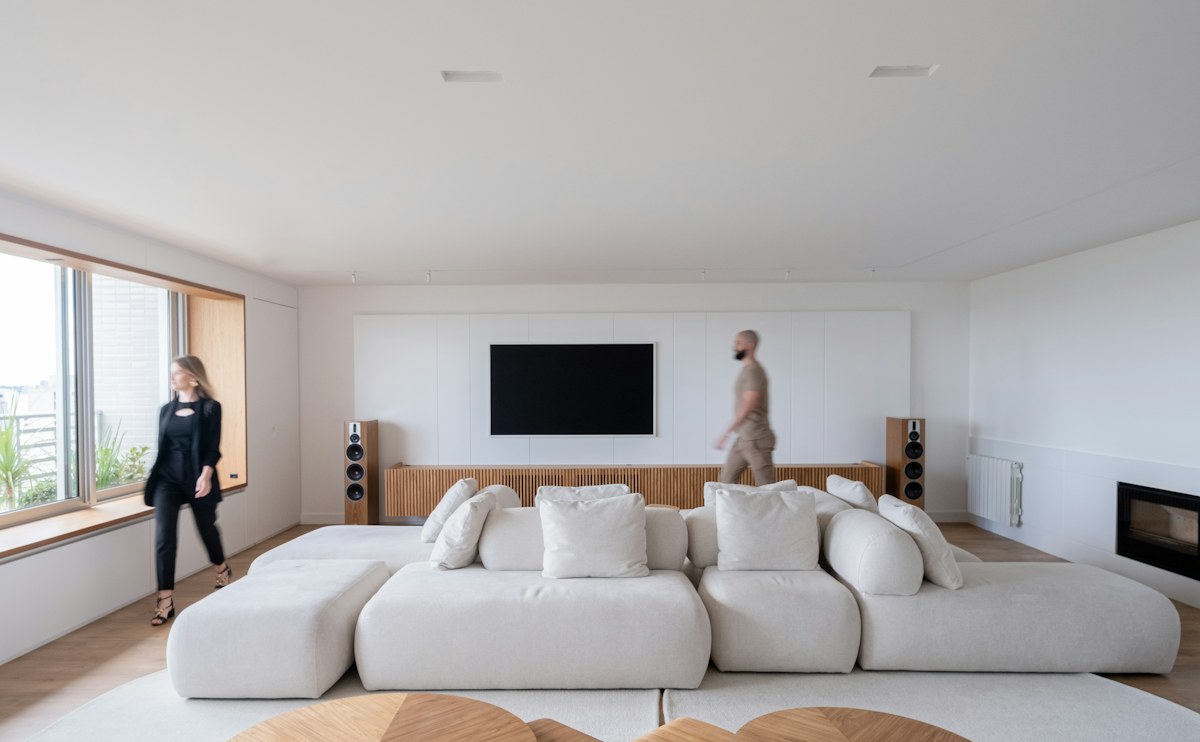
A modular sofa may appear to solve several living room problems at once. You can put the long part by the window, move an end piece for a visitor and turn two chairs into a wider seat for a movie. But the arrangement you see in a showroom may occupy a very different patch of floor from the one you will use at home. Before looking at colors, draw the modules separately and put them where the room actually needs them. The pieces should make sense in at least one arrangement that works every day and another you would genuinely want to use.
Write down what happens in the room on two ordinary evenings. On one, you might watch a screen while someone reads. On the other, four people might want to face one another. Decide which seats need a good view, which person has to get up first and where you want a route to remain open. A sofa that handles both evenings in the same configuration may be all you need. If you would change a piece, find out which one and where it would go. Extra flexibility is worth having when you can describe a time you would use it.
Measure the pieces individually
Get the maker's dimensions for each component, including arms and any hardware that projects. A corner, armless center and end unit may differ in depth even if the seat cushions line up. Check the outside measurements and the seating measurements separately. The usable width of a broad arm can be zero for sitting, though the arm still takes up floor. An end piece might come in a left and right version. Confirm the direction in the maker's terminology so the arm arrives on the side you planned.
Draw the furniture around the room on paper or use separate floor outlines. For the everyday layout, place each unit in its proposed position. Include the back and any air gap the maker recommends. Put the existing coffee table in place. Try standing in the space where the sofa would end and walking around the table. You should have a clear route to each seat and to the rest of the room. Keep doorways, windows you need to access, heating equipment and vents clear as appropriate. Pay attention to where the sofa reaches into the path, especially near a corner that looks open on a flat plan.
Measure the screen view or focal point from the main seats. A person at the far end of a long sofa may have to turn farther than you expect. In a conversation layout, see whether the people who use the ends can see one another comfortably. Use actual chairs to sit where the key positions would be. Their heights can be approximate for the first check. See where you would put down a cup or reach for a book. If the only useful spot for a lamp is between two modules you expect to move, you may need a different place for the lamp as well as the seats.
Find the second arrangement that is worth using
Leave the first outline in place while you sketch another. Which unit needs to move? Can it travel through the room without going over a table or rug edge? When it reaches the new position, does it still have the support, back or arm it was designed to use? Some units are intended to work only when connected to specific pieces. Read the instructions before planning to turn a middle unit into a freestanding chair. Check whether each configuration is supported and what you have to do to secure it. A piece that can physically separate may still be intended to remain attached during use.
Imagine that a visitor arrives while the room is in the first arrangement. Try the order of the change with empty cardboard footprints. Does the table need to move before the unit can turn? Will that table occupy the only route out while you work? If an armless piece needs to move through a tight passage, check its diagonal as well as its width. Consider the handling guidance and weight of the actual units. You might decide the second configuration is a weekend change when two people are around. That can still be useful if the first one works on its own.
Choose an extra piece only when it has a suitable place between changes. An ottoman can sit in front of one seat most days and travel to the side for visitors. A large corner seat may need to stay attached for its intended use. A separate seat might offer more room to change the layout if the modules you are considering are heavy or connect with hardware that takes time to adjust. Look at the problem the movable piece solves. If it usually gives one person a place to sit near the window, compare the effort of moving it to the space a separate chair would take up.
Check the route from the delivery door
A group of modules can reach a room that a long one-piece sofa cannot, but check each packed component individually. Ask for packaging and unpacked dimensions as relevant to the seller's delivery process. Measure the building entrance, any stairs or lifts, the apartment door and the turns between them. Take the usable opening inside the frame. Note handrails, low ceilings and other fixed features that affect a turn. Ask the seller or delivery team what they require and confirm any building access rules before ordering.
Think through the path inside the room too. The modules may need to be set down before being connected. Clear a suitable floor area for that step and keep access to the assembly points. If the instructions call for two people, plan the setup accordingly. Some connecting hardware may be accessible only from the side or below, so check the sequence. It can be easier to place the first pieces near the far wall and connect the rest in the order described. Follow the maker's handling and assembly instructions for every arrangement. Furniture that needs moving should be unloaded and moved safely as directed.
After placing the pieces, check that the floor is suitable and the sofa is stable, and confirm the connections according to the instructions before anybody uses it. An uneven area can make components sit differently. If a module shifts or the connector appears damaged, check the instructions and seek help from the manufacturer or supplier. Keep any assembly tools or instructions for a future reconfiguration. The small details that make an arrangement safe to use can be easier to look up while the model information is still in front of you.
Choose a finish that still works when the pieces move
Look at which sides of the sofa will be exposed in each position. A joint you rarely see against a wall can be in full view when a piece becomes an end. Check that the maker finishes the exposed surfaces in the configurations you want. If you plan to add a piece later, find out how the model and covers are sold. A name or fabric can change over time, and two orders made at different times can look a little different. A deliberately different accent piece may suit a plan that does not require an exact match.
Check fabric samples in the room if available. Light at the window end can make a shade look different from the same sample at the opposite end. See where the usual person sits and what contacts the fabric. An arm under a window may see more sunlight, and an end near the door may be used for bags. Check the care guidance for the material and whether covers can be removed as directed. A finish is useful when it fits the traffic and care you expect, with enough room around the furniture to reach the places you need to clean.
Leave the cushions and accessories simple until you see how people sit. A deep corner can benefit from a cushion if that helps the person using it reach the back. A movable footstool can work well when it has a clear resting place. Several large cushions in a short seat can make the useful width smaller. Test how the seat feels before deciding which extras will live there. If you can, sit in a similar model with the people who will regularly use it and compare how they stand up and reach the arms or nearest table.
Keep the arrangement that makes the room easiest to share
Live with the primary layout before trying to improve it. Look at which routes people actually take and where they put an extra chair when company comes. Try the second supported arrangement once you have a reason to use it. Keep the instructions handy and ask for help with the movement if needed. If the second layout takes more effort than you expected, you can let the first stay and use a smaller movable piece to solve the occasional problem.
When the sofa suits the room, the people who use it should be able to reach a seat, see what they came to see and leave comfortably. The modules you bought for flexibility will have a practical place in the everyday setup as well as in the occasional one. Measuring each unit before you order gives you the freedom to choose the combination that fits both, or to buy fewer pieces and keep a good path through the room.