The useful moment in a linen closet comes when you open it with an armful of bedding already in your hands. You may need to find one fitted sheet and two pillowcases without setting the rest of the load on the floor. If the sheets are divided by color and the pillowcases are piled together at the top, you can spend longer gathering the set than putting it on the bed. A different arrangement starts with a particular change. Think of the bed or bathroom you are going to and what you will need when you get there. Put the group somewhere it can leave together.
Choose the three linen trips that happen most often. They might be making the main bed, changing hand towels after cleaning and putting out a guest set. Write down the items for each trip. Include the things you often forget. The small towel you have to go back for may deserve the easiest position, even if it takes up very little space. Give the main shelf to the trips that come up most often and the ones you want to finish quickly. A rarely used tablecloth can occupy a less accessible shelf without interfering.
Bundle what travels to the same bed
Spread one ordinary set out where you can see it. Decide which pieces you need together and how you can identify the size later. A folded pillowcase can hold a matched set if the other pieces fit comfortably and the bundle is easy to lift. A row of folded sheets beside the cases can work just as well when the shelf depth allows it. The set only needs to come away with the right pieces. Choose a fold you can repeat without taking time to match corners that won't matter inside the cupboard.
If beds in the home use several sizes, give each size a recognizable location. A shelf label is useful when a person putting clean laundry away can see it with both hands full. Consider writing the room name as well as the size if that is how the household remembers the sets. If rooms or beds change use, a removable label lets you make the next assignment without replacing the shelf or bin. Keep sets that look alike far enough apart that you can reach one without pulling the other out.
Notice the size of a complete set when you lift it. A large fitted sheet may make a bundle bulky, especially with thick fabric. You can put the sheet beside its cases and leave a visible division between sets. Try taking out the lower bundle while the others stay where they are. A low stack of two can be easier to handle than a tall one you have to lift with both arms. If several complete sets are regularly in use, give each stack enough height and space to come out safely. A little room above can matter more than one extra bundle at the back.
Give towels a route to the places they get used
Separate the towels you reach for after a shower from the towels you put down at a sink. They can share the same shelf if the smaller towels are easy to see and each stack can be reached without knocking the other over. Look at where someone would stand with a towel in their hand. The person who opens the door in a hurry may be able to identify one row from the front. A shallow stack or open container near that position can make it easier to take a towel without pulling down anything else.
Choose a practical place for towels that go out as a group. A guest towel, hand towel and washcloth can wait as one set if those are the pieces you normally put out. For regular bathroom use, it may be easier to keep the larger towels separately and replace the smaller ones more often. Check which pieces are carried during a normal clean. The replacement pieces can live together even if their folding styles are different. Choose the size of container after you make the usual pile and see what it needs.
Return linens to the closet only when they are clean and fully dry. Follow the textile care instructions and leave room to look at the shelf surfaces when you put things away. A section that is regularly damp or has an unexplained smell needs attention before you use it for storage. Ask the relevant owner or professional to investigate if needed. Keep used or damp towels in their appropriate laundry area. In a small room, the linen closet can be the convenient place for fresh towels while the laundry has a separate path.
Use the shape of each shelf
Look at the shelf from the front and compare what fits with what you can actually reach. A deep shelf may let you put two rows behind each other, but you will still have to move the front row to reach the back. Reserve that back position for an item you use infrequently and can identify. If a set in the back is used every week, move it forward. Choose lighter things for any shelf above a comfortable reach, and follow the shelf maker's limits. A bulky spare quilt can be easier to handle at a reachable level than on the highest shelf.
Fold one towel or set to suit the shelf depth. It can be easier to put the folded edge facing out so the stack holds its form as you pull one piece free. If an item extends past the edge, change its fold or use another shelf. Test the stack when several things are on it. A fold that fits one towel perfectly can be awkward when five have to sit without leaning. You can choose a different arrangement for oversized towels, perhaps folding them on a broader shelf where they need fewer turns.
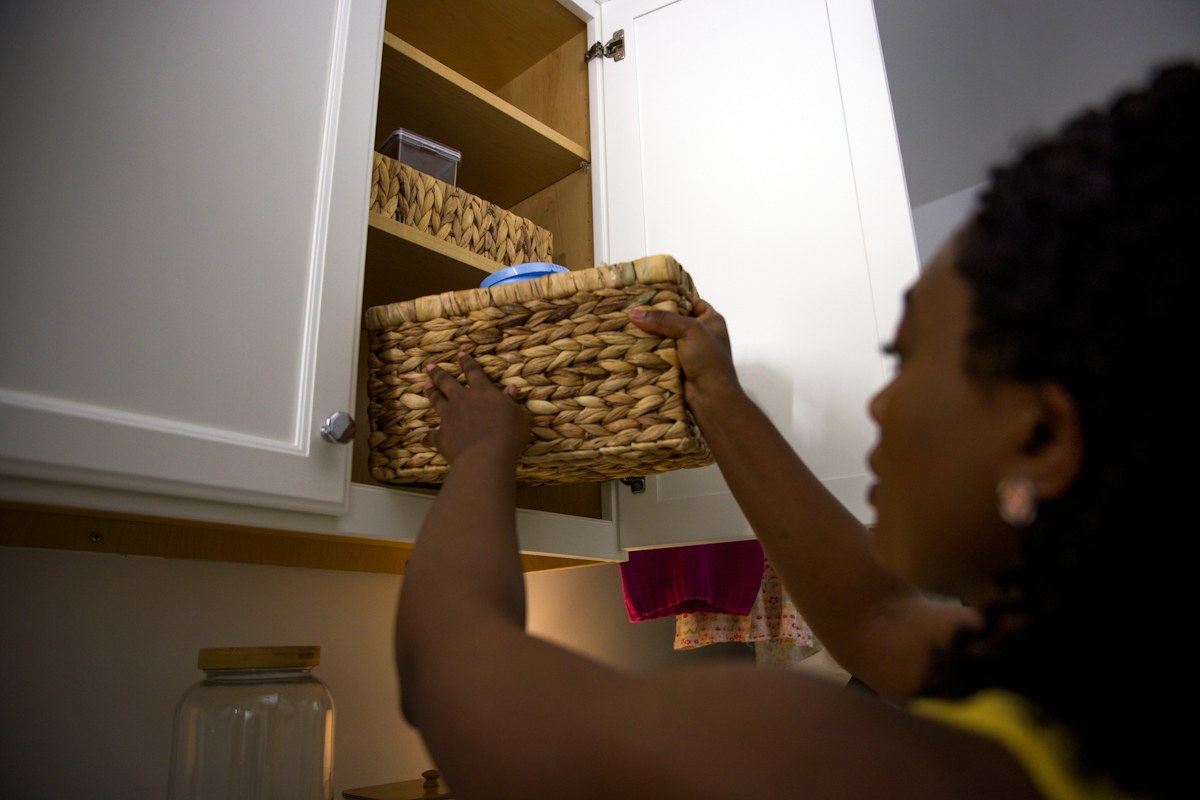
Watch the door when a basket sits near the front. A handle can catch on a closet frame or push into a nearby stack. Select a basket only if it can come out without tilting into another shelf. A suitable tray or bin can help when small cloths repeatedly fall into the gap behind a stack. If the bin is used every day, make sure the opening is easy to reach without removing its lid and pulling it out. In a crowded closet, a short stack that stays put can use the area better than a large organizer with inaccessible handles.
Give clean laundry a predictable place to return
Use the space left after the everyday shelves are set for spares and occasional linens. A labeled spot for the next clean set can be close to where a laundry basket arrives. If clean sheets spend several days in a basket because it is unclear which bed they fit, the shelf labels can help more than adding storage. Put matching pillowcases with the rest of their set as you fold. That saves you from sorting again in the closet. Leave a little room for the set that is on the bed now to return after its next wash.
A shelf that is always at capacity can require you to shift an item every time a towel comes home. Look at the pieces that rarely leave. Some may belong in a different room, and some may be kept for occasional use. Give the occasional pieces a suitable spot that does not occupy the easiest shelf. If you need a spare set for one bed, put it where another household member can find it. Extras help when you know which bed they belong to and can reach them at the time you need them.
Think about what happens when more than one person puts things away. A name on each shelf can describe the trip rather than the fabric. A lower shelf might be marked for the hall bathroom, with a separate stack for hand towels. Test whether somebody unfamiliar with the arrangement can find a set and return it in the same place. If the label needs three explanations, try a simpler group. The cupboard can stay useful as colors and fabrics change if the destinations remain clear.
Time one complete change
Carry a basket to the closet and gather everything for one bed. Take it to the room without going back for a missing piece. Then see whether the cupboard is ready for the next person. Straighten only the stack you used and check how easy it will be to return the clean set. If you had to reach behind a full pile or hold two sets to retrieve one, change the position of that item. If a stack fits in the morning and collapses after several people use it, reduce its height or give it a broader surface.
A linen closet can serve different parts of the home with very few visible labels. Keep the sets in the places that make sense on the way out, and leave enough space for the next wash to come back. When the closet gives you the right pieces in one trip, you can close the door and get on with making the bed.