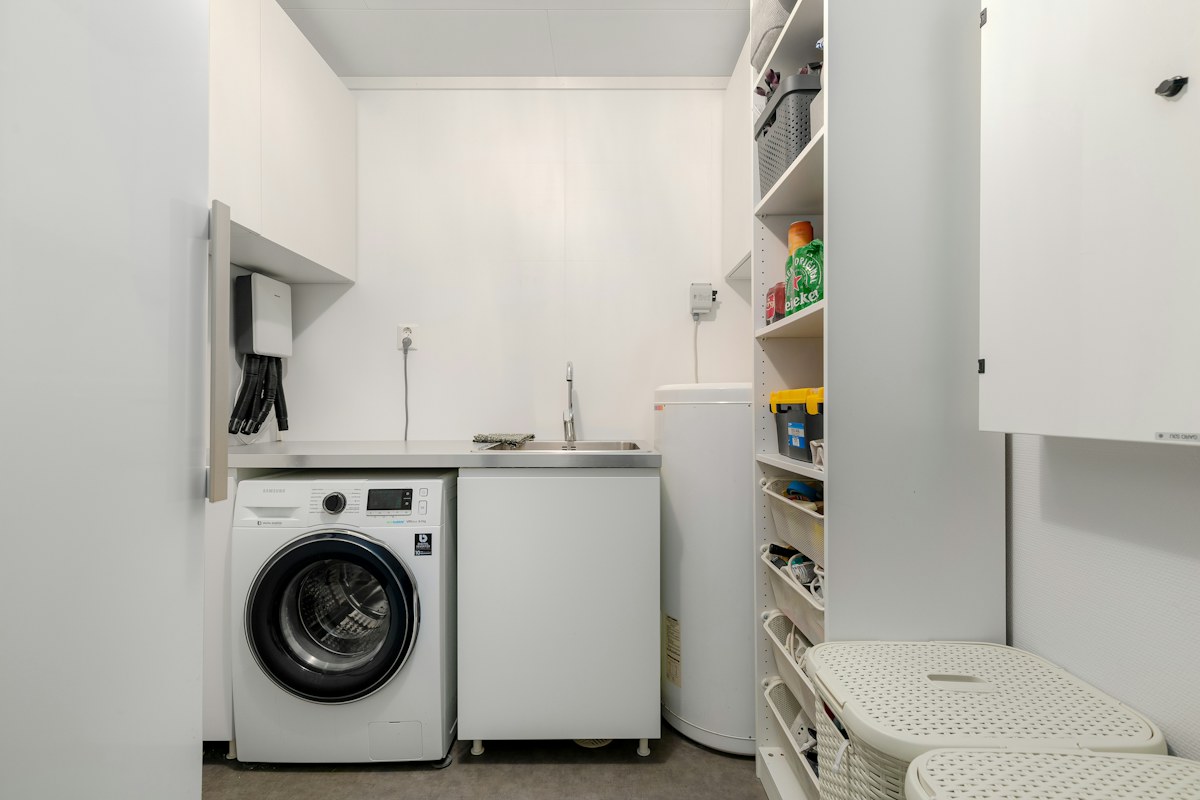
A shelf above the washer seems to put everything within reach. Once the lid is open or a basket is on the floor, that can change. The bottle may be too far back to grip with one hand. The measuring cup may be in a different room because it was waiting to dry. Spare supplies may be easy to see and the bottle you use for most loads may be wedged against them. Laundry storage works best when it supports the order of one load and can be checked without moving the machine or occupying the place where a basket needs to go.
Begin with a normal load, without buying anything or emptying the room. Notice what you reach for before opening the machine, what you need while the machine is open and what you need after the load leaves. Most of those objects should have an obvious position. If something takes you to the other side of the room, decide whether it needs to be closer or simply has a good reason to live somewhere else. One reachable section can be enough for daily supplies. The rest of the shelf can serve the occasional things within its safe use.
Look at the machines with their doors open
Take note of the space the lid or doors use in every normal position. Check the washer and dryer separately, as each can require a different amount of room. Look at the area you stand in while placing a load inside. The position you can reach safely from there may be lower or closer to the front than the shelf you can touch with the machine shut. Follow the manufacturer's installation and access requirements, including any clearance for ventilation and service. A shelf cannot be planned from the dimensions of the appliance alone.
Try taking an empty measuring container from the proposed shelf location, then put it back while the rest of the area is as it would be for a load. If you need to reach above a tall open lid, you may prefer a suitable shelf on an adjacent wall. An item that sits directly over the machine can be difficult to see from below. Move the everyday supplies to the side that is open to you. Give the lid or door room to move as designed without touching the storage above it. If a bottle has to pass over the opening each time, choose another route or another shelf position.
Think about the basket too. You may set it on the floor at one end and need to reach across it. Try the empty basket in that spot while someone opens the other machine or walks through. Keep the floor and required routes clear. A shelf that occupies a narrow corner can make it harder to reach both appliances if you have to move the basket every time you use it. A position that works from one side of the room can leave enough open space for somebody else to collect a different load.
Choose a place for the package you handle most
Keep products in suitable secure storage and follow their labels. Store laundry products, including detergent packets, where children and pets cannot reach them, as instructed. Keep them in their original packaging with their labels and closures. Plan the shelf or cabinet around those requirements first. An open shelf may be appropriate for a few tools, cloths or empty containers while products requiring secure storage live in a suitable place. That separation can still make the normal routine easy if the tools and supplies come together at the point where you need them.
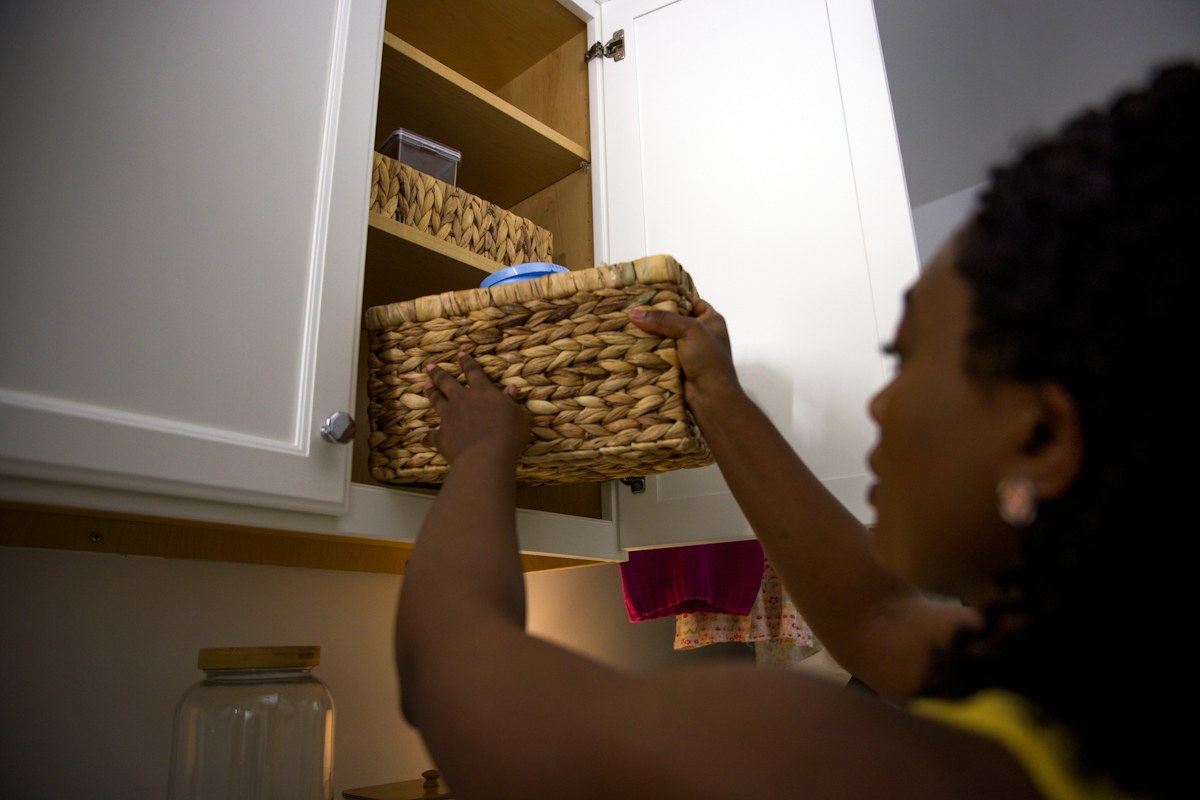
Look at the weight and shape of a product in use. A large refill bottle may be awkward to lift from high above your head. Keep it at a suitable reachable level and follow the storage guidance. Put the active product where you can grip it without touching the item next to it, and give spare packages a place that does not obscure it. A low tray might hold a measuring tool when it is dry and ready to put away. Check that it is suitable for the item and easy to clean. Look at what can safely remain on a shelf when the machine is operating.
Give labels a visible direction when you return packages. A person who uses the room once a week should be able to identify the one they need without moving the others. If several products look similar, use the original names on the packaging rather than decanting them into lookalike containers. The product instructions are part of the routine and need to stay available. Set aside time to check whether a package is damaged or leaking before adding a new one. Use the label guidance to handle it appropriately and keep the storage area easy to inspect.
Leave room for a small task that waits
A laundry area often has one item that does not leave with the rest of the load. A sock may have lost its pair, a garment may need mending, or a label may need checking. Give the waiting item a suitable place outside the ordinary basket. A shallow bin at a reachable position can hold light items briefly. Choose its size based on what waits and how often you deal with it. If it takes a full shelf, it may become difficult to see what belongs to a current load. Keep anything that needs special care or drying in a suitable separate position.
Put fresh cloths or empty tools in a position where they remain clean and dry. Notice which cloth you use for wiping the room and which is ready to go back into a load. A short divider or two simple places can make the difference obvious. Keep items away from vents and hot surfaces as required. Leave enough room for the machines and their surroundings to be checked and cleaned according to their instructions. A shelf that is easy to reach but impossible to clear can make ordinary upkeep take longer than it should.
If the shelf holds a spare supply, decide how you will know when it is time to replace it. One spare in a known place can make the next shopping decision easy. Several spare products in a deep row can hide what you already have. Arrange them so the older suitable package remains visible and check the storage directions for each. If something rarely gets used, choose an appropriate place away from the daily supplies. The area above or beside the machines can then serve the tasks that actually happen there.
Make sure the shelf itself suits the room
Check permission and the manufacturer's mounting, support and load instructions before installing or moving a shelf. Laundry areas can contain water, electrical and ventilation equipment. If you cannot confirm where an installation can safely be made or what the wall can support, ask the appropriate owner, installer or professional. Do not guess about hidden lines or fittings. You can use an existing suitable storage space or an approved freestanding unit while you check what is possible. Leave all required access, clearance and airflow available.
Compare the usable shelf depth with the items it will hold. A package should be fully supported and remain stable. A shallow shelf can be useful for a row of small items you can see from the front. A deeper one can hold a closed lightweight bin designed for the space if you can handle it safely. Follow the maker's limit and keep heavy or awkward objects in suitable lower storage. Do not rely on an open machine or its lid as a step or a supporting surface. A shelf at the right height lets you reach and return an item without borrowing another surface to stand on.
Check the shelf after putting the intended contents in place. Open the machines, see whether the doors and lids still move freely, and look for any obstruction to required service access. Follow the care directions for the furniture and appliances. If a shelf needs frequent wiping, see whether you can take a few things down without unloading everything. A short row with room to move can make it easier to notice a drip or other change. Keep the floor and the route to the controls visible while you do the check.
Run the next load with the arrangement in use
Bring in a normal basket and see what you reach for first. If the package you need lives in a good place but the tool for it always ends up elsewhere, give the tool a clearer stop. If the active bottle is easy to reach only when the spare has been moved, change the order of the storage. Keep the room's safety requirements while you adjust the position. Notice whether another household member can find the same things when they do a load.
Leave the shelf ready for the next visit. Put the supplies away according to their instructions, give any damp tools a suitable place and keep the access clear. The available space may be smaller than the wall suggested. It is enough if you can start a load, return what you handled and leave the machines ready to be used again.