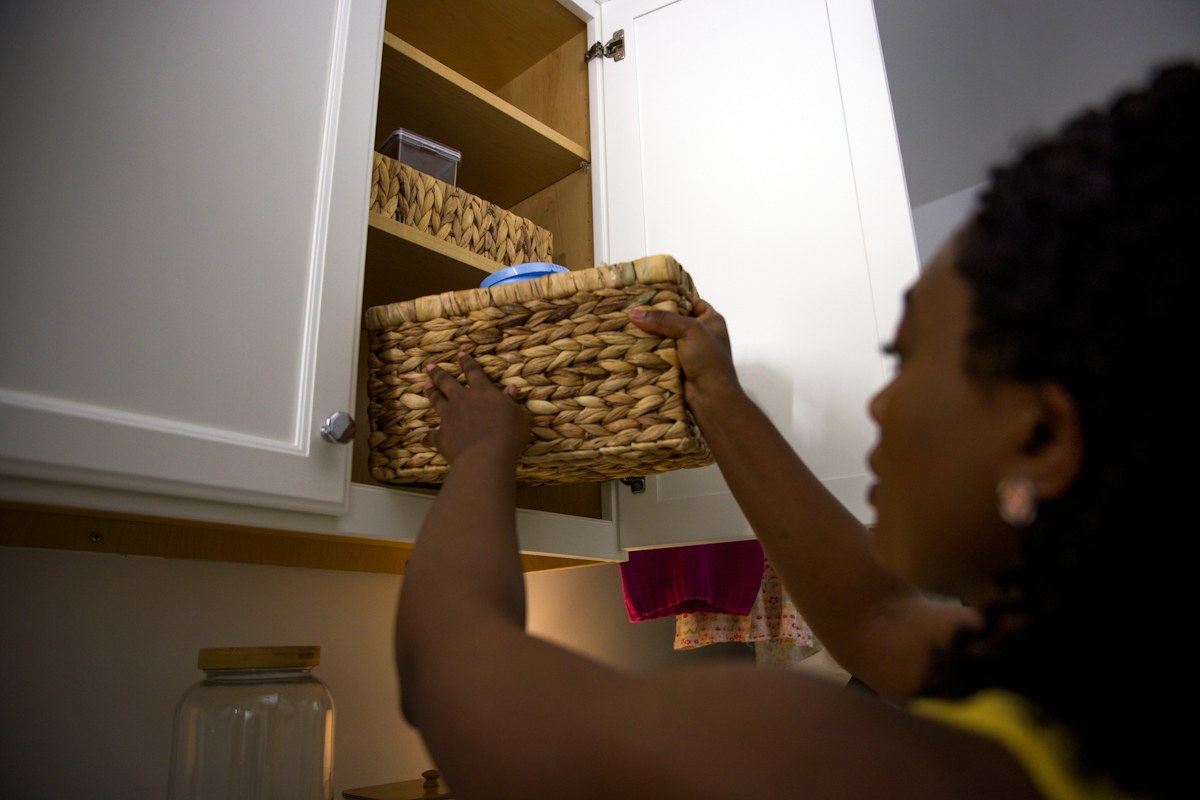
A basket can make a shared room easier to clear and harder to search. It can hold the book that belongs upstairs, a cable that belongs to somebody else and a small toy you mean to return before bedtime. After a few days you may have to empty the entire basket to find the one thing you put in it. The basket began as a place for objects in transit and quietly became a place where they stayed. It can do the first job well if there is a route out, a comfortable amount to carry and a regular time to empty it.
Look at the things that have arrived in the room today. Choose one or two that belong somewhere else and are safe to leave in this kind of temporary storage. Notice where you would naturally carry them next. A basket makes most sense when several things have roughly the same route. A book headed upstairs can travel with a folded cloth that goes to the same floor. A container filled with objects that go in six different directions may need a different plan. Keep the basket small enough that you can take it with you and actually finish the trip.
Give it one direction
Name the basket for the route, such as things to take upstairs or things that belong in the next room. Choose a clear position on the way out of the room that does not occupy the path itself. A basket on a stable suitable shelf near the doorway can be easier to remember than one behind a chair. Check that the shelf and position are suitable for the load and that the basket has room to come out. Avoid putting it on a step or where it can catch a door. It should be visible when you leave and remain out of the way while you are in the room.
Make the first test with the things that normally wait on one surface. Take an empty basket around with you once and put in the few suitable things that belong on the chosen route. Now take the route and put them away. This shows whether the basket is serving a real trip. If most objects belong in the same room as the basket, give them an appropriate home in that room. The basket can handle the smaller group that actually needs to leave. If the contents regularly include something another person will need shortly, agree on a position they know to check.
Decide what leaves by itself. An object that needs careful handling, prompt attention, secure storage or special conditions should go directly to its appropriate place. Keep liquids, food, breakable things and items requiring secure storage away from a general return basket. Choose the contents with children, pets and anyone using the room in mind. A basket can be useful for light, ordinary things without being the default for every object you find. If you cannot recognize where something belongs, set it in an appropriate place to identify it rather than making it part of the trip.
Choose the container after you know the load
Set a typical trip's worth of things on a table. Measure the area they occupy and see which item needs the most depth. A shallow basket lets you see small items without lifting several other things. A deeper one may fit a large lightweight object but make a short object hard to find. Try the shape with the few belongings you actually expect to use it for. A container that looks useful when it is empty can be awkward to carry when an object reaches the height of the handles.
Look at how you will lift it. A firm handle you can grip comfortably can make one small trip easy. A basket that needs both hands may be appropriate for a short route on one level, provided you can carry it safely as intended. If your route involves a door or stairs, think about how you will use the handle or handrail and choose a safe way to take the objects. Use a container meant for the load and avoid carrying anything that blocks your view. If the basket is difficult to move, you can use it as a short-term position from which you take one small object at a time instead.
Choose a material you can look after. A woven basket can work well for suitable dry objects if the surface and handles remain in good condition. Check the care instructions and look at the base before putting it on furniture. A rough edge can mark a finish or snag fabric. Leave room to take it out and clean around it. If you plan to use a liner, choose one that sits safely in the basket and can be cared for according to its instructions. The best version can return to its place without you having to arrange the handles or move something else first.
Decide how the basket empties
Connect the trip to something that already happens. You might take it when you go upstairs before dinner or empty it after the last person leaves the room at night. Choose a point when the route is clear and you can deal with what is inside. If you keep putting the trip off, the basket may be in the wrong place or it may hold more than you can deal with at once. Reduce the contents and try a shorter route. A basket meant to empty every evening does not need space for a week's collection.
In a shared room, decide how people can recognize the position. A small note may be enough, especially for children who can use it safely. Keep the description specific to the destination. “Upstairs” is easier to act on than “sort later.” Put things away when they reach the next room rather than leaving them in the basket there. If nobody has the time to make every stop at once, give each item a suitable destination as it leaves. The basket can make the first move easier and keep the last move visible.
Return the basket after the trip. Its empty place lets people use it again, and it gives you a useful picture of how often it needs to move. If one person tends to do all the trips, see whether the basket is positioned on a route somebody else can use when appropriate. You can give each person their own small section only if the arrangement remains simple to empty. A wider basket with several categories can turn one short trip into a sorting session. The contents are most useful when the person carrying them knows where they belong.
Keep one view of what is waiting
Look inside before putting an item on top of another. If the bottom has become hidden, make the next trip or move the contents to their appropriate positions. A place for temporary things loses its usefulness when nobody can see what is there. Use a simple container rather than adding small bins within it unless a particular lightweight item needs a suitable separate spot. Leave the items easy to lift and the load easy to see. The basket can be ready for another day as soon as it is empty.
Notice which objects keep returning. If the same book comes back every evening, decide whether it needs a place beside the seat where it is read. If a blanket is carried back and forth because it is used in both rooms, find a suitable place at the point where it usually waits. The basket shows you which objects are part of a routine, and some of those can earn their own permanent position. The basket can then carry fewer things and empty more easily.
Look at the furniture around it as the room changes. A basket tucked into a cabinet can become less reachable when a second piece is added. Check that the container stays fully supported and within the shelf's limit, and that the doors still move freely. If the return trip begins at a different time of day, move the basket only if the new place is safe and obvious to the people who use it. A familiar reachable spot is often enough to keep the whole arrangement easy to remember.
See what remains on a normal evening
Clear the room once in the way you would before going to bed or leaving for work. Put suitable objects in the basket only if you can say where they are going. Carry the load by the safe route you chose. Put the objects away and return the container. If the route takes longer than you expected, see which item stopped it and decide what should happen to that kind of object next time. Adjust one part of the routine while it is easy to see.
An empty basket at the end of the day is ready to do the same small job tomorrow. Leave it where you can set down an object without losing track of it. Keep the collection small enough that the next trip actually happens. The room stays easier to use when things can pass through it and continue on to the places they belong.