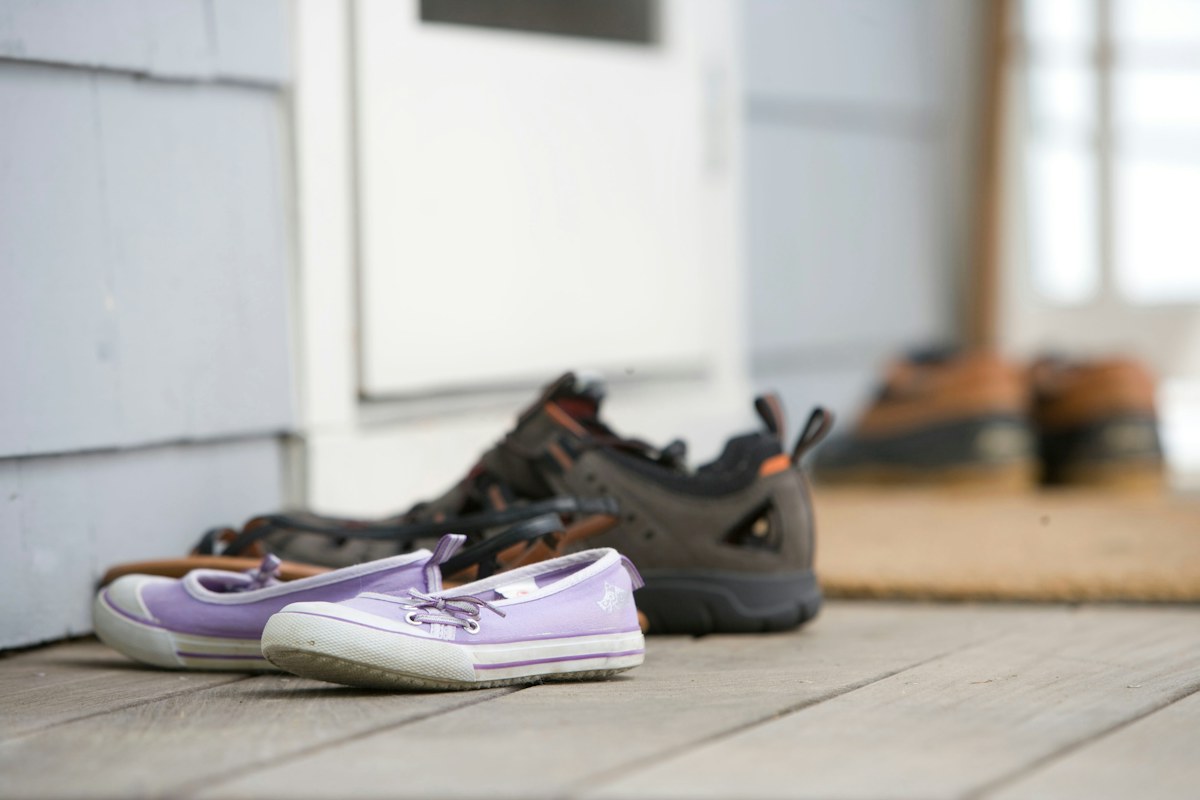
A pair of shoes can lie beside the front door all week because it belongs there. Another pair can stay in exactly the same place because nobody decided what to do with it after a walk in the rain. These shoes are using the floor for different reasons. Give the pair you wear tomorrow a place to wait and the wet pair somewhere suitable to dry. Then decide how much of the entry the shoes actually need. The smallest useful arrangement often begins with the ordinary act of taking one pair off.
Stand inside the door after a normal arrival. You may be holding a bag or wearing a coat that makes it hard to bend. See where you normally put your feet while taking the shoes off. If the floor nearby gets damp or gritty, notice which part needs cleaning afterward. A shallow tray can help contain dirt in one place if it fits the floor and remains clear of the route. A bench can help somebody sit comfortably if the space and product suit them. Choose around the particular movement that is difficult. More storage may leave that movement exactly as it was.
Draw a line between the arrival spot and the walking route
Open the front door as far as it needs to go. Stand where you pause when coming inside and look at the floor beyond you. Leave enough clear room to approach and open the door without shifting shoes. If another door opens into the same area, test both. Keep the access required for the building and household. A wall beside the door may be available for a small shoe area, but the floor directly in front of it is useful only if someone can reach it without stepping across another person's path.
Follow the route to the next room while carrying something bulky. Think about where you stop if another person is coming the other way. A mat that occupies the entire width can be fine if it is compatible with the floor, lies flat and does not interfere with doors. A tray rising above the floor needs a position away from the main path. Test a plain piece of paper in the proposed spot before choosing any accessory. Its outline shows whether a visible section of floor is really available once somebody stands there.
Look at the way the entry is used when more than one person arrives. Shoes can end up pointing into the hall because there is no place to turn after taking them off. Give people an easy direction to leave them. A short row parallel to the wall may need less floor than a cluster forming around the door. If the entrance is narrow, leave one place for the first person to stop and room farther along for the second to pass. You can then put only the everyday pairs at the position both people can reach.
Take a full pair into account
Measure the largest everyday pair in the position it will occupy. A boot can stick farther out than a trainer, and a shoe with a loose lace may need more clearance than its sole suggests. Put both shoes together and see where your hand will reach to pick them up. A storage space that holds one pair in theory may leave too little room for you to use it with the neighboring pair in place. Allow a small gap or use a suitable rack with openings that fit the actual shoes.
Give everyday shoes a position that can be reached without moving another item. A rack with a low shelf can help if the household takes shoes off while standing. A higher suitable shelf can make light items easier to reach for a person who prefers to sit. Follow the manufacturer's requirements for placement, assembly, securing and loading. A shelf under a bench only helps when the shoes clear the supports and the person using the seat can reach them safely. Leave the floor around the feet clear. If the only appropriate seat is in another part of the room, you can carry a dry pair there when needed.
Decide where tall or rarely worn shoes go. They might fit on another suitable shelf or in a closet with a separate place for daily pairs. A pair that only leaves the house once a month can give up the closest spot. Give your next pair priority even if it looks less tidy than matching shoes arranged by color. If you have two pairs in regular rotation, leave room to remove either one without shifting the other. You can add a place for visitor shoes if the space is there, and keep that position free in between.
Give a damp pair a short path to a suitable place
Check the care directions for the shoes you wear outside. Set a suitable washable tray or mat where you can deal with mud and moisture without crossing the hall. It should sit securely, remain clear of walking routes and work with the surface below it. Look at what happens when water reaches the edge. A tray that is large enough for boots might still put the boots partly over the side if you park them at an angle. Put it where you can lift, empty and clean it without carrying drips past another person's things.
Let shoes dry in an appropriate spot as directed for the materials. A closed crowded cabinet may be a poor place for a pair that has just come in wet. Keep shoes away from unsuitable heat or electrical equipment and keep the floor dry. If the practical drying spot is in a utility area, the entrance can serve as a brief stop where mud stays contained while you get settled. Move the pair to its drying spot once you can do that easily. A short routine may suit a small entrance better than a permanent tray large enough for everyone's wet boots.
Think about the next trip. If you expect the wet pair to need time, keep a suitable dry option where you can reach it. Put that pair in the everyday position if it is the one you will wear. Give borrowed or occasional items a place where they can leave after their purpose ends. This stops the tray from becoming a storage shelf by default. After the wet pair is ready, return it to its usual place and see what the floor needs before the next arrival.
Make space for the people using the entry
Ask how each person prefers to take off shoes. Someone may want a stable suitable seat and enough room for their feet in front. Another person may prefer to stand and lean down on a clear patch of floor. Test the arrangement with the actual people in mind. A small basket or boot remover placed too close to a door can interfere with either method. Keep the hardware people rely on available and make sure items on the floor do not crowd it. If the entry is too tight for a seat, look for an appropriate nearby place where people can sit down and take a pair on or off.
In a home with children or pets, choose storage and positions with their access in mind. A long loose lace or small shoe accessory can move easily from the spot where you left it. Put loose items somewhere suitable and secure when needed. If a child is learning to put shoes away, give them a place they can reach and identify. A low open section can be easier to understand than a cabinet with several full shelves. Make the everyday pair easier to return by leaving room for it while it is being worn.
Watch what happens when the house is busier. If a delivery arrives at the moment everyone is changing shoes, the area around the door should still be available. Try leaving an empty position for a pair that belongs to a guest. You may not have room for a dedicated guest shelf. A small clear edge can do the same job temporarily when someone comes over. Move the shoes again as needed so the route stays open, then return the everyday pairs to the spots that make sense on a normal morning.
Reset the spot in one trip
At the end of the day, look for what is still waiting. A pair near the door may be ready to put on again. A pair in the drying place needs to stay there until the material is ready to put away. Give each the next step it needs and clean the floor or tray as appropriate. Lift any protective surface if the maker's instructions require it and check for moisture or grit underneath. A small shoe area that is easy to reset can hold less and still serve more of the household.
Try the entry the next time you bring bags inside. See whether you can get through the door, put the shoes in their place and leave the route ready for the next person. If the same pair always remains in the middle of the floor, give it a closer reachable spot or adjust the direction it faces. When the pair you need tomorrow has a dry place to wait and the rest of the floor is open, the entrance is doing what you ask of it.