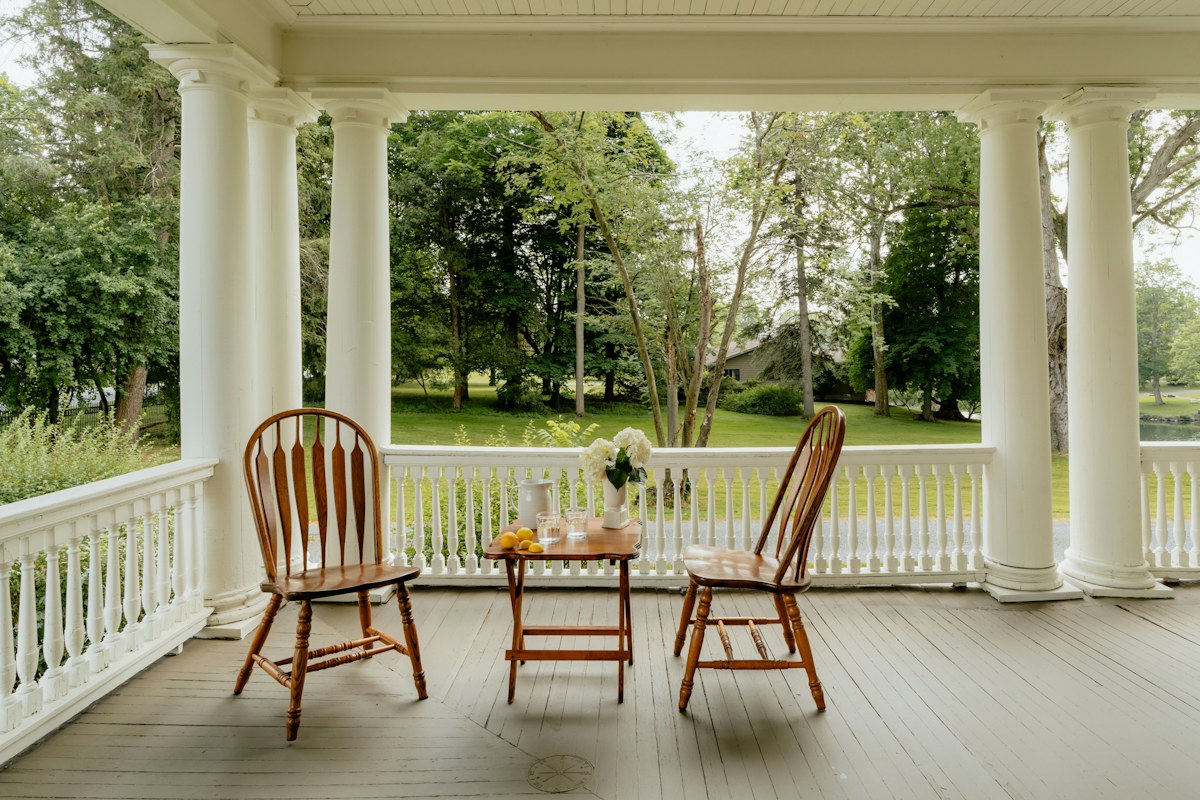
Two small chairs can look easy to fit on a porch. Then you open the door, put a bag down and find that a chair leg stands where you normally turn. The place that looks wide enough for a table may need to hold the person who is unlocking the door at the same time. A good front porch seat can leave the entrance doing its usual work. The difference comes from testing the floor in motion, with people arriving, getting up and walking past, before deciding which pieces belong there.
Begin with a time when you would actually use the seats. Early coffee, an after-work conversation and a short wait while someone gets their keys ask different things of the porch. Decide whether you need a table for two plates or a place for a single cup. Look at where the seats would face and where the sun, wind and activity on the street come from at that hour. A view from one end can make that chair the one everyone chooses. Give it a clear route without assuming both chairs have to sit symmetrically.
Protect the approach to the door
Open the door to the full position you need for everyday access. Check storm or screen doors as well as the main door. Mark the swing on the floor with a few removable paper markers. Include the place where a visitor normally pauses and the floor you need while carrying groceries. An outward swinging door may need space very close to the outside furniture. It should work normally with nobody having to slide a chair to one side. Keep the clearances required by the building and leave any required escape or accessibility route available.
Walk to the entrance from the steps, path or gate. Carry something that occupies both hands. Notice where you stop to reach the handle or turn the key. A narrow gap that works when you are facing forward can be hard to use when you have to turn around. Leave a useful landing beside the door and pay attention to changes of floor level. A table corner is especially noticeable where people need to watch their footing. In a shared or rented property, confirm the rules on furniture, access and storage before committing to a layout.
Look at the way people approach from different sides. A neighbor might arrive from a different path than the household usually takes. Think about whether someone has room to see the entrance and reach it while a chair is occupied. Consider the route used for packages and bins. Some pieces look small when they are empty but take up additional room when the person sitting in them turns to stand. Test that movement before treating a narrow strip of floor as available.
Place one chair before placing the second
Start with the seat you expect to use most. Try a similar chair on the porch while you are present and the weather is suitable. Set it on a stable surface where the legs have full support. Sit down and see where your feet rest. Compare one position with the back near a wall and another where you face diagonally toward the street. A slight angle can improve the view and make it easier to speak to another person. Check the space the chair takes once its feet no longer follow the edge of the porch.
Try getting up while holding a cup or book. You need a clear place to put your feet and room for the chair to remain stable. If you expect to move the chair slightly when you sit down, mark that position as well. For a foldable chair, follow the maker's directions and check that it is fully opened and secure before sitting. Choose seating that suits the people who use it and the floor where it will stand. If the best spot is not level or is too close to the edge, consider a different place rather than trying to make a chair work there.
Then place the second chair. In some porches, two seats along the same wall leave the entrance easier to approach than two seats facing each other across the path. In others, a slight angle brings the chairs together without pulling either into the route. Test whether you can both sit down without one person having to step outside. If you usually sit alone and only sometimes need another chair, decide where the second will stay in the meantime. A compatible folding chair can be a useful occasional piece if there is a suitable place to put it away.
Match the table to what will land on it
Set the things you actually bring outside on a suitable surface. Two mugs and a book need less room than two bowls and a serving dish. Measure the occupied area, then think about where your hands will reach from the seats. A broad base or several projecting feet can use floor you thought would be clear. Check the base dimensions separately from the top. Put the temporary outline between the chairs and try sitting and standing. The tabletop may fit while a foot is exactly where you need to set a shoe.
Choose a table you can reach comfortably from the intended positions without leaning onto it. Follow its instructions for setup and loading. Some small tables are handy for cups and light objects but have a top that is awkward to reach from a low chair. Compare the seat and table heights with objects you already have. If the table is mainly for a short coffee, try moving it alongside one seat where it leaves the front of the other clear. The two people can still have a place for their cups without a central piece sitting in the main route.
Check whether you need room to move the table. When a delivery arrives, it may help if the table can sit by a wall without blocking anything. Choose a clear resting place before you decide you will move it often. Follow guidance for carrying or folding the furniture, and unload it first. A table set down beside a door only works if the door still opens and the surface stays stable. Think about the smallest change you would actually make on a busy day. For some porches, leaving the table in its useful corner is simpler than moving it back and forth.
Use finishes that suit the entrance
Look at how exposed the porch is during the part of the year when you use it. Check the maker's directions for outdoor use, handling in windy conditions and storage. A covered porch can still receive rain from the side. Think about whether cushions need to come indoors and where you will put them. A cushion that has to be carried past the kitchen every evening can spend long periods inside, even on days you wanted it. You may prefer a chair you can use comfortably on its own and bring out a cushion when there is time to look after it.
Check what happens underneath the table and chairs after rain or a clean. The surface should remain suitable for their feet. Keep drainage clear and leave room to sweep or wipe around the furniture. If a mat is already part of the entrance, check that the chairs do not pull it into a fold when they move. Use floor protection suitable for both the furniture and the surface. Pick materials that can be cleaned as directed. Outdoor pieces earn their place more easily when keeping them ready takes about as much time as using them.
Think about the view from inside. A chair back across the glass can block a strip of light, or a table can make the porch look crowded when it stands near the threshold. Try the furniture farther to the side and compare how the doorway feels. You can also check the evening position from the path. People should be able to see where the entrance and steps are. If the table uses the only place for a useful light or interrupts an existing fixture's clearances, adjust the arrangement and follow the applicable guidance.
Check the porch the next time you come home
Approach the door with the chairs where they are normally left. Open it, bring your things inside and come back out to sit. Then ask someone else to do the same while you are in the chair. If the route only works while nobody is seated, change one element. A small rotation of the first chair may leave room for both, or the table may work better at the wall. If the open floor is the part you use every time you arrive, leave it open and use a single chair until you need the second.
Stay outside long enough to see where you put the things you brought. If the table holds the cups and leaves the door free, it has a reason to stay. If everyone sets their drink on the same part of the step, find a better location for the table and keep the step clear. The right bistro setup can be quite small. It gives two people somewhere to sit for a few minutes and still lets the porch serve as the everyday way in.