Decide how the porch should work before buying a pot
A porch earns its floor space in several ways. It can be a place to sit after work, a dry spot to set down groceries while opening the door, or a route people take on the way to the garden. Choose which job matters most. A chair that looks good beside the door can make it harder to bring a parcel inside, and an attractive row of pots can occupy the only level place to stand while unlocking the door. Start with the ordinary walk through the porch and build around it.
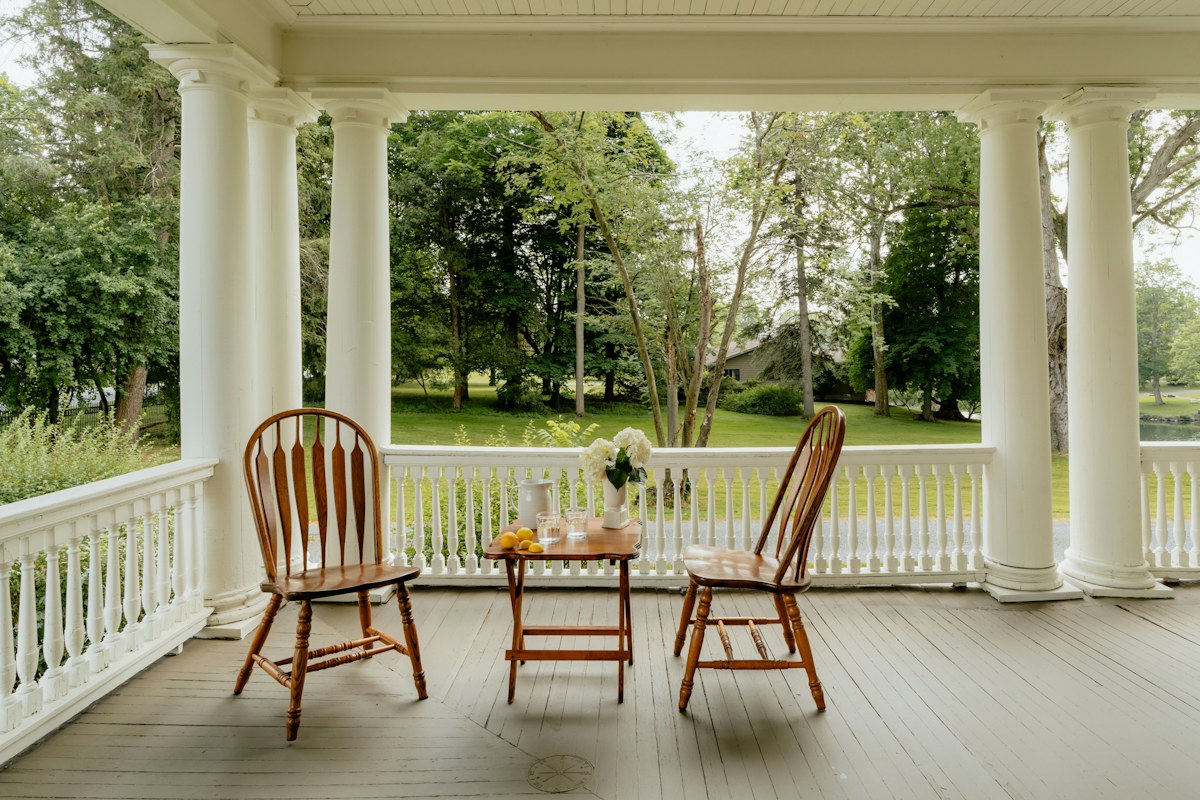
Open the door fully and mark its swing. Sit on a chair in the proposed spot and stretch your feet the way you would on an evening outside. If a parcel can still reach the door and a second person can pass while you sit there, the chair has found a reasonable place. The useful footprint of a chair includes the space around it. The porch may be more pleasant with one chair and a clear route than with a pair packed tightly around a small table.
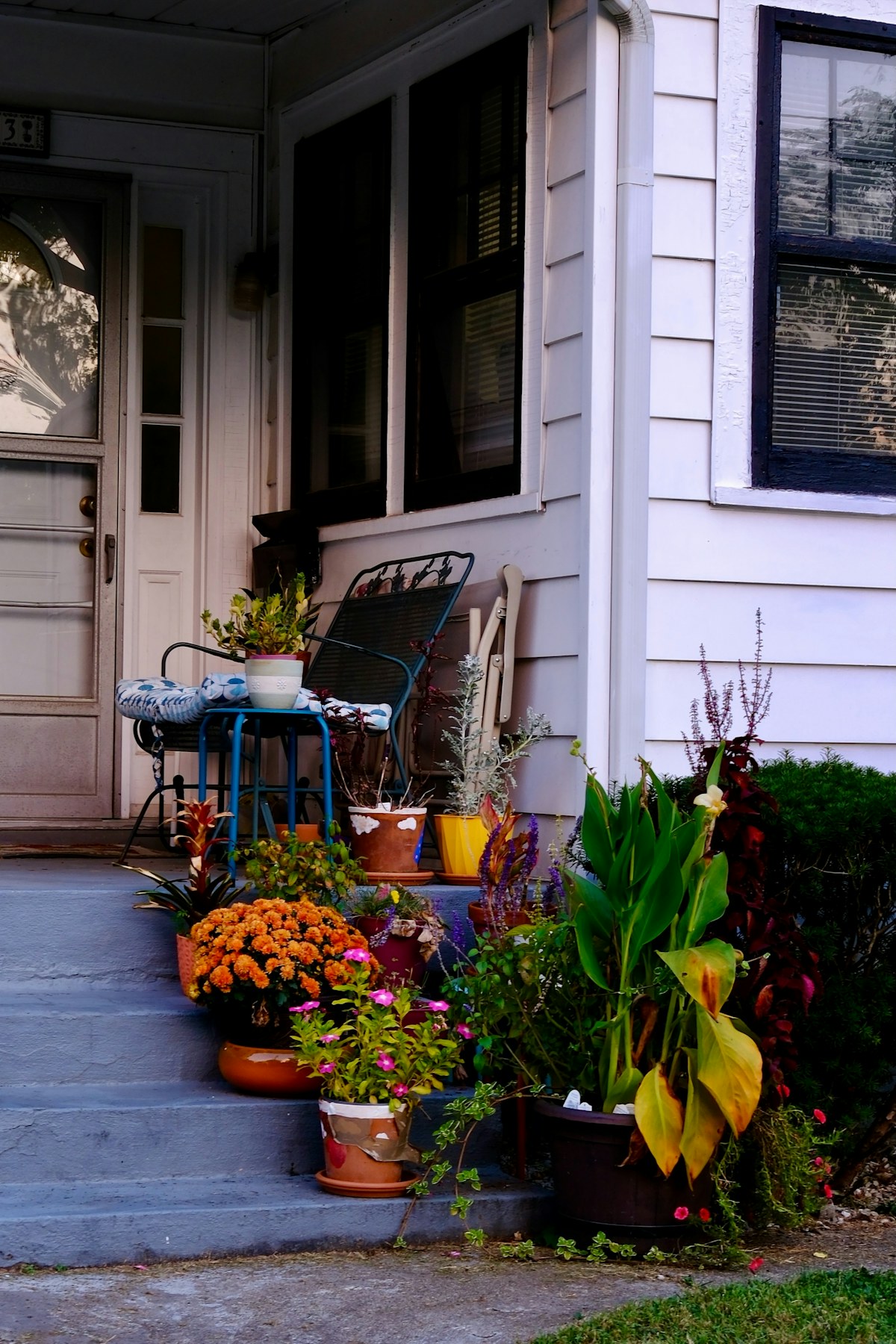
Use empty cardboard boxes to represent the pots. One box can show the base and another can represent the eventual reach of the plant. When you try the route again, include the space a watering can needs and check whether a person standing inside can see a step before taking it. Keep plants away from steps, handrails, door swings, and the area where anyone might need to pause. If the pots leave a clear route while they are empty, the next step is checking how much light their positions receive.
Watch the light change over the day
Porches that appear bright can have very different amounts of direct sun. Stand outside at breakfast, around midday, and again in late afternoon. Mark on paper where the sun actually falls. A roof can leave the wall behind a chair in shade all day while the outer edge gets hours of strong light. A spot can also get plenty of reflected brightness without direct sun. Use the plant labels to match the actual exposure you observe.
Notice what casts each shadow. A solid roof creates a steadier boundary than a deciduous tree. In summer, foliage may shade one end of the porch. After leaves drop, the same pot could sit in strong light. Sun angles change through the year as well. If you are planning in early spring, observe neighboring areas and ask which surfaces usually get hot later in the season. Give yourself flexibility to move a pot when conditions shift.
Light also changes the way a plant reads from the doorway. Pale foliage can stand out in a deep shadow. A darker green plant looks better when there is a brighter wall behind it or an opening at the side. Choose for growing conditions first, then use color and shape to decide among plants that suit those conditions. A plant struggling in the wrong light will rarely look like the one on the label.
Check rain and wind separately
Watch the porch during a normal shower. A roof can keep the first few feet surprisingly dry, so a pot against the wall might still need water after a full day of rain. A pot under the roof edge can catch more water than one in the open if the roof concentrates drips in one place. Look for wet lines on the floor once the shower is over. Those lines show where standing water and splashes may be an issue.
Wind is easiest to notice at the corner. A row of leaves flicking in one direction can show where air travels around a wall. Tall, narrow containers with large plants are a poor match for a gusty spot. Choose broad, stable pots and lower-growing plants where wind is common. A plant can be protected by moving it closer to a wall if the light still suits it. Leave enough space behind it to inspect the floor and water without leaning over the pot.
Think about how water leaves the container. Use pots with adequate drainage holes and a suitable container potting mix. If a tray is necessary to protect the floor, make sure you can reach it to empty standing water. Test how water runs before adding a second row of pots. On a balcony or raised structure, confirm the building rules, drainage expectations, and load limits before bringing in heavy planters. Soil and containers can weigh considerably more when wet.
Shop with the mature plant in mind
At a nursery, look at the expected size on the label. A small plant can be manageable on a narrow step in spring and awkward by midsummer. Set the smaller plants together at the distance you want on the porch and imagine them wider. One plant with a strong shape, such as a compact upright grass suited to the climate, may do more for the composition than three plants pressed together in a shallow pot.
If you want a mixed container, choose plants with similar light and water needs. Put the tallest one where it will make sense when viewed from the doorway or from your chair. A low plant at the outer edge can soften the outline of a large pot without hanging into the path. Put long trailing plants where they can hang away from shoes and door swings. Look for mature size and growing conditions on each label rather than treating a row of little pots at the store as a ready-made combination.
Consider where you live and who uses the porch. A plant recommended in one area may be unsuitable or invasive elsewhere, so ask a local nursery if you are uncertain. If a pet or child has access to the containers, confirm the plants are appropriate for that household before buying. There are plenty of combinations available once you start with plants suited to the real location.
Plant a group you can maintain
Set the empty pots into position before filling them. A broad, heavy pot becomes difficult to move after you add damp mix. Check that the bases sit flat and the drainage holes can function. Place a tall container where it is least likely to be knocked and a lighter one in a spot you might want to change with the season. For planting depth and spacing, use the instructions for the specific plants you bought.
Water after planting according to the plant and potting mix directions. Observe where the runoff goes and whether the floor stays slippery afterward. Move the watering can to a reachable spot once the pots are in place. If a container in the back is hard to reach even now, it will be harder once the plants fill out. Leave enough space to touch the soil and look under the leaves without moving the entire front row.
Give the first arrangement a few weeks before adding more. You may find that one side dries out faster even though both positions appeared to get similar light. Check moisture in each container rather than treating every pot as a matching set. On dry or windy days, check more often. After rain, inspect pots tucked under cover because they may have received very little. Using a routine that starts by looking at the soil avoids watering already wet containers by habit.
Keep the labels for a season. A paper note showing when a container gets sun and how quickly its surface dries will help when you want to repeat a combination. At the end of the growing season, look at which leaves held their shape through hot afternoons and which needed moving. If the pot itself was hard to reach or awkward to empty, record that too. A future arrangement can keep the plant combination and swap in a container with a more useful shape. Small adjustments based on a season of use are easier to justify than choosing an entirely new set of pots each year.
Make changes based on the seat and the doorway
Sit outside in the morning and again on a normal evening. Look for the view that makes you want to stay. One upright plant can block a view straight into a neighboring window, while a low pot can leave the view toward the street or garden open. Rearrange the movable pots so they give you that balance. Stand up afterward and walk inside to see whether the change has put something into the route.
If the planting is hard to see from indoors, try moving one lighter container into a place visible through the window. If the porch feels busy, remove a pot instead of shopping for a matching one. Set any spare container somewhere else for a week and see whether you miss it. The grouped pots will usually look more deliberate when there is a little empty floor around them.
A small porch can work well with just one comfortable seat, a clear space to put a mug, and two or three plants with different heights. The most useful measure is whether you can enjoy the plants and still use the door on a rainy day. Keep the pot positions that make watering easy and let the planting grow into the room you have left for it.