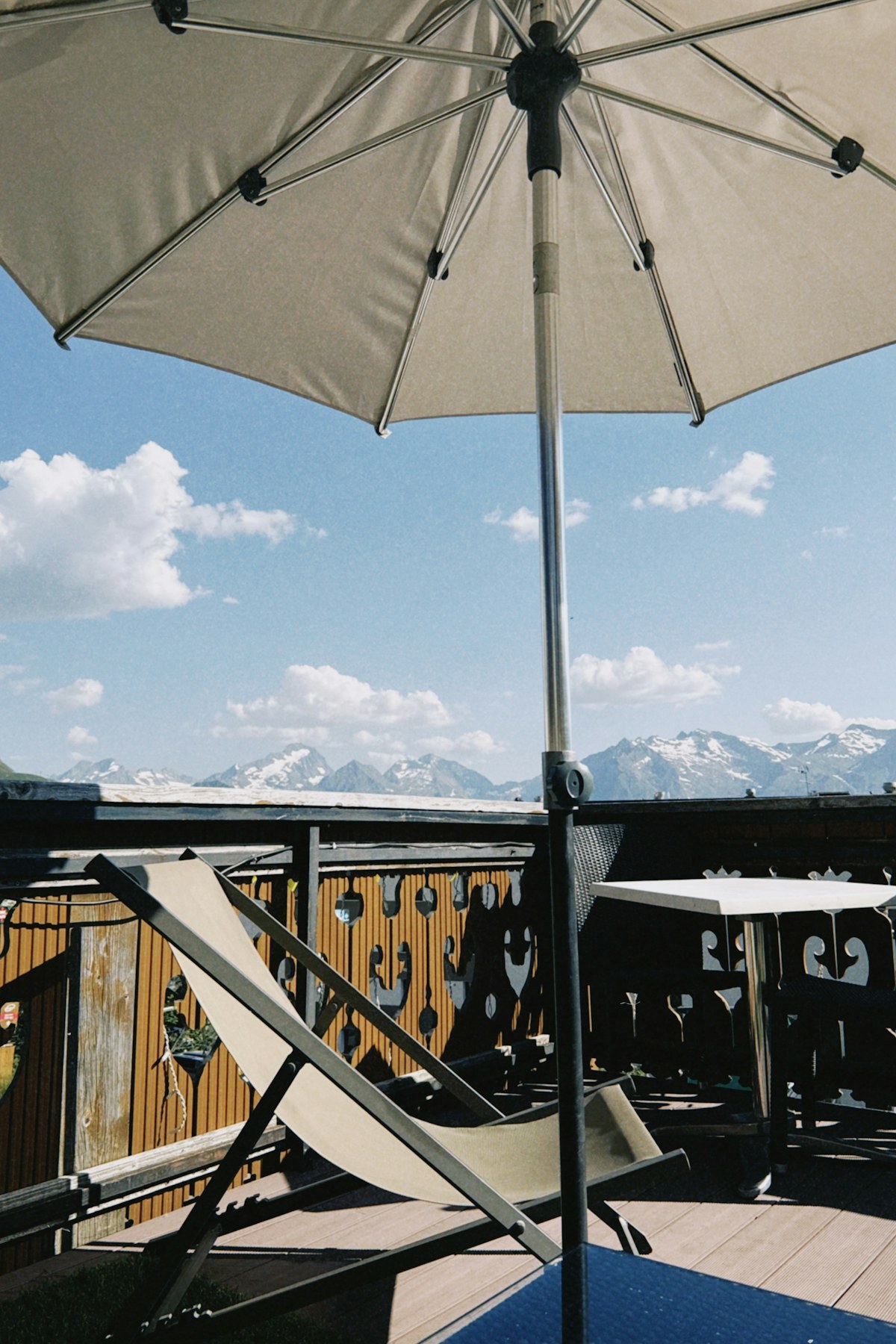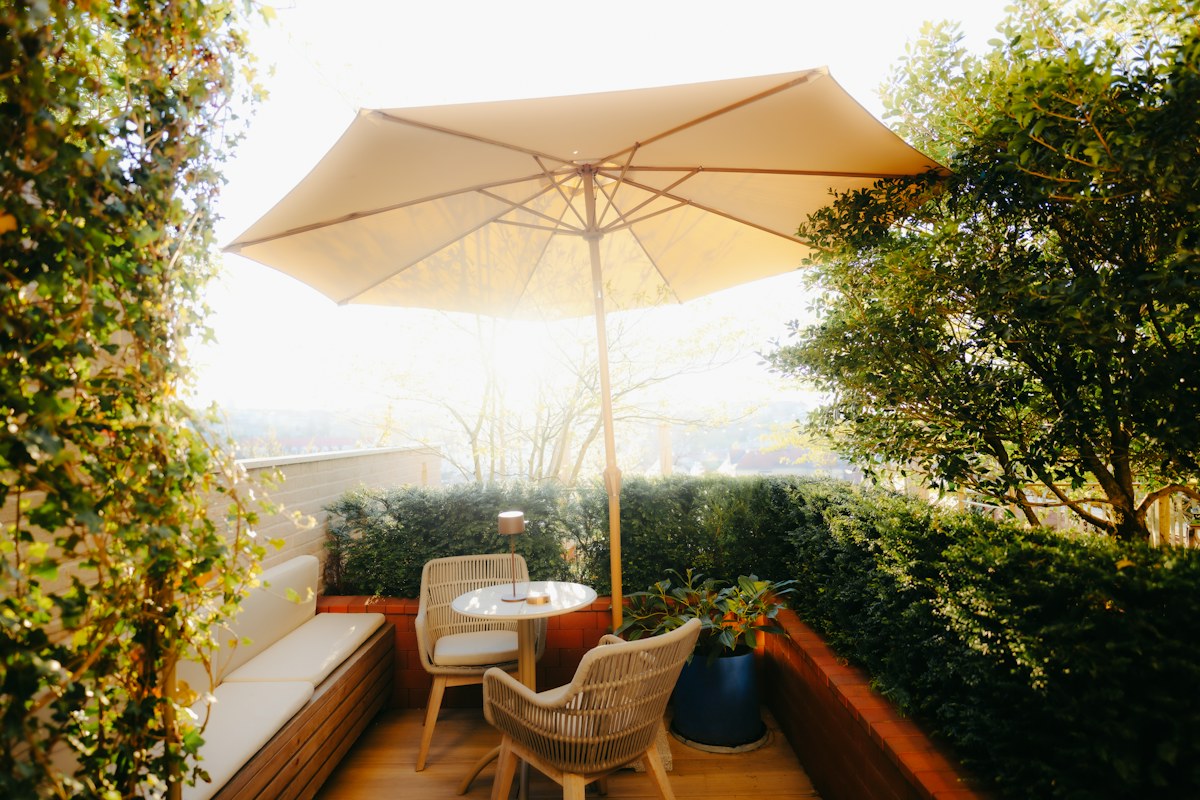
At noon, a balcony table may sit entirely in the shade of the building. At four, a strip of sun can land on one chair, then move across the tabletop and into the room. If the only time you sit outside is after work, the midday view will tell you very little about where an umbrella belongs. Start with the half hour you actually want to spend outside. Where do you sit? Which direction do you face? Where does the sun reach you at that hour? An umbrella can be useful over one part of the space, provided it fits the location and you can use it in safe conditions.
Take a couple of notes on clear days. Mark where a chair, table or plant stands when the light begins to matter. You might find that afternoon sun only reaches the reading chair for a short period, but the outdoor dining table gets direct light from the side throughout a meal. Treat those as different problems. The umbrella can take on the one you encounter most often. A useful choice starts with the size and movement of the shadow you need, then looks for an approved product and position that can provide it.
Watch where the shadow travels
Look at the floor a short time before you normally go outside. Draw the position of the shadow on a sketch of the balcony, then look again when you would be ready to sit down. A shadow line that moves quickly may leave a seat exposed after you have only just made it comfortable. Check the time at which the sun reaches the chair and where the light comes from. Later in the day, a broad canopy directly above you may cast its shadow several feet away. Think about whether you can move the chair into that shadow while keeping the route to the door clear.
Use the place you sit as the reference. The chair may stay fairly close to the wall while the table needs to be out far enough for somebody to move around it. On a narrow balcony it can be easier to shade the back of a seat than to shade the entire floor. At a table, see where the person facing the sun would sit. You may be able to change that seating position and reduce how much area the umbrella has to cover. A choice made for two chairs and a drink table can be more practical than a choice based on the widest measurement of the balcony.
Think about how the view changes from indoors. An umbrella can remove glare through a glass door at one hour and cover a view you enjoy at another. If daylight makes a small living room pleasant in the morning, you may want the umbrella closed until you go outside. Find the place where the view remains clear when it is folded. Take the approximate canopy height into account. A canopy that clears the rail may still sit at eye level when you are standing inside. Knowing where the folded shape lands helps you decide whether this is a position you can live with through the day.
Check permission and exposure before choosing a model
Read the building's rules before putting an umbrella on a balcony. Check any limits on items that project beyond a rail, attachment to building elements and what can be kept outdoors in windy conditions. Follow the umbrella maker's guidance for the base, operating space, use and storage. Some sheltered-looking places get gusts that travel around a corner. If a product is unsuitable for the balcony's exposure or you cannot provide the base it requires, choose a different way to use the shaded parts of the space.
Think about how a weighted base reaches the balcony. See where you can set it and what the building allows. The floor and its drainage must be suitable, and the product should be installed as instructed. Do not assume a rail or a heavy piece of furniture can take the place of a manufacturer specified support. A base needs room where it can sit steadily without a corner projecting into the path. Take its shape into account when you measure. A broad flat base may consume more of a narrow walkway than a sketch of the center pole suggests.
Make a habit of closing and securing or storing the umbrella in the conditions described by the manufacturer. Close it when it is unattended as directed, and leave time to deal with it before changing weather. If opening and closing the umbrella would require moving a table with a drink on it, set up a simpler route to the handle. Think through the movement with the door open and with the chairs in place. How easily you can close the canopy matters on days when you are ready to go inside quickly.
Leave room to open it
Mark the base position with paper or a piece of fabric. Put the usual chairs in place and walk from the door to the farthest seat. Open the door to its normal limit. Compare the canopy dimensions against the available space above the floor. Check overhead structures and anything that moves near the canopy, such as a window, an awning or a balcony door. The arc of opening takes space even when the final position looks clear. Look at the manufacturer drawings for the actual dimensions in the operating positions and use them to rule out anything that would interfere.
On a small balcony, a center pole can be easier to place when a table is designed to accommodate it and the maker's specified base still fits. A cantilever style moves the pole to the side but usually needs its own considerable support space. Look at the full layout instead of comparing only the space beneath the fabric. If the balcony is already full of plants, give them a place where they won't block the base or the movement of the umbrella. Keep access to drainage openings and keep the route from the door clear. You should be able to reach the closing mechanism with your feet on the floor.
Try the place from a seated position. A person should have room to get up and turn while the canopy is open. If you have a chair that reclines, open it to the position you commonly use and check where the front legs or footrest end up. Look at the passage as someone approaches with a drink or a book. A clear section of floor on a plan may be a poor path if you have to duck under the fabric or turn sharply around the pole. Move the paper marker until you can see what to change without committing to furniture.
Match the fabric to the job
Look at what you expect from the canopy. A light fabric may let through enough daylight to keep a small balcony bright. A denser one can make the difference between using a chair in the late afternoon and leaving it empty. If you are comparing fabric for UV protection, check the actual product specifications and how much of your position is shaded. Light can still arrive from the sides and reflect from nearby surfaces. Choose your seating time and direction with that in mind, particularly when the light comes in low and moves quickly.
Check the care directions and think about how the canopy dries. A balcony with plants may collect pollen, leaf debris and water after a shower. If the umbrella has to be moved or stored, see where you can handle the fabric as directed without dragging it on the floor. Check whether the product is suitable for the conditions on your balcony and whether you can keep it inside or protected when it is out of season. A canopy that is easy to close and put away will get more useful outings than a large one you avoid opening because the cleanup is awkward.
If there are two times you use the balcony, compare the placement at both. A morning coffee seat against the wall can be comfortable without any added shade. The afternoon chair facing the window may need the canopy. Set up the umbrella for the second position and leave the first one available as a simpler option. You can also decide that on a windy day the seats move to the part shaded by the building, with the umbrella stored. This gives the balcony more than one way to work without requiring the same piece of equipment every time.
See where you sit once it is in place
Use the umbrella during a few ordinary outings and note when the shade moves away. If you keep dragging a chair to one corner, look at what the first layout missed. The canopy may shade the table when the seat is the part that needs it. Shift the movable pieces within their clear routes or choose a different approved umbrella position. Check that all the openings and walking space still work after the adjustment. You may find a small shift in seating time solves more of the problem than a move across the balcony.
Give the umbrella one job you can describe easily. It might shade the chair where you read after lunch or cover two places at a small table while you eat. Keep the arrangement that lets you get outside, sit comfortably and close the umbrella as soon as you need to. The useful result is the place you can occupy at the time you wanted, with room for everything that still needs to happen around it.