A floating shelf can be small enough to fit on an empty wall and still be too large for the job you had in mind. A short row of books may need depth the shelf does not have. A shallow ledge can hold a picture where you can see it, but that picture may be above the height you can reach to clean. Before choosing the length of the shelf, choose what you will ask it to hold. The objects and the wall should meet in a position that lets you use them without making the route below more difficult.
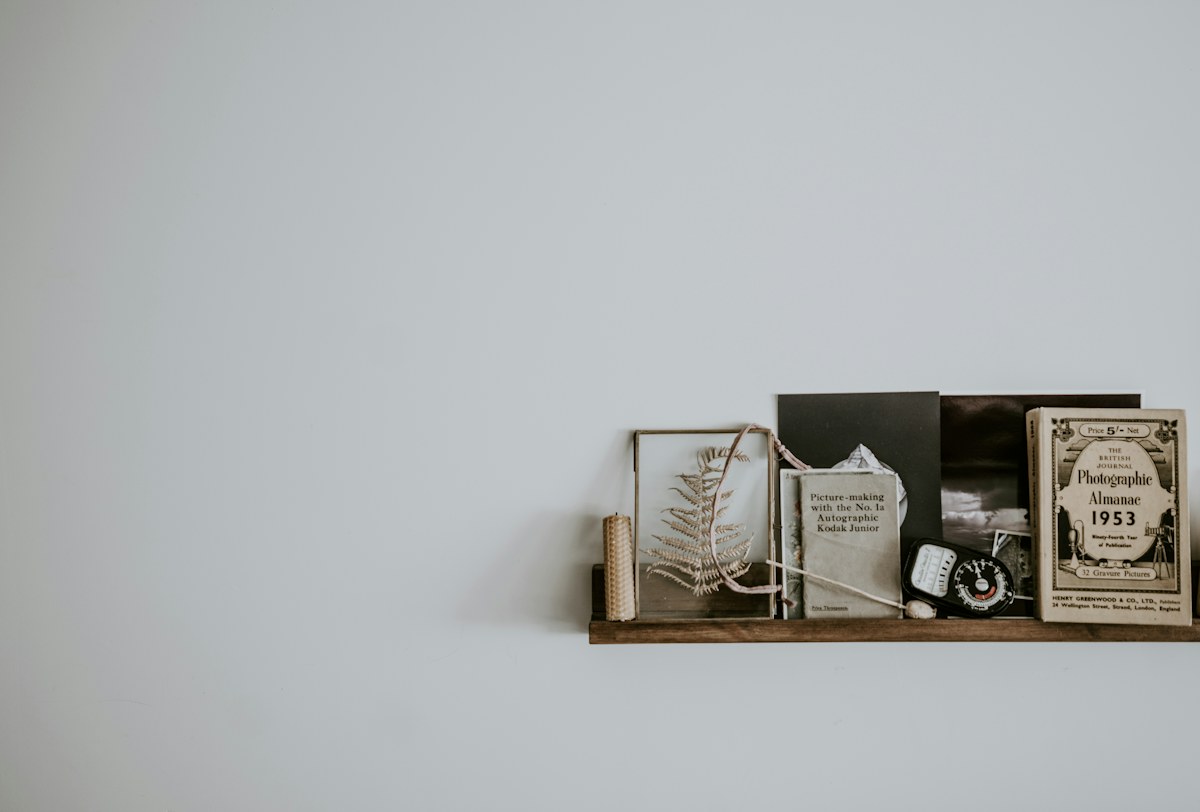
Find three objects you expect to put on the shelf. They might be a picture, a small container for items you reach for every day and a lightweight object you like to see. Lay them on a suitable table and mark the area they occupy. Look at the parts that need space around them. A frame with a stand needs a particular depth. A container needs room for your hand and anything it will hold. The shelf can be narrower or shorter than the empty wall if that is enough to give these objects a good place.
Work out what needs to come down
Decide which of the objects you will reach for every day. A shelf you only look at can sit at a different height from a shelf used while you stand in front of it. Try lifting an everyday object from a similar existing shelf at a comfortable height. Compare the movement with the one you would make where the proposed shelf goes. A person can often reach a visible object higher than they can safely lift it with a firm grip. Choose a position that suits the way you expect to use it, with no need to stand on nearby furniture or lean across another object.
Look at the distance an item needs to move before it clears the shelf. A basket with a broad handle can be easy to lift from an open top and hard to remove with another shelf directly above it. A frame can be wider at its feet than it appears from the front. Choose objects that can stay fully supported and stable, within the maker's limitations. If you often reach past one object to take a second one, change the order. A usable shelf has enough open area for an item to leave and return without needing to be lined up carefully each time.
Consider how often somebody else will use it. A high shelf can be appropriate for a suitable light object that is only displayed and inconvenient for a thing you have to put away frequently. A low shelf may be accessible to children or pets. Choose the position and contents for the household and avoid placing anything fragile or unsuitable where it can be pulled down. If a particular object needs secure storage, give it an appropriate place elsewhere. The shelf can serve a modest part of a room and leave more demanding storage to furniture made for that purpose.
See the proposed position at its full depth
Put a paper outline of the shelf's front edge on the wall or hold a light mockup safely in the intended position. Do not leave the temporary pieces where they can fall or obstruct a route. Look from the doorway and from the place where you usually sit. A shelf at eye level while standing may become the most prominent thing in the room when you are seated. Check how it meets the edge of a cabinet, window frame or wall feature. A small position change can make the pieces around it easier to see and help it sit where you want it.
Measure the actual projection from the wall, with any visible ends or fittings taken into account. Walk through the area as it is used. Open the nearest cabinet and bring a folded item or bag through the room. Notice whether the shelf would project into the place where a person turns or stands. If it goes above furniture, check the movements below it. Somebody sitting down or standing up may use more vertical space than a picture of the empty chair suggests. Keep the proposed shelf outside the space needed for normal movement.
Look at the light on the wall. A ledge under a lamp can catch a shadow along its lower edge, and the items on it may look darker than they do on the table. Decide whether you want to see the objects from across the room or mainly when you stand close. Leave any required clearances for lighting, heating or other equipment. You can move the temporary outline to compare a second height before choosing a final position. If an object needs its own light or power, handle that requirement in a supported way. It may be easier to keep the shelf for objects that can sit without an extra cord.
Confirm the support before selecting hardware
Read the directions for the shelf and its mounting system. Find out what kinds of wall and support it is designed for, what fittings it needs and what load it can hold when installed as directed. Check permission in a rented or shared home. If you are unsure what the wall contains or whether it can support the shelf, ask the appropriate owner, installer or professional. Do not guess about hidden wiring, pipes or structure. You can keep planning the layout or choose suitable freestanding storage while you establish whether the wall option is appropriate.
Compare the stated shelf capacity with the weight and placement of the actual objects. A supported shelf may have different guidance about an evenly distributed load and a concentrated one. Include the weight of anything that goes inside a container. A stack of books can be heavier than a shelf of the same size with a few decorative objects. Follow the specific guidance and choose a different shelf or storage option if the planned contents do not suit it. You should not have to leave out required supports or improvise a mounting method to make a particular finish work on your wall.
Once the shelf has been installed appropriately, follow the maker's checks before putting anything on it. Look for signs of movement or damage when checking it as directed. If something seems wrong, leave it unloaded and seek suitable help. Do not use a wall shelf for support while sitting or getting up unless a product is explicitly designed for that purpose. Keep the objects away from the edge and use them in a way that suits the shelf and the room. Good placement leaves the installation available to inspect as needed.
Keep a clear edge around the objects
Put the largest suitable object on the shelf first and see where the other pieces can sit without crowding it. If you want to take one thing down often, keep its opening clear. Leave a small space between pieces so you can wipe the shelf and see whether anything has shifted. A visible gap also makes it easier to tell what belongs there. A shelf that holds only the planned objects can stay useful even when a temporary one arrives. Decide which items can safely share it without pushing anything forward.
Consider how you will clean the top. If a nearby window is usually open, dust may collect more quickly. Choose a surface and objects whose care you can manage at the actual height. If you cannot reach the shelf safely to clean it, consider another position. See whether you can remove a light object as directed without lifting it over something that could be disturbed. The simplest arrangement can leave room to use one hand for the item and one for the cleaning. A single short line is often easier to care for than several small objects arranged front to back.
Let the shelf support the place where it sits. Near the front door, it might hold one lightweight thing you use on the way out, with everything else in appropriate storage below. In a living room, it may give two objects a visible place that stays easy to look after. If the same thing is repeatedly left on another surface, see what movement the wall shelf is missing. Move the item to a place that works or give it a clearer position on the shelf within the maker's guidance.
Review the shelf after a normal week
Look at the objects that are still there and the ones that moved elsewhere. If the useful items are easier to find and can come down safely, the shelf is doing what you planned. If it mainly collects things that have not found a home, give each of those a different destination. Check the installation and contents as directed when you make changes. Keep the space beneath clear and look at how the room feels while the shelf is being used.
A good shallow shelf can have a plain purpose and leave most of the wall available. The right position makes the things you chose easier to see, reach or care for. The open area at the edge stays available for the small movement you make each time you take one of them down.