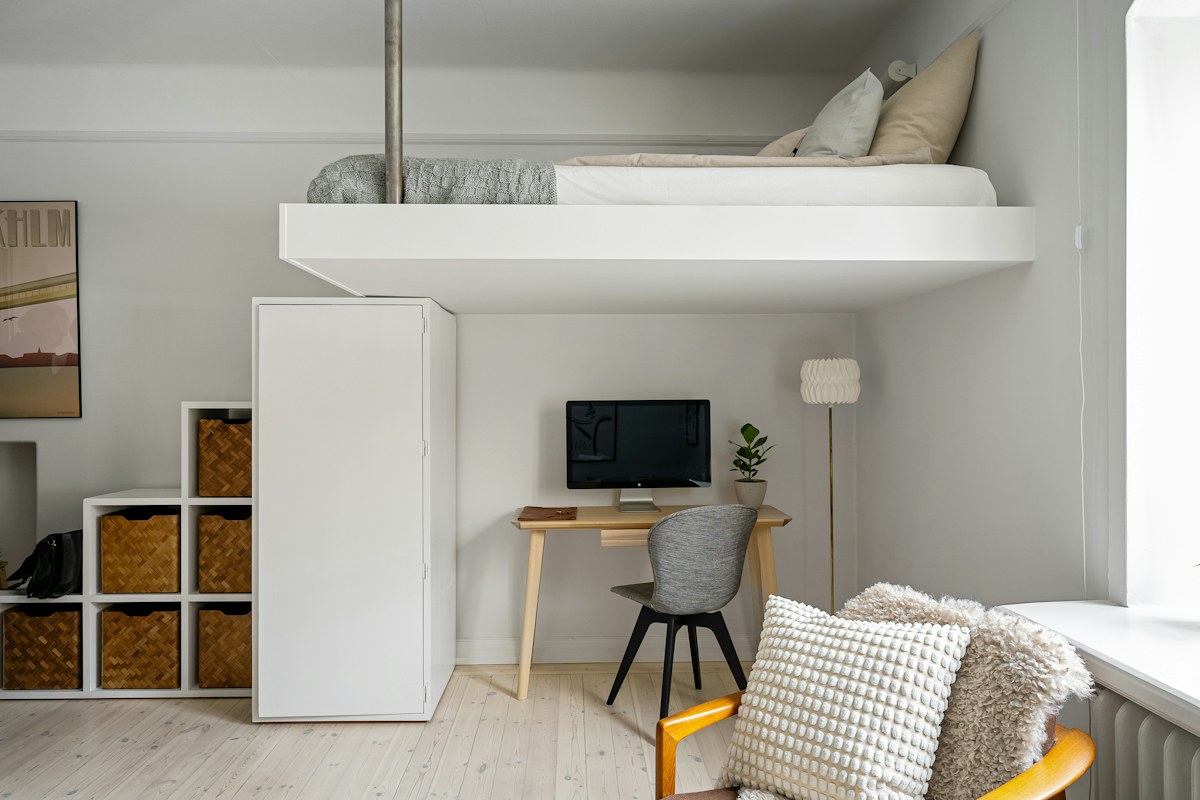
An empty rectangle beneath a loft bed can look like the obvious place for a desk. Move a chair into it and the room changes. You may discover that you can sit comfortably but need to move forward before you can stand. A light attached to the nearby wall may fall behind your shoulder, putting the work in shadow. The ladder may be easy to reach when the chair is pushed in and difficult when somebody is sitting down. All of these questions come from how the area is used, so the best first test uses a chair and an empty surface.
Read the bed and furniture instructions before treating the space as a work area. Confirm what the bed is designed to accommodate, what clearances the maker requires and how it needs to be installed and secured. Keep the ladder, guardrails and any other required parts in the intended positions. A piece of furniture that needs an unusual change to make a desk fit is a reason to reconsider the layout. A freestanding work surface that can be set up within the supported space gives you a way to try the idea without modifying the bed.
Sit where you plan to work and stand where you will leave
Find the lowest part of the structure above the proposed work surface. It may be a crosspiece or a section you do not notice when you look from the door. Measure it from the floor and compare it with the actual height you occupy when sitting in the intended chair. Use a safe position and avoid hitting the structure during the test. Think about where your head goes when you lean forward, sit upright or reach for an item behind the desk. If the room above you seems close while you sit still, a small movement can bring it closer than the floor plan suggests.
Try leaving the seat from the open side. A chair that rolls may be able to move forward easily on one surface and stop at the edge of a mat. A four-legged chair may need room to be pulled back before you can stand. Measure where the front of the seat lands at the point when you can rise comfortably, and keep that area free. A desk that only works when the chair remains in one spot might suit a brief task and become tiring over a longer session. The person who will actually use it should check both their seated position and the route away.
Consider where someone else can walk while you are in the chair. Leave the ladder and all required routes accessible without anyone having to move the desk or squeeze past the back of the seat. If the only way to reach the ladder is the part you need to use to stand, put the desk on the other side or try a different room arrangement. The bed must remain usable according to its instructions whenever the desk is occupied. Think about the movement when somebody is carrying bedding or a laundry basket, not just when the room is empty.
Make the desk deep enough for the work you bring to it
Choose an everyday task and lay out its equipment on a surface you have. For study, try a book, notebook and pencil beside whatever screen you use. For craft or repair, check that the area suits the work and use a surface intended for it. Measure from the front of the work to the farthest item you need to reach. Include space for your hands. A narrow desk under a bed can be a good place for a notebook and a laptop and feel cramped if you expect to keep an additional screen, lamp and set of speakers there.
Check how the available height interacts with screen position. A laptop can sit below the bed and still be awkward to view because the worktop is low or deep. Sit at the proposed height and see where you want the screen to be. Consider the room needed by accessories and cables. Avoid attaching them to the bed unless that is part of a supported configuration. Place the work surface where you can maintain a comfortable position for the kind of work you do. An occasional desk that suits a brief task may need a different setup before you use it for a long workday.
Look at where the desk meets the side supports. A piece can fit between them on paper and leave no room for the person to reach the power cord or clean at the back. Keep required clearances and choose a position where the desk stays stable, with room for accessories to work as intended. A shallow gap can be enough to give a cable a safe route, provided it follows the product guidance and stays away from the path. The desk can be a little shorter than the bed and still do all the work you planned for it.
Give the work its own light
Test the space at the time of day you use it. The floor above the desk may block light from a ceiling fixture. A window on the side can be useful for reading while sending glare onto a screen. Try the existing light from the actual seated position. See which way the shadow of your hand falls across a page. If the desk receives plenty of light in the morning and little after dinner, you can plan for both conditions instead of judging from the brighter one.
Choose an appropriate task light for the available clearance and the work. Follow the lamp's instructions on placement, ventilation and distance from surrounding materials. Keep lighting and cords away from bedding, the ladder and the paths people use. A light on a freestanding surface gives you a way to adjust direction within its intended range. Use the smallest amount of equipment that gives you a clear view of the page or keyboard. A lamp that occupies the entire spot where you would put a notebook may need a different place or size.
Look at where the room remains dark when the desk light is on. You should still be able to see the route from the chair and the floor around the ladder. If the desk is used early while another person is sleeping, check which direction light travels and how you can work without changing the supported use of the bed. A light aimed at the work can make a small area pleasant while leaving the rest of the room available. If it creates a bright reflection on a screen, try changing the direction before adding more light.
Keep the space around the feet simple
Notice what is currently stored under the bed. If several boxes already have a place there, decide which can move. A desk area needs room for the person as well as the worktop. Use a small nearby storage spot only if it does not take away legroom or interfere with the bed. Keep the floor clear of cords and objects that could be caught by the chair or feet. If papers come and go, a shallow container on the desk or another suitable shelf can hold the current work. It should be easy to take away when you want a clear surface.
Check how the electrical equipment will be used and stored. Follow the directions for each product. Use suitable power access and avoid pinching cables between furniture or putting them where somebody will step on them. Keep room for required ventilation. If you cannot get suitable power to the desk without running a cord through the ladder route, choose another position or ask an appropriate professional about options. A simple desk using the light already in the room can be enough for tasks that do not need several devices.
End a session by putting away the items you no longer need and returning the chair to the position that leaves the route open. Check where your next piece of work will begin. It might be possible to leave one book open while the rest of the space stays clear. If the tabletop always becomes a place for items that are on their way somewhere else, give those items a different landing. A small work area is easier to begin using when you can see the surface and sit down without first sorting a pile.
Give both uses of the room a full test
Use the desk for a normal session and check access to the bed afterward. See whether the chair and light are in the way when you change bedding or walk through the room. Adjust the arrangement within the manufacturer's guidance if one movement feels constrained. If the desk only works with the ladder moved or a required part altered, keep the bed's supported setup and choose a different place for the desk.
The space under a loft can be useful when it gives the work its own clear surface, allows a comfortable seated position and leaves the rest of the room ready for use. The trial with an empty desk shows where that is possible. Keep the arrangement in which the ordinary movements work easily, and give a different spot to anything that still needs more room.