Take inventory at the busiest hour
An entryway looks deceptively simple when everyone is out. It becomes a different room when a bag goes down, wet shoes come off, and somebody needs a key that was set aside that morning. Wait until a normal busy arrival and look at where the objects land. The first flat surface often catches the mail because it is the only place available when both hands are full. Shoes tend to stop where there is enough space to balance on one foot. Those movements tell you where storage would be useful.
Walk through an ordinary departure as well. Find the keys, pick up a bag, put on shoes, and open the door. Notice which steps require going back into another room. In some households, outgoing post moves from a desk to a dining table and eventually gets left behind. A slot by the key tray can change that. If the keys are usually where you need them and the actual problem is a work badge, give the badge the closest spot instead.
Write down the objects involved in those two trips. Keep items that rarely leave the house off the list, even if the existing pile includes them. A folded blanket, a stack of old receipts, and a pair of shoes worn twice a year can move somewhere else. Start with the things that come or go on a typical day and make room for those first.
Preserve enough room to cross the threshold
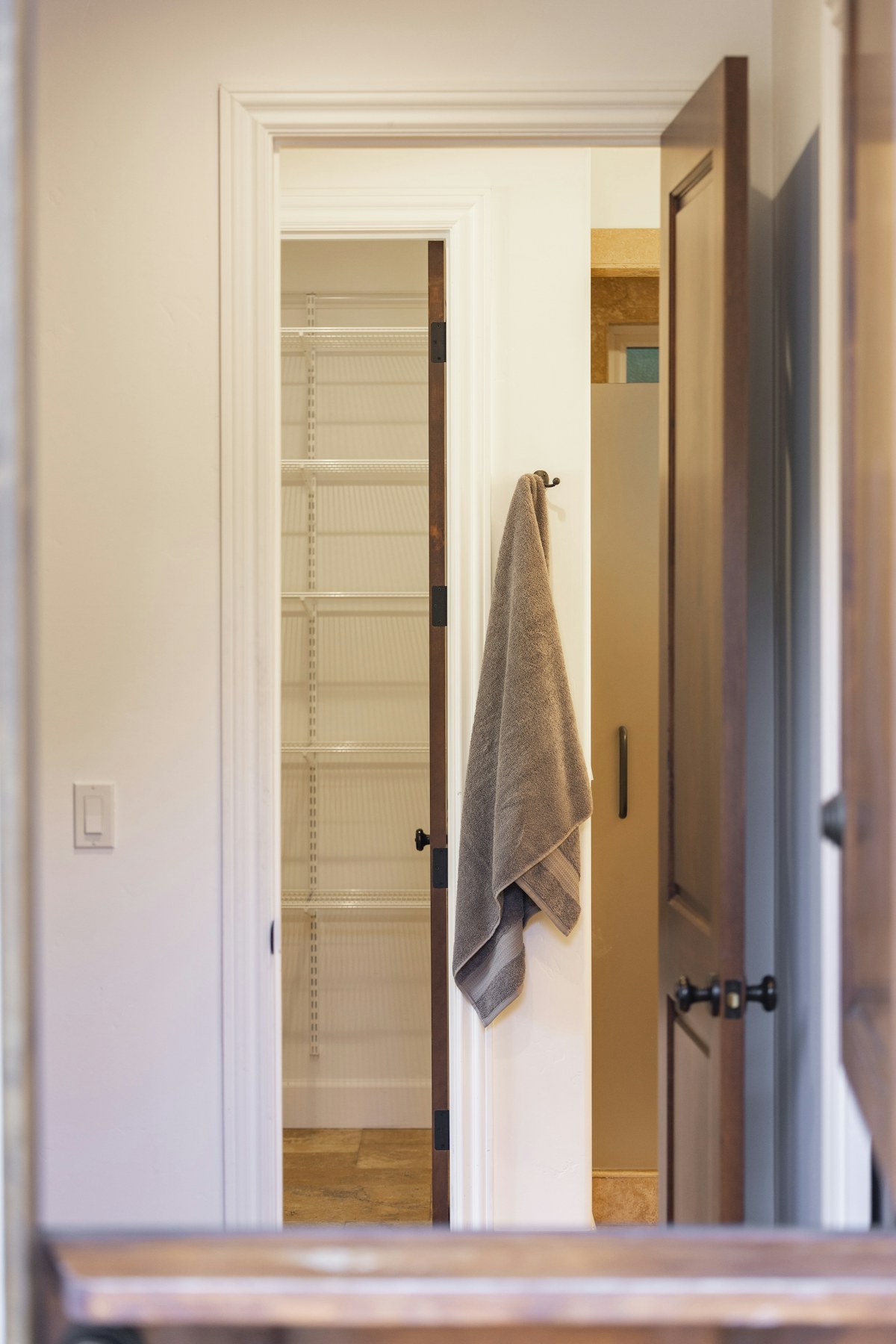
Open the front door to its usual stopping point and look where the edge passes. If there is an internal door to a cupboard or another room, open it too. Draw both arcs on a sketch or lay a strip of cardboard at the edge of each swing. Keep bag handles, hanging coats, and the legs of any table outside those areas. The most useful width is the one left after everything is hung and the doors are open.
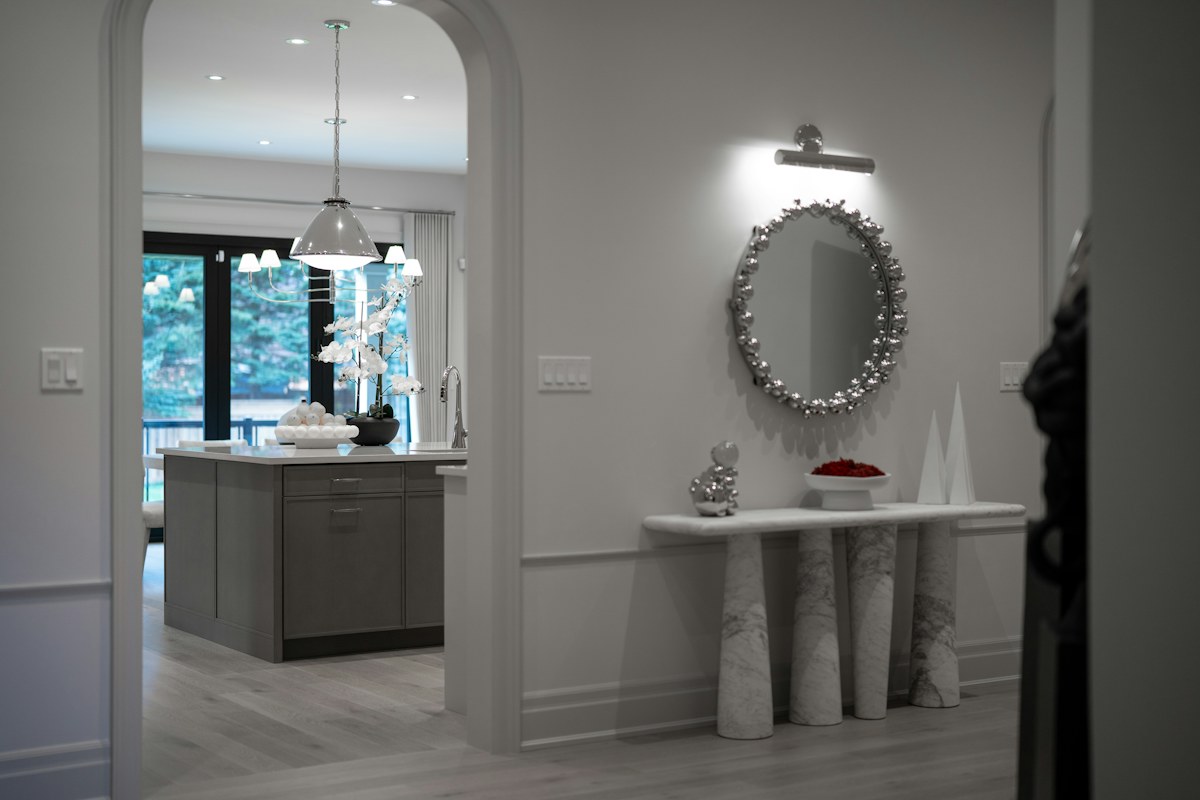
A narrow console often looks fine until a tote sits on the top and projects several inches beyond the front. Measure the tote as well as the tabletop. Sit on a temporary chair if you would like a bench for shoes and see how far your knees project into the path. Ask someone to go past while you are seated. In a busy hallway, a small bench that tucks fully against a wall can feel larger than a shallower bench whose legs sit at an awkward angle.
If the entrance opens directly into a living area, set a visible limit to the space that belongs to shoes and bags. A flat washable mat or a tray with a clear outline can be enough. Place its edge outside the place where a person naturally turns the handle. Leave room for anyone who uses a cane, a walker, or another mobility aid to make their usual turn. Use a mat with a secure, low-profile backing so it stays where you put it.
Give incoming and outgoing objects different homes
Use a dish or shallow tray for keys. Put it within reach when you first step in and a little away from the outer edge of the surface. The dish should be shallow enough to see what is in it. If several sets of keys go in together, give each person a small compartment or a separate spot within the tray. A hook can be just as useful if the key ring is easy to hang with one hand. Make sure the hook is away from the place where a coat sleeve might sweep across it.
For post, set up two physically distinct positions. Incoming items can go in an upright sorter where you can see envelopes without unstacking everything. Outgoing items can sit upright near the place you pick up keys. A dark envelope will disappear on a dark shelf if you set it flat. Give it a visible edge or a small clip to hold it upright. Put anything personal away once you have acted on it.
Decide where the post will be opened. It might work best at a desk, where scissors and a recycling bin are already close. Keep the entry spot as a handoff point and bring the contents to the desk at a time you actually have free. If you want to open post at the door, give it a stable surface large enough to lay down an envelope and write on a sheet of paper. A ledge that can hold three unopened letters is unlikely to be a comfortable desk.
Make space for a wet day
Spread out the shoes people are likely to wear in the current weather. Arrange them as they might fall when nobody has time to line them up. Notice how much room a pair of boots takes when the shafts lean over. A tray with room for two orderly pairs may only hold one set of boots comfortably. Give it enough space to catch drips without placing it across the walking route.
A shallow boot tray can contain water while the shoes dry. It works best where you can see the tray and lift it out to empty it. Shoes that are dry and waiting for later can move to a shelf or basket. Keeping wet and dry items apart helps the whole setup stay useful through the day. Add a spare washable cloth nearby if wet umbrellas or muddy soles are common at your door. Put the cloth somewhere it can dry between uses.
Coats need more space than hangers suggest. A thick winter coat takes up room in front of a wall hook, especially if it covers a bag or another coat. Leave a distinct hook or place for a wet outer layer so it does not cover the bag you will pick up next. If everybody comes home at once, try staggering hooks in a way that keeps each handle visible. Once a coat covers the spot for keys, it is easy for the routine to stop working.
If the only suitable spot for umbrellas is a corner, choose a narrow, stable stand with a base you can wipe. Try it with the longest umbrella fully inside and check that the handle does not project across the route. A collapsible umbrella may dry better opened elsewhere before it goes back into a bag.
Use a shelf or wall hook where a table will not fit
A wide table is handy if you have space for it. In a tight entrance, a narrow ledge and two well-placed hooks can perform the same jobs while leaving the floor open. Before mounting anything, check the manufacturer's weight guidance and choose a method suitable for the wall surface. If you rent or prefer to leave the wall untouched, look for a low, stable freestanding unit that fits the route, or try a small tray on an existing shelf near the door.
Place the most-used object where your hand reaches naturally. A key shelf a little too high encourages people to throw keys upward or set them elsewhere. If a child uses the entry regularly, give them a reachable place for their own bag. Keep heavy items low enough that they can be lifted without pulling anything down. A tall shelf can stay available for a light hat or another item that seldom needs to be moved during a rush.
Work backward from the objects before choosing containers. Measure the widest envelope, longest key ring, and deepest shoe. An attractive box that requires lifting a lid every time is useful for occasional items. A person holding groceries is more likely to drop keys into something open. Before buying a tray, try a shallow plate for a few days. The position, depth, and weight of the plate will tell you what the tray needs to do.
Let the first week reveal what needs changing
Look at the entry each evening and see which objects missed their places. A bag on the floor every day probably means the hook is too high, already occupied, or on the wrong side of the door. Try one change while leaving the rest of the arrangement in place. Move the bag hook closer to the path or make its place more obvious. A spot that works can be tested again immediately with an ordinary arrival.
Give recurring items a place and move special cases on as they appear. A package due for return might need to sit near the door overnight, while a helmet needed every morning deserves a more regular spot. The distinction keeps a temporary pile from becoming permanent. It also leaves room for a guest who arrives with a coat or bag when all the familiar hooks are already occupied.
Once the entry feels natural, stand outside again and walk through with your hands full. Set down what you need to set down, clear the door, and find the key dish without looking. If you can do those three things comfortably, the arrangement will probably hold up on a busy morning. Keep any measurements that mattered, such as the greatest depth a table can have before it blocks the path. That number is useful if you later decide to replace the temporary plate, shoe tray, or shelf with a piece you want to keep.