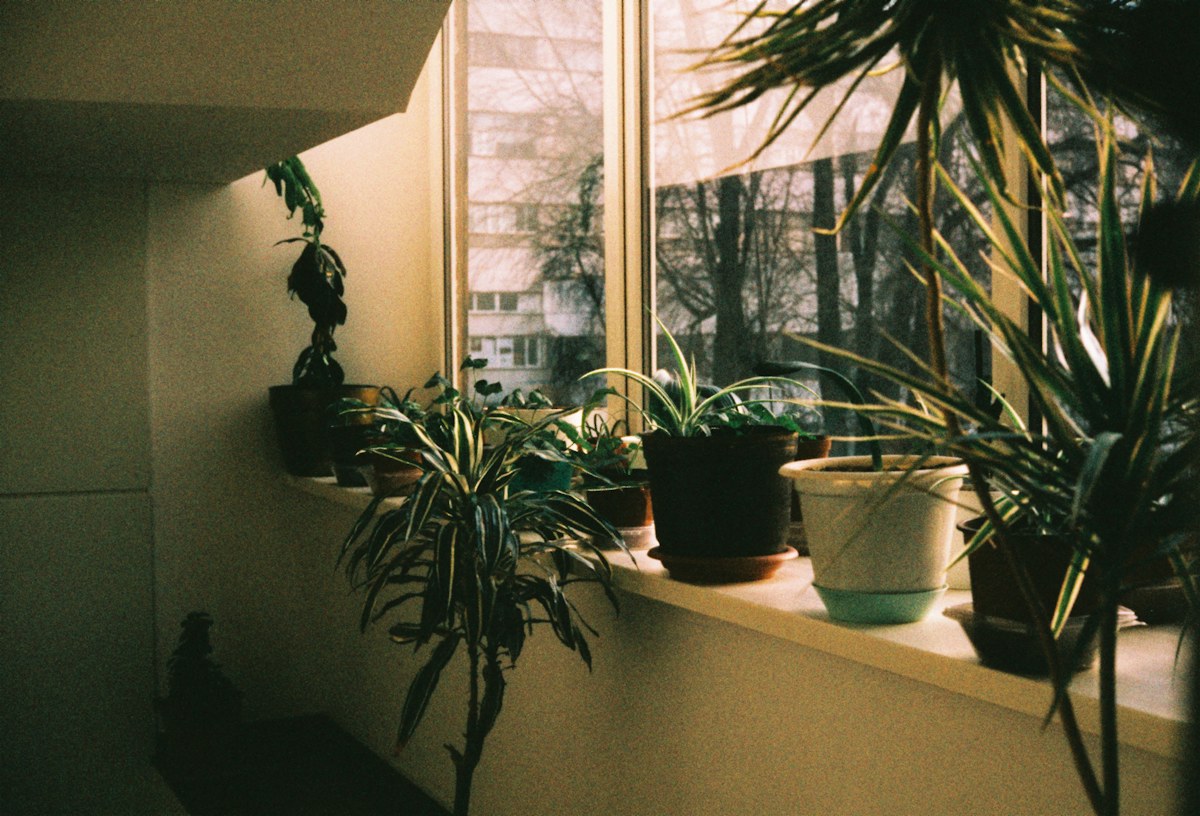
A windowsill full of herbs can become a windowsill full of pots you move every time you open the window. The leaves reach toward the glass, one saucer collects a small lake, and the herb you want for lunch has ended up behind the one with the broadest leaves. If you begin with a few herbs you already cook with, the layout can be simpler. The purpose of the sill is to make those leaves easy to reach while giving each plant the conditions it needs and keeping the window usable.
Think of a meal you make without a recipe. It could be toast with eggs, a pot of rice or a bowl of tomatoes. Which herb would you actually cut for that meal? Choose a small starting group around the answer. A pot of a familiar herb that gets used regularly can tell you more about the spot than several plants with different requirements. Check the care information for each variety you choose. A sunny kitchen window can be suitable for some plants and uncomfortable for others, depending on the light, heat and air movement.
Spend a day reading the sill
Take a look at the glass in the morning, around midday and later in the day. Note which sections receive direct light and whether that light stays for a useful amount of time. Check the conditions a little farther back as well. A narrow strip of sill may have very different light from a shelf just below it. If there is an overhang outside or the window is partly covered by a blind, look at how its shadow moves. Use the result to choose a position with conditions that match the plants you want to try.
Watch what happens when you open the window. A sash may move through the space above a pot. A handle can pass very close to the leaves or need a clear spot for your hand. Mark the movement with an empty pot in a safe position and keep any required access open. Look for a secure place where the pots stand fully supported. Keep them away from an edge, and do not assume a shallow ledge can support any container you can balance on it. If the sill is too small, a stable surface nearby can be a better place for a few suitable plants.
Check the air and heat as well as the light. A window above a radiator or close to a draft can create a different environment from the rest of the room. Observe what changes when you use the room's heat or ventilation. If a leaf would touch glass, leave more space, especially where temperatures change significantly. Follow the care guidance for the plant and keep heating or electrical equipment clear of water and storage. You can move the pots before the room changes for the season. Leave them somewhere you can reach easily so the move can be made safely.
Choose pots with a place for the water
Use containers suited to the individual plants and their intended growing conditions. Check that water can drain as directed and that the surface below it can be kept dry. A saucer needs to fit under the whole pot and remain accessible. Try lifting the pot when the leaves have spread a little beyond the edge. See whether you can get a secure grip without pushing another plant against the glass. A row that looks tidy when each pot is new can become crowded as soon as there is growth or a larger saucer goes underneath.
Decide where you will water the plants. You might take small pots to a suitable spot to water and let them drain before returning them. You may find it easier to use a small watering can at the sill, with protection appropriate for the surface. In either case, follow the care guidance for each herb and avoid leaving water sitting where it can damage the sill or collect around the plant against its needs. If you keep several pots on one tray, check them separately. One tray can bring several containers together, but it cannot tell you which plant is ready for water.
Think about the materials near the pots. A painted sill can be damaged if moisture sits underneath a saucer. Test for space to lift the tray or saucers and wipe the surface. Keep the containers clear of cords and outlets. If you have to lean over a sink or reach behind another object, choose another place where you can see and handle the water. You can keep a small cloth nearby for wiping without using the ledge to store every tool. The plants will remain easier to care for when the first thing you reach for is the pot you meant to check.
Put the herb you use most at the useful end
Look at how you approach the window when preparing a meal. If your work surface is to the left, give the herb you cut most frequently a suitable place near that side if it gets the conditions it needs. Keep a small pair of appropriate clean scissors or other tool in its normal safe place. Use clean tools and follow care and harvesting guidance for the herb. A few leaves can go a long way in an everyday meal. Let the plant grow in a way that suits it instead of taking a large amount because that is the only time it will be within reach.
Leave enough room for each plant's actual shape. A compact pot can hold stems that lean well beyond its edge. Put the wider plant where it can grow without covering the handle or trapping another pot behind it. If a plant consistently leans toward the light, look at its guidance and whether the available position suits it. You might adjust the arrangement or choose something better matched to that window. Three plants of the same size at the shop do not have to remain the same size in the room.
For a home with pets or young children, choose the plants and positions with their access in mind. Verify plant suitability with a reliable source if animals may reach them, and keep growing materials and tools safely stored. Do not use products on culinary herbs unless they are suitable for that edible use and applied according to their labels. Keep the care instructions where you can look at them. A window that is a natural place for a person to reach may also be a place another member of the household can access. Make the arrangement around the space as it is actually shared.
Notice what changes over two weeks
Start with the plants in the positions you chose and check them individually. Use the guidance for each instead of watering them all on the same schedule. Note which ones are easy to reach and which you find yourself moving to use the window. Look at the soil, leaves and saucers as appropriate for the plant. If one plant seems unhappy, confirm its requirements and look at the conditions in its particular spot. Changing its position by a small distance can change how much light or air it receives. Avoid making several changes at once if you want to see which one mattered.
Pay attention to what you take for dinner. If you never reach for one herb, ask whether it is a variety you enjoy or whether its placement is the problem. The plant may belong outside the kitchen while a familiar alternative does the work here. If you cut the same herb every time, give it the conditions it needs and let it regrow according to its guidance. You can keep a second suitable pot elsewhere if you want more of it. The useful window can remain a modest collection, with room to look after each one.
Look for parts of the setup that are taking longer than expected. If you have to move all the pots to check the far one, leave a gap between them or turn the group so each can be reached. If a saucer drips when you lift it, choose a way to handle water more easily and keep the surrounding surface dry. If the screen, handle or curtain is caught, clear the operating route. A few practical adjustments are easier to make while the group is small. Let the places that remain comfortable guide whether you add anything.
Let the kitchen decide the final number
After several meals, see which leaves are most often taken and which pots can stay where they are without interfering with the room. A good grouping might be two herbs and a clear place to put the watering can while you work. Another window might take three, with space between them and easy access to the handle. The final number comes from what the space can support and what you will cook with. There is no reason to fill an empty strip of sill if you use it when you open the window or wipe the glass.
Keep the setup simple enough that you can harvest a few leaves and return to the worktop without moving everything else. The window can still open as it did before, the pots have somewhere to drain, and the herbs you take out most often are within reach. In a busy kitchen, that is a useful change you will notice every time you remember to add the leaves.