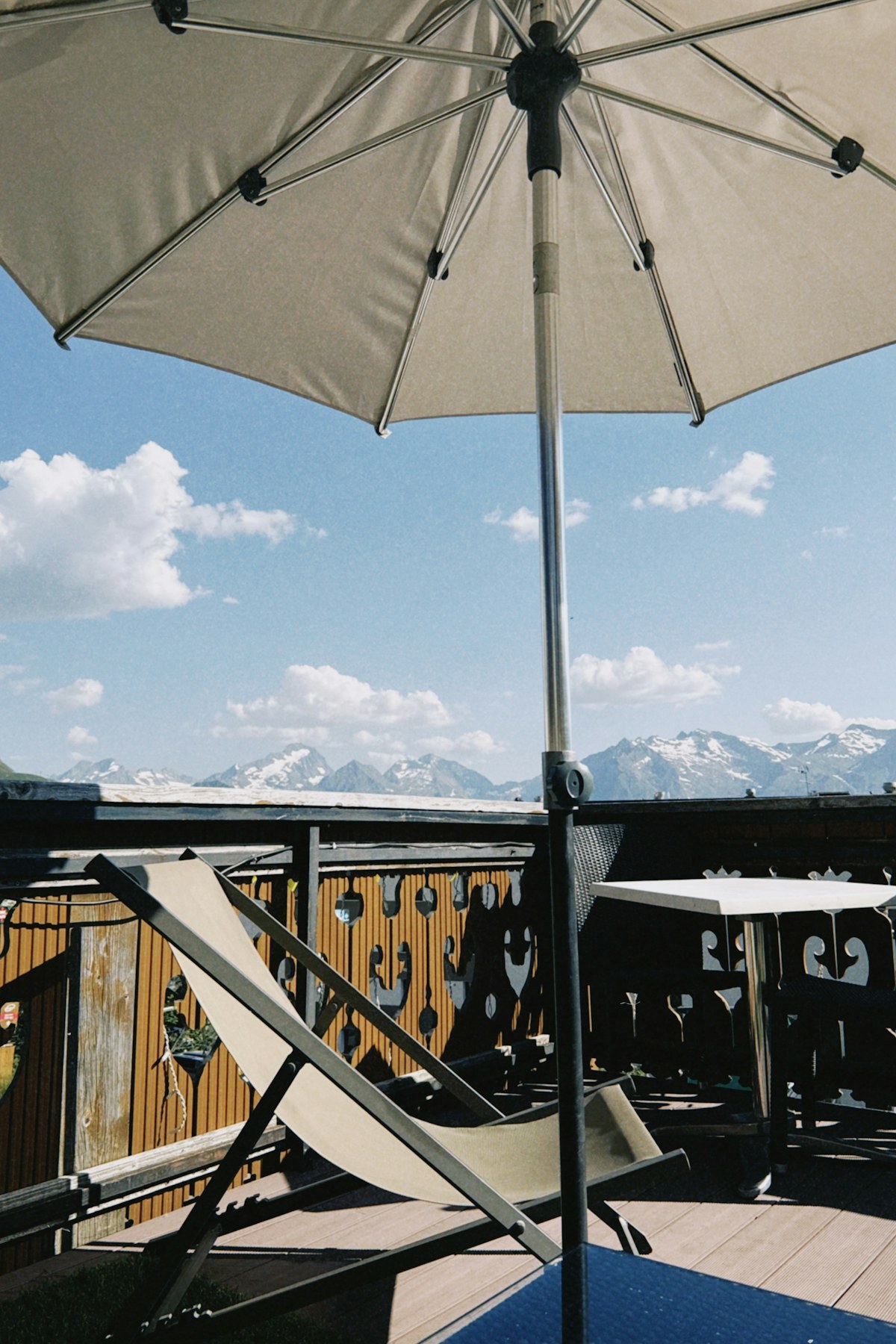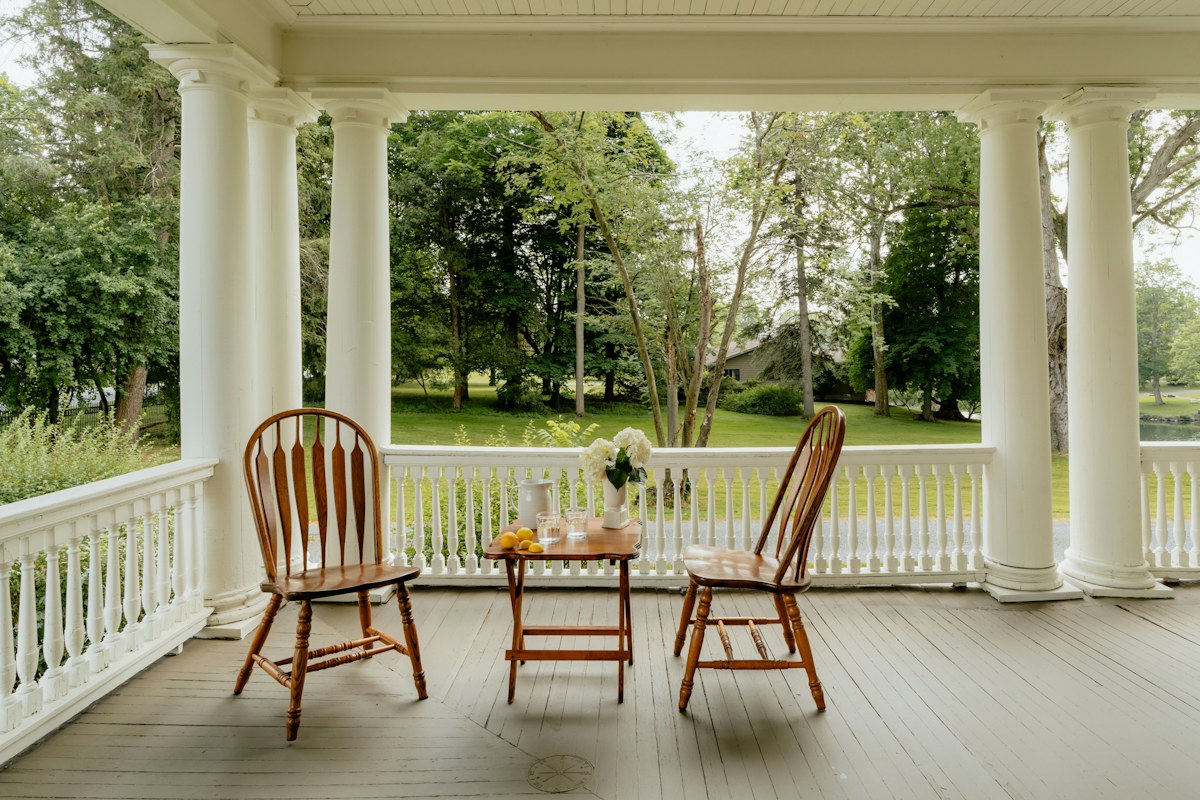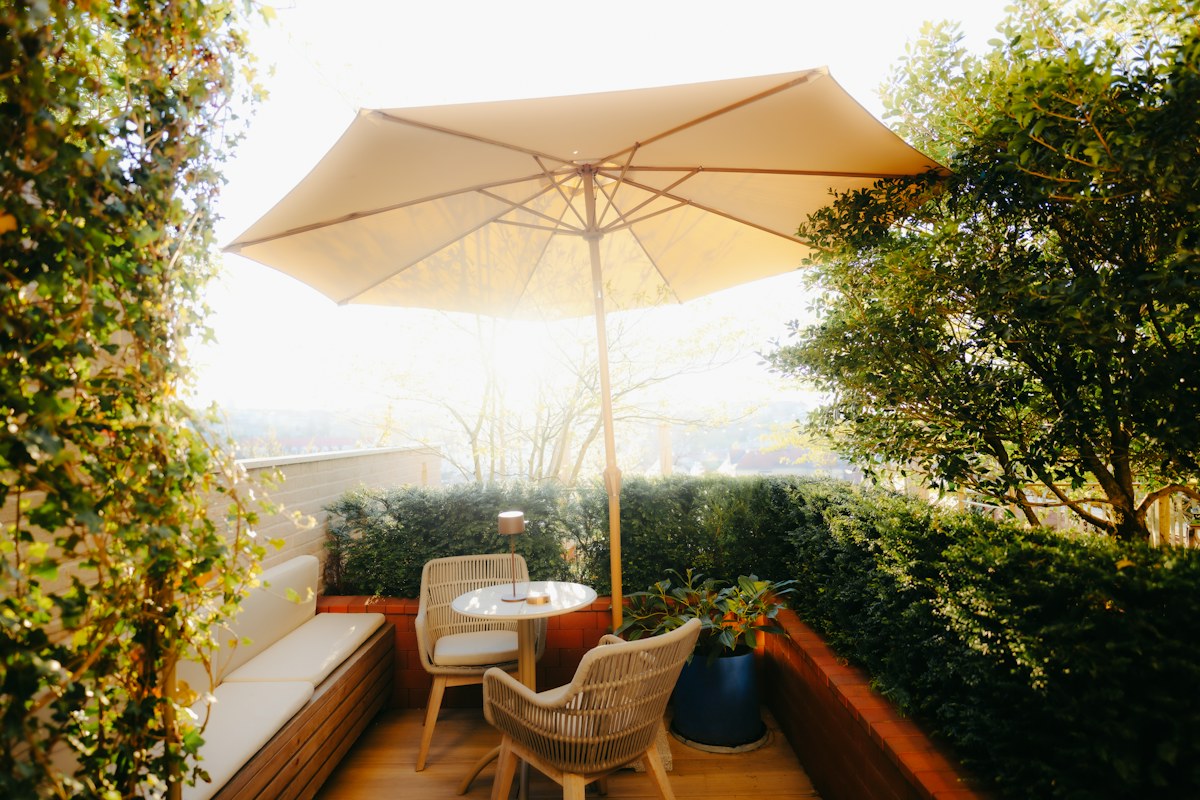
The place where you first imagine a planter is often the place you see from inside. It may be right in front of a window, near a rail, or beside the chair you bring out on a warm evening. Once the planter arrives, you may discover that it catches very little light, turns watering into an awkward reach, or takes away the only place to put your feet. Try deciding where the container belongs before choosing the plant. An empty space, the view from a chair, and a short walk with a watering can can tell you what size and position will make sense.
Choose what the planter should do from a chair
Sit where you actually use the balcony. Look out at eye level and find something you would like to keep in view. A distant roof, a patch of sky, or a tree can be worth leaving unobstructed. Then notice the place where a small area of leaves could make the balcony feel more finished. You might prefer a planter beside your knee, where you can see it while reading, or close to the wall where it gives an otherwise bare corner a purpose. A single plant can make a stronger contribution when it has a recognizable place in the view.
Check the same spot from the room behind the balcony. What part of the container would you see through the window? A plant that looks well placed when you stand outside may be visible only as the bottom edge of a pot from indoors. If the inside view matters, try a location where you can see part of the plant at a height you enjoy. Leave doors and windows able to open and keep the path outside clear. A useful position can be near the view without standing in the route to it.
Measure the spot with something light
Use an empty cardboard box or an object of similar size to represent the planter while the weather is calm. Place it where you are considering a container. Open the door fully. Move your chair into the position you use and take your usual route back inside. Check whether the pot would occupy the area where you place a foot when you stand. If you share the balcony, repeat the walk with someone already seated. The size that looks modest in a store can feel larger on a narrow balcony with an occupied chair.
Mark the approximate height of the plant above the container with a safe temporary visual marker or by asking someone to hold a piece of paper. A plant can reach into a window view even when its pot sits below it. Imagine its mature spread as well as its current size. Keep it away from openings or controls that need to remain accessible. Give yourself enough room to care for it on the side you can reach comfortably. The smallest spot that technically fits a pot may have no place for the person watering it.
Check what the building allows
Look at the building's rules and any instructions that apply to balcony use before purchasing a container. Confirm which kinds of planters are allowed, where they may sit, and what restrictions apply to water or loading. A container can weigh considerably more when full and wet than when it is empty. Do not guess how much the structure can carry. If you cannot confirm that a proposed arrangement is suitable, choose another location or ask whoever is responsible for the building. Keep required routes, drains, and access points clear.
Choose an approved, stable placement. A pot near a rail can be affected by wind and can present a risk if it moves or tips. Avoid putting loose objects on ledges. Use a container intended for the site and follow the relevant guidance about keeping it secure. If an open edge makes the view appealing, you may still be able to get the effect from a location nearer the wall. Try viewing a light test object from the chair and see how far in you can move it before it stops contributing to the scene.
Follow the light across the floor
Check the proposed spot at several points on a typical clear day. Note where the sun reaches the floor in the morning, at midday, and toward evening. A wall or balcony above can shade a corner while the floor a short distance away gets bright sun. Railings and screens can also change how much light reaches a low plant. Compare this observation with the guidance for the plant you are considering. A description such as bright shade or several hours of direct light is more useful than calling the entire balcony sunny.
Look again during a different season if the timing matters to your plant choice. The angle and duration of sun can change, and a plant near glass or a wall may experience heat differently from the open balcony. Feel where the wind passes on a day when it is safe to go outside. A quiet-looking corner can catch a strong draft as air moves around the building. Choose plants and containers suitable for the conditions you can observe. A location you like visually has more value when the plant can live there through the season you plan to use it.
Walk the watering route with an empty can
Decide where you will fill the can and how you will get to the planter. Try the route with the door in the position you normally use. You may need a free hand for the handle, or a landing place to put the can down as you move. A pot in the far corner can be easy to see and hard to reach without moving a chair. If you notice that problem now, shift the test box a little and walk again. Make watering a movement you can do without reaching across something unstable.
Check where excess water is allowed to go. A suitable container and saucer or other approved arrangement can help keep runoff from the path, the wall, and spaces below. Use drainage appropriate to the plant and follow the container instructions. Do not let water sit where it creates a problem for the plant or the building. Try a modest amount of water in the usual setup once it is in place and observe what happens. Give yourself enough room to inspect and care for the container without tipping it or lifting it over a rail.
Put the watering can away again and think about what else you would carry out. A folded towel, book, or seat cushion may need a place while you open the door. If the pot takes that place, you may end up setting things down on top of it or blocking the path. A small shift can preserve the useful surface and leave a gap to reach the container from one side. Work with the movements that happen on most evenings. You can adapt the position for an occasional deep clean without making everyday access harder.
Leave space for the plant to become itself
Choose a plant whose mature size fits the place, with some room between its leaves and the route people use. A small pot in a nursery can contain something that will spread far beyond it. Read the label or guidance from a reliable grower before buying. If you want a strong vertical shape, look for an option that stays suitable for the height and wind conditions. If a low group of leaves would frame the view better, choose for that shape instead. Give yourself a way to reach the soil without brushing against a plant that will get broader.
Think about care at the end of the season. A pot that needs to be moved indoors should have a suitable indoor place before cold weather arrives. Plan how to move it using the guidance for its size and weight, and choose a smaller option if handling it would be difficult. If you expect to leave it outside, check that the container and plant are appropriate for those conditions. A planter can be a temporary seasonal feature. It can also stay in one position, with the plants changing as conditions allow.
Keep the chair in the test after planting
Once the container is in its intended location, sit down and see whether the view is what you hoped for. If the plant is still small, check that the approximate mature shape would leave the view and route open. Carry the watering can once more and see whether you can set it down without putting anything in the way. After the first period of normal use, look at where the light actually reaches the leaves. Small observations like those give you a reason to change the position before a problem becomes routine.
If the location is working, leave the neighboring floor empty for a while. See whether you prefer the simplicity of one patch of leaves and a place to sit. There may be room for another plant later, once you know what the first one needs and how the balcony feels in use. A single container can be enough to change the view from indoors and make the outdoor chair feel like somewhere you will actually go.